
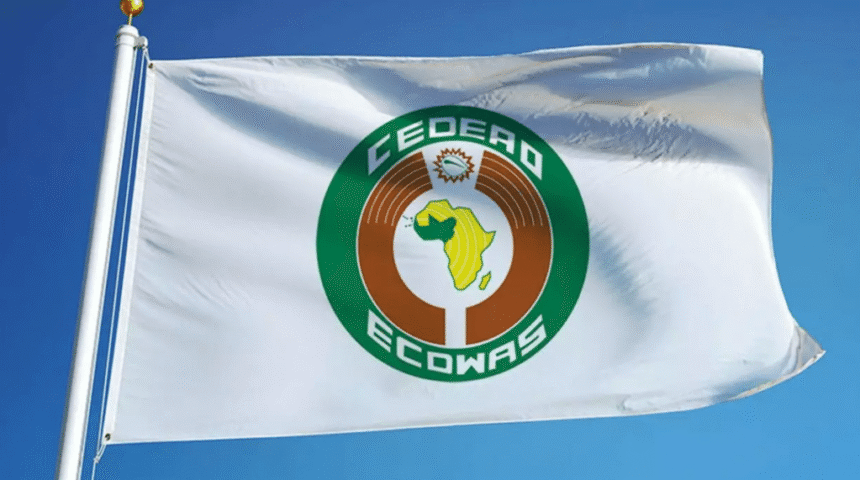
The Economic Community of West African States (ECOWAS) has declared a state of emergency across West Africa following a surge in successful and attempted military takeovers in the region.
ECOWAS explained that it declared a state of emergency in West Africa in an effort to halt democratic backsliding and preserve constitutional order.
Omar Touray, President of the ECOWAS Commission, relayed the declaration on Tuesday during the 55th session of the Mediation and Security Council, at the ministerial level in Abuja.
The meeting was convened following the string of coups and botched mutinies in the sub-region in recent times.
The declaration comes amidst a regional security crisis that has seen at least six military coups or attempts across the sub-region since 2020, with the most recent being the December 2025 foiled attempt in Benin and a successful military takeover in Guinea-Bissau just a month prior.
During the summit, ECOWAS cited Article 25(e) of the 1999 Protocol on Conflict Prevention, Management, Resolution, Peacekeeping, and Security to justify the reason it declared a state of emergency in West Africa.
Touray said the developments highlight the “imperative of serious introspection on the future of our democracy and the urgent need to invest in the security of our community”.
“Events of the last few weeks have shown the imperative of serious introspection on the future of our democracy and the urgent need to invest in the security of our community.
“As you would have seen in the memoranda before you, the country-by-country analyses of our member states show different risk levels across our community, from high to medium, with an average of high risk, thereby demanding immediate and concerted action.
“The risk factors are the persistence of military interventions (Guinea-Bissau and the Republic of Benin just days ago); non-compliance with transition norms in Guinea, where we face a military leader turning civilian; growing erosion of electoral inclusivity across multiple states; expanding influence of terrorists, armed groups and criminal networks; and increasing geopolitical pressures affecting member states’ diplomacy and cohesion,” he explained.
Touray also pointed to elections as a “major trigger of instability” in the region.
“Despite the best of efforts of our community to establish constitutional convergence principles, and to have a support programme for elections in our region to safeguard our democratic credentials and stability, we have continued to witness political practices that violate these principles,” he continued.
The remarks come as Guinea, Benin, Gambia, and Cape Verde prepare to conduct elections soon.
“We also have to negotiate with our neighbours, the Alliance of Sahel States (AES), particularly the terms of our security cooperation, as we continue to see the devastating effect of terrorist groups along our borders with them.
“We must confront these threats with the attention they deserve. We must pool our resources to confront the threats of terrorism and banditry, which operate without respect for territorial boundaries,” he added.
Touray tasked the council with maintaining unity within ECOWAS amid geopolitical pressures.
Last month, a group of military officers in Guinea-Bissau took over control of the government and suspended the electoral process.
The coup came just days after a presidential election was held, as citizens awaited results.
On Sunday, a group of soldiers announced a takeover of the government in the Benin Republic.
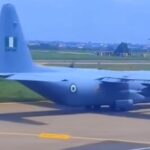
Hours later, the Nigerian Air Force (NAF) was deployed to restore constitutional order in the country.
Bayo Onanuga, presidential spokesperson, said President Bola Tinubu’s actions were based on requests from the Benin government.
Recall also that on Monday, the Alliance of Sahel States (AES), a breakaway ECOWAS faction, accused Nigeria of violating its airspace, warning that it had the authority to neutralise intruders.
However, the Nigerian Air Force (NAF) denied violating Burkina Faso’s airspace.