
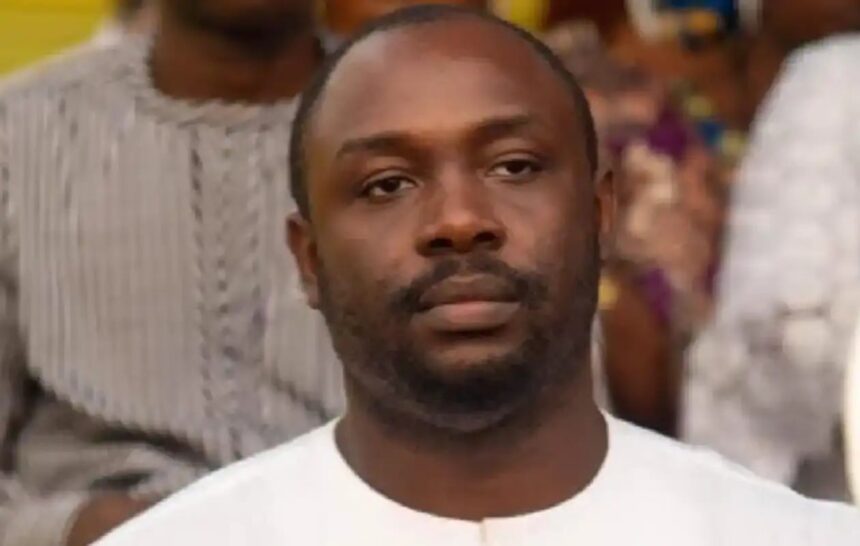
The political temperature in the Benin Republic has continued to remain tense following the arrest of Chabi Yayi the son of former President of the Benin Republic, Thomas Boni Yayi.
The arrest of the son of the former president occurred a week after a failed military coup.
Chabi Yayi was detained early Sunday at his home, according to close family members and party officials.
While authorities have not officially stated the reason for the arrest, the timing, just one week after the abortive military takeover on December 7.
“At this time, we don’t know what he (Chabi Yayi) is accused of,” one relative told the press.
“We don’t know if it is linked to the events of last Sunday,” said another close friend, a member of the Democrats party, the main opposition party, which Yahi heads.
Pan-Atlantic Kompass reports that several people have been arrested over the coup attempt.
A former minister of defence and key opposition figure Candide Azannai, has been placed in police custody for “conspiracy against the authority of the state and incitement to rebellion.”
Several of those who staged the failed coup, including their leader Lieutenant Colonel Pascal Tigri, remain at large.
Meanwhile, ECOWAS convened a meeting on Sunday at Abuja following a recent coup attempt in the Benin Republic and renewed instability in Guinea-Bissau.
Present at the Ordinary Session of the ECOWAS Authority of Heads of State and Government at the State House Conference Centre are President Julius Bio (Sierra Leone, ECOWAS Chair), President Patrice Talon (Benin), José Maria Neves (Cabo Verde), Alassane Ouattara (Côte d’Ivoire), Adama Barrow (The Gambia), John Mahama (Ghana), Umaro Embaló (Guinea-Bissau), Joseph Boakai (Liberia), Bassirou Faye (Senegal), and Faure Gnassingbé (Togo).
Sunday’s meeting comes after five turbulent years for West Africa, which saw coups in Mali (2020, 2021), Burkina Faso (twice in 2022), and Niger (2023).
Speaking during the summit, President Bola Tinubu, represented by Vice President Kashim Shettima, called for all hands to be on deck in solving political instability in West Africa.
“The external threats confronting West Africa today demand nothing less than a united front, terrorism, violent extremism, unconstitutional changes of government, transnational organised crime, arms for liberation, cyber insecurity, climate shocks, food insecurity, and irregular migration,” said Tinubu.
“We do not share geography by accident. We share it by design, by history, and by the enduring logic of kinship. West Africa is not a random assemblage of borders grown by chance. It is a family bound by memory, culture, struggle, and aspiration.
“We remain persuaded that fraternity, not force, must define the future of our community. Yet history reminds us that ECOWAS can only fulfil its purpose or aspiration when every member state upholds the values of purity, justice, and equality within its domestic affairs.
“A community is only as strong as its trust its members repose in one another. Our shared challenge is to ensure that internal divisions do not erode the collective sense we have built over decades.”
Speaking also, ECOWAS Chair, President Julius Bio of Sierra Leone, condemned the resurgence of unconstitutional power grabs in West Africa and warned that instability in one state endangers all.
Bio said: “The instability in Guinea-Bissau and the attempted coup d’état in Benin remind us that democracy requires constant vigilance and principled action. On behalf of this Authority, I strongly condemn the unconstitutional change of government in Guinea-Bissau and the attempt to subvert the constitutional order in Benin.
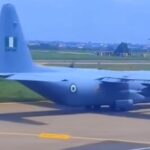
“I commend the rapid mobilisation of ECOWAS troops and air assets, with Nigeria taking the lead to safeguard constitutional order in Benin.
“West Africa faces some of the most complex and evolving threats in its history. Our response must therefore be united and uncompromising. Security is not only a military obligation; it is a human imperative.”