
The military junta of Burkina Faso has released the seized Nigerian Air Force (NAF) C-130 Hercules transport aircraft and 11 Air Force personnel who had been detained in the Sahelian nation for over a week.
The release of the military aircraft and the 11 Air Force personnel has also been confirmed by the Nigerian government.
The Nigerian government explained that the release follows intensive high-level negotiations with the Burkinabè military leadership.
Confirming the development on Wednesday night, the spokesperson for the Ministry of Foreign Affairs, Mr. Kimiebi Ebienfa, stated that the aircraft and personnel had been released.
He said, “Yes, they have been released.”
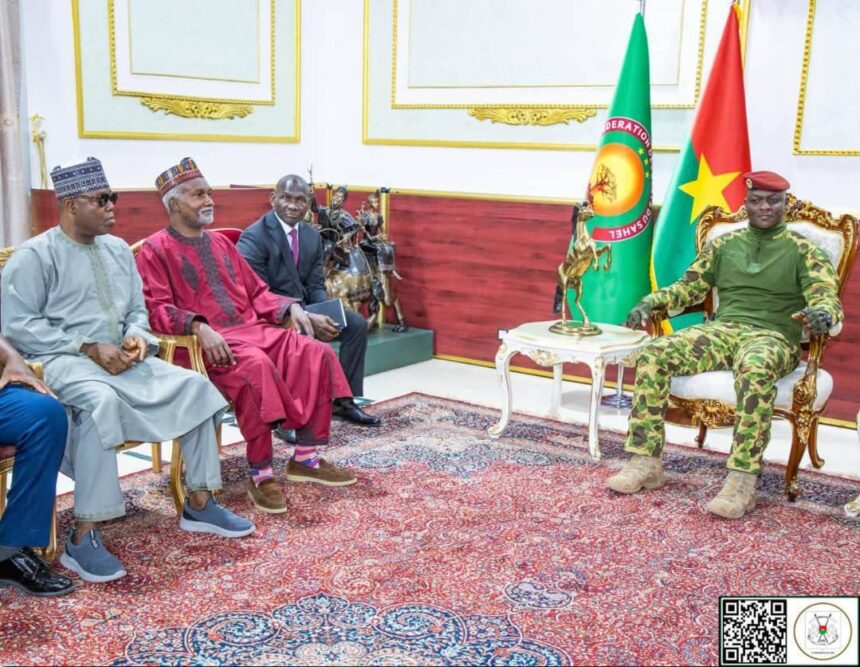
Ebienfa also revealed that the 11 Air Force personnel were freed after a Nigerian delegation visited Burkina Faso to resolve the matter.
It was gathered that the Nigerian delegation was led by the Minister of Foreign Affairs, Yusuf Tuggar, who held discussions with Burkinabe government officials to clarify the circumstances surrounding the emergency landing.
In a statement issued by the minister’s spokesperson, Alkasim Abdulkadir, both governments said the issue had been amicably resolved through dialogue.
“In the spirit of constructive engagement, the two governments amicably resolved the issue concerning Nigerian Air Force pilots and crew, reinforcing confidence and highlighting the effectiveness of dialogue in addressing sensitive matters,” the statement said.
A separate statement issued on Thursday by the Minister himself reads: “Nigeria continues to prioritise dialogue and regional cohesion in its engagement across West Africa.
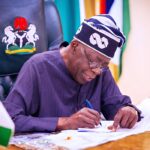
“I led a high-level Nigerian delegation to Burkina Faso on behalf of President Bola Ahmed Tinubu @officialABAT to convey his message of solidarity to President Ibrahim Traoré and engage on shared regional priorities.
“The visit allowed us to review pathways for strengthening #NigeriaBurkinaFasoRelations and advancing regional integration. Through sustained dialogue, we also resolved the matter concerning Nigerian Air Force pilots and crew, reaffirming the effectiveness of diplomacy in addressing sensitive issues.”
The incident began on December 8, 2025, when a Nigerian Air Force (NAF) C-130 Hercules transport aircraft was forced to make a precautionary landing at the Bobo-Dioulasso airport.
The detention sparked regional concerns after the Confederation of Sahel States (AES) initially characterized the landing as an “unfriendly act” and a violation of sovereign airspace.
However, the Nigerian Ministry of Foreign Affairs said the aircraft was on a routine ferry mission to Portugal for scheduled maintenance when it encountered technical difficulties.
Director of Public Relations of the Nigerian Air Force, Mr Ehimen Ejodame, had explained that the crew observed a technical issue and carried out a precautionary landing at the nearest airfield, in line with international aviation protocols.
Pan-Atlantic Kompass reports that Burkina Faso grounded the Nigerian military aircraft a few days after the administration of President Bola Tinubu conducted a military action in the Republic of Benin over a coup attempt.
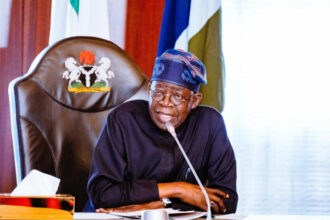
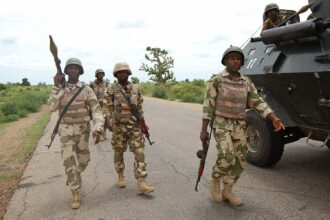
Tinubu, who is also the Chairman of the Economic Community of West African States (ECOWAS), stated that the deployment of the Nigerian troops to the Benin Republic was a direct and necessary response to safeguard regional stability and constitutional order in the neighboring country.
Recall that on Sunday, a group of soldiers identifying themselves as the “Military Committee for Refoundation” (CMR), led by Lieutenant Colonel Pascal Tigri, appeared on state television to announce the dissolution of all state institutions and the removal of President Patrice Talon.
Benin’s government later announced that the coup attempt had been suppressed and control restored.