
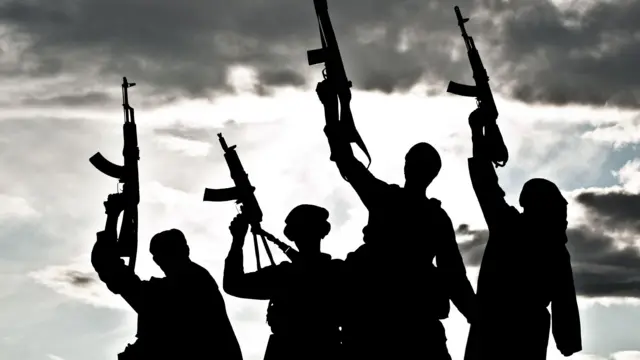
The Federal Government of Nigeria has announced that it has held talks with WhatsApp, Facebook, and other major social media platforms in a bid to shut down social media accounts operated by terrorists in the country.
The government said the move to shut down terrorists’ accounts is aimed at dismantling the online infrastructure of extremist groups.
Speaking at an end-of-year briefing in Abuja on Tuesday, the Director-General of the National Counter Terrorism Centre, Maj.-Gen. Adamu Laka said platforms such as TikTok, Facebook, Instagram, Snapchat, and X had been used by terrorists to publicise operations, display looted items, and communicate with supporters.
According to him, security agencies have held several engagements with social media companies to address posts and accounts that pose threats to national security.
Laka said: “The issue of social media platforms used by terrorist groups—if you knew how many accounts we took down. We have had several meetings with these social media platforms, such as TikTok, Instagram, Snapchat, Facebook, and X.
“They are businesses looking to grow their subscribers, but we engage them, explain the effects of certain posts on national security, and we take them down.
“There was a time when bandits would go on TikTok showing their loot. We took those accounts down—you don’t see that again. At some point, they were even doing live streams and holding conversations, but we’ve been able to handle all that.”
Laka revealed that aside from targeting terrorists’ accounts, the Nigerian government is also waging war against ransom payments.
He revealed that ransom payments remain a major source of terror financing, with point-of-sale operators increasingly exploited to move funds.
He explained that in many cases, ransom payments are transferred to accounts belonging to POS operators, who then release the cash to kidnappers, making tracking more difficult.
“You see a transfer made by terrorists, and when you investigate the account, it belongs to a POS operator. The kidnappers give out the POS operator’s number, the money is transferred, and they go to collect it,” he said.
The counter-terrorism chief said security agencies had intensified efforts to track ransom payments, arrest those involved, and disrupt terror financing networks, but stressed that operational details could not be made public for security reasons.
He revealed that several arrests and prosecutions had been carried out in connection with ransom payments and terrorism financing, adding that asset recoveries and seizures formed part of Nigeria’s compliance with international anti-money laundering and counter-terrorism financing standards.
Laka said the country’s recent progress in meeting the requirements of the Financial Action Task Force was partly due to coordinated investigations by a joint committee involving security agencies, financial intelligence units, and the judiciary.
While acknowledging the challenges posed by evolving terror tactics and porous borders in the Sahel region, he assured Nigerians that security agencies would continue to strengthen both physical and digital counter-terrorism efforts.
He said, “Towards the end of 2023, the security situation in Nigeria was improving. But after the coups in some Sahel countries, the situation worsened because these terrorist groups have connections across the region.
“So Nigeria has to play a leadership role in West Africa and the Sahel to address these threats. As long as those countries continue to face these challenges, Nigeria will also face them. We are doing our best, and we will not relent. In 2026, we are going to up our game.”
Pan-Atlantic Kompass reports that many Nigerians had raised concerns about the growing number of terrorists’ social media accounts.
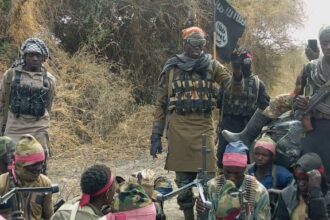
Many of the terrorists have been seen flaunting huge sums of money and sophisticated weapons.
Some even go as far as recording how they attack communities and villages in the Northern part of the country.
This development also comes as President Bola Tinubu took a hard line, declaring bandits, militias, armed gangs, and kidnappers, among others, as terrorists.