The controversy surrounding Nigeria’s newly enacted tax reforms has continued to escalate as many are calling the government to suspend the tax laws amid allegations of “forgery” and unauthorized alterations.
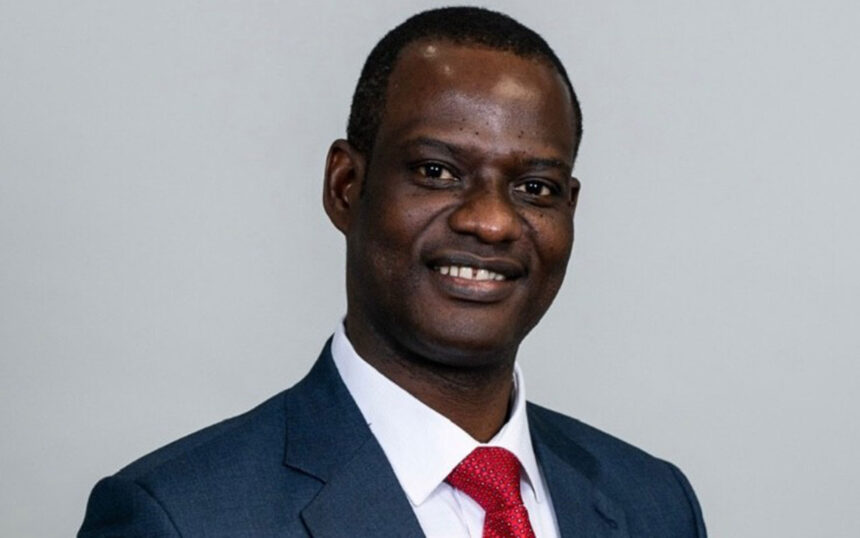
While several Nigerians, opposition leaders, and the Nigerian Bar Association (NBA) have called for the immediate halt of the tax laws, Taiwo Oyedele, Chairman of the Presidential Fiscal Policy and Tax Reforms Committee, has clarified why it’s difficult to suspend tax laws despite alteration allegations.
According to the renowned tax expert, the legal and economic machinery of the state cannot simply be “paused” without potentially devastating consequences for the citizens the reforms aim to protect.
According to him, one of the primary reasons why it’s difficult to suspend tax laws despite alteration allegations is the constitutional limit on executive power.
Oyedele, speaking during an interview with Arise TV and monitored by Pan-Atlantic Kompass noted that once a bill has been signed into law by the President, it becomes a binding legal instrument. He emphasized that the President lacks the authority to unilaterally postpone the January 1, 2026, implementation date.
Oyedele stated: “So, the first one is, you know, suspension, put on hold, what does it even mean? First and foremost, some of the people calling for suspension have not explained who is supposed to implement the suspension.
“The President has no powers. The executive has no authority to suspend here. That’s the first point.
“The second point is that these are four tas laws, two of them commenced immediately. So this is the Nigerian Revenue Service Act. Look at the commencement date. It has commenced already. So, this law repeals the FIRS Act. We no longer have FIRS. We now have NRS.
“Now, how do you suspend this? Does it mean we’ll no longer have any revenue service? Is there a risk that somebody will say, for the past six months, there has been an illegal FIRS? All the money we pay to them we should collect back.
“I feel like, if we wait for the outcome of that review, whatever that is, my personal view, and I may be wrong, once we establish what is wrong, then that part of the alteration was never part of the law, which means the law goes ahead and you deal with what was wrong with the alteration and whoever was responsible should face the consequences. That’s my own view.
“I think in most countries when it comes to tax matters, the overriding public interest is, if you come in the way of revenue generation, if you suspend the FIRS for one month alone, that’s a crisis.
“So, the second point about, what should we do to improve the process? I think automation will help a lot at every stage, because that’s transparency. That’s what we did in our committee before we submitted the bills, we had a process that ensured the integrity of that document. That’s why you didn’t see any multiple versions from the committee stage.”
Speaking on specifics of the alleged alterations to the gazetted tax laws, Oyedele explained the provisions of the laws that allowed tax managers to ensure payment of taxes from individuals who have been evading payments.
He explained that there are legal processes to pass through before a tax manager can then effect payments on behalf of an individual who has been evading tax.
This comes after reports emerged that enforcement powers were allegedly expanded in the gazetted tax laws.
According to the allegations making the rounds, Section 60(1) of the gazetted Act adds the phrase “without an order of the High Court”, allowing tax authorities to appoint agents without court approval.
However, Oyedele claimed that the provision is deliberately misinterpreted in isolation.
He stated that other provisions in the law ensure that legal processes are concluded before a property of a tax evader can be seized or sold.
He continues: “So, the point I’m making is, before you get to this point, we call this the power of substitution. So, what that means is you owe the government, you haven’t paid, I’ll go to someone who has money belonging to you, and ask them to pay me the money belonging to you.
“Before you get to this power of substitution, that tax liability must be final and conclusive. So it can’t be the Tax Managers waking up and saying, Rufai is owing us 2 million naira. Bank, give us the 2 million naira.
“No, you have to go through that process that involves stages of the courts to finally establish that that tax is indeed due and payable before you can now say, I give you notice to pay within 30 days. You refuse, I write to banks, do you have this guy’s account? Does he have money inside? You know, so that process and that provision are in the current law we operate presently.
Also, Oyedele addressed allegations that Section 41 (8) of the gazetted tax laws now requires a taxpayer dissatisfied with the decision of the Tax Appeal Tribunal and seeking to appeal to the High Court to deposit 20 per cent of the disputed amount as security before the appeal can be heard.
He added: “Another issue is those things that they listed, and one of them, I can show you here, is about saying that you have to pay a deposit of 20% if you want to go to appeal.
“And that’s under the Nigeria Tax Administration Act, Section 41 Subsection 8. So this is in the Nigeria Tax Administration Act, Section 41 Subsection 8, if you read this, you will not find it there.
“So, my view is we should allow the lawmakers do their investigation and come up with what they consider to be a substantial alteration, and then they make the decision as to what to do subsequently, rather than trying to speculate and discussing things that we’re not even sure where those things came from, you also need to ask and say pwho will benefit from some of those things that they have said.”
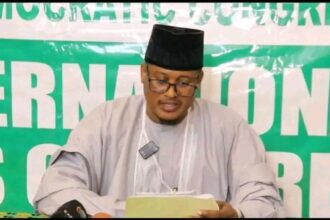
Pan-Atlantic Kompass reports that the controversy began after a member of the House of Representatives, Abdussamad Dasuki (PDP, Sokoto), had, during plenary last Wednesday, alleged discrepancies between the versions of the tax bills passed by the House and the copies subsequently gazetted.
Following the allegation, the House of Representatives set up an ad hoc committee to investigate the matter and submit its report on Thursday, Christmas Day.
The controversy has triggered reactions from various quarters with many calling on the government to suspend the tax laws scheduled to take effect on January 1, 2026.