
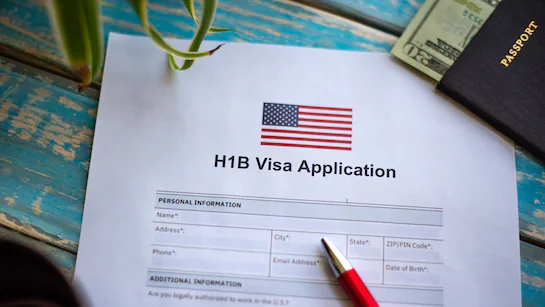
The United States Department of Homeland Security (DHS) and the Department of Labor (DOL) have officially announced the release of supplemental H-2B visas for 2026.
This allocation adds 35,000 extra work visas for 2026 to the standard annual cap of 66,000, providing a lifeline for industries that rely on temporary nonagricultural labor to maintain operations during peak seasons.
Pan-Atlantic Kompass reports that the H-2B visa program is vital for sectors such as hospitality, tourism, seafood processing, forestry, and landscaping.
The H-2B visa is a temporary work visa for non-agricultural jobs in the United States.It allows U.S employers to hire foreign workers when they cannot find enough local workers for short-term roles.
These jobs are usually seasonal or tied to peak demand. Common H-2B jobs include hotels and resorts, restaurants and tourism services, seafood processing, landscaping and forestry, amusement parks, and construction support roles.
By authorizing 35,000 extra work visas for 2026, the U.S government said it aims to stabilize “critical infrastructure” sectors.
According to official statements, these 35,000 extra work visas for 2026 are intended for U.S employers who can attest that they will suffer irreparable harm if they cannot obtain the necessary temporary workers.
The statement reads: “The Departments of Labor (DOL) and Homeland Security (DHS) are announcing that they will make an additional 35,000 H-2B temporary nonagricultural worker visas available for Fiscal Year (FY) 2026, on top of the congressionally mandated 66,000 H-2B visas that are available each fiscal year.
“The Departments will focus these additional H-2B visas, nearly a 50 percent reduction in the total supplemental visas released as compared to FY 2023-2025, to support American businesses with seasonal or temporary workforce needs in critical infrastructure sectors of the U.S. economy, such as seafood, forestry, hospitality and tourism, transportation, and manufacturing.
“The Departments expect to release these additional H-2B visas, including any eligibility criteria and filing requirements, in the coming weeks through a temporary final rule published in the Federal Register. The Departments have agreed to release additional H-2B visas for FY 2026 under the time-limited authority enacted by Congress for FY 2026.”
However, the numbers released for 2026, when compared to the past three years, show a sharp cut. Between 2023 and 2025, the U.S released far more supplemental H-2B visas each year. The 2026 increase is almost 50 per cent lower than what employers had recently become used to.
DHS and DOL said that they will target critical sectors for the extra 35,000 work visas for 2026. Priority will go to businesses in:
- Seafood and food processing
- Forestry and outdoor labor
- Hospitality and tourism
- Transportation services
- Manufacturing
“These industries are seen as essential to local economies, especially during peak seasons,” the statement added.
Countries Eligible for the H-2B Visa
Only nationals from approved countries can apply for H-2B visas. The list is updated regularly by DHS. Some of the key eligible countries include:
Argentina
Armenia
Australia
Barbados
Belize
Brazil
Chile
Costa Rica
Dominican Republic
Ecuador
El Salvador
Guatemala
Haiti
Honduras
Ireland
Jamaica
Japan
Mexico
Moldova
Nicaragua
New Zealand
Norway
Panama
Papua New Guinea
Peru
Philippines
Poland
South Korea
Switzerland
Taiwan
Thailand
Turkey
United Kingdom (except Northern Ireland)
Uruguay
It is worth noting here that countries like India, China, and parts of Africa are often off the list due to high fraud risks or over-application. Caps apply per country, too.