
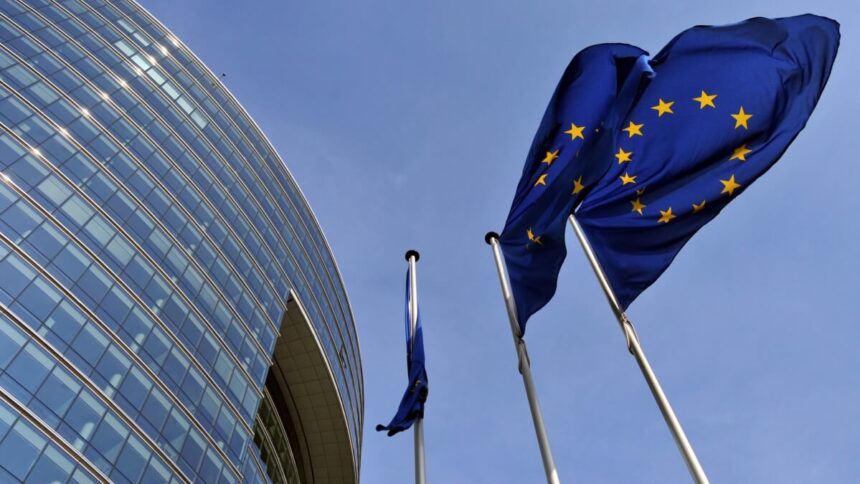
The European Union (EU) has announced its decision to remove Nigeria from the high-risk financial list, a move expected to ease trade, payments, and investment flows between the country and Europe.
It was gathered that the Union removed Nigeria from the high-risk financial list following the country’s successful reforms in its anti-money laundering and counter-terrorism financing (AML/CFT) frameworks.
The EU explained that these reforms brought Nigeria’s financial systems in line with international standards set by the FATF, eliminating the need for automatic enhanced due diligence on transactions involving Nigerian entities by EU financial institutions.
Previously, Nigeria’s inclusion on the EU’s list of high-risk third-country jurisdictions meant stricter scrutiny for cross-border payments, trade deals, and investments.
Businesses faced additional documentation, continuous monitoring, and senior management approvals, which often delayed transactions and increased costs.
The removal is expected to streamline these processes, reduce friction in financial flows, and make Nigeria a more attractive destination for European investors.
The European Commission decided the delisting in December 2025, with the decision set to take full effect on January 29, 2026.
This move aligns with Nigeria’s earlier removal from the Financial Action Task Force (FATF) “grey list” in October 2025.
Also, the EU removed South Africa, Burkina Faso, Mali, Mozambique, and Tanzania from the high-risk financial list.
Reacting to the development, the Minister of State for Finance, Dr Doris Uzoka-Anite, described Nigeria’s removal from the list as a major boost to investor confidence.
In a post on X on Thursday, she wrote, “Big win for Nigeria! Removed from the EU’s financial ‘high-risk’ list!Congrats to President @officialABAT on this achievement. As Minister of State for Finance, I’m proud of this boost to trade and investor confidence.”
Nigeria’s removal from the EU high-risk list has significant economic and financial implications. Being classified as a high-risk jurisdiction often leads to higher transaction costs, delayed payments, restricted correspondent banking relationships, and reduced foreign investment.
Recall also that Nigeria was removed from the FATF greylist in October last year after implementing a series of reforms aimed at strengthening its anti-money laundering and counter-terrorism financing (AML/CFT) regime.
The country was removed from the list alongside South Africa, Burkina Faso, and Mozambique after their governments stepped up efforts to combat money laundering and terrorist financing.
South Africa and Nigeria were added to the grey list in February 2023, while Mozambique was added in October 2022, and Burkina Faso was originally designated in February 2021.