
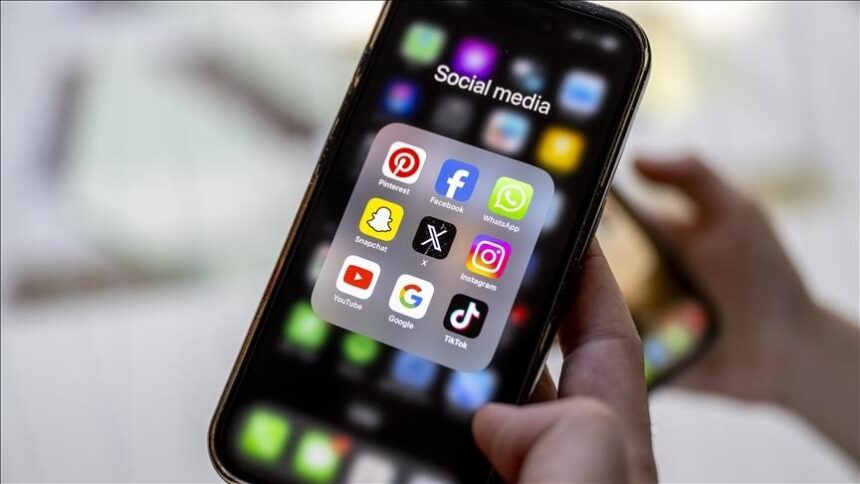
The United Kingdom (UK) government is considering a new policy that would place a social media ban on under-16s.
The UK government explained that it is considering the social media ban for under-16s as part of a broader push to safeguard children’s online wellbeing, following intense pressure from MPs, parents, and campaigners.
The Department for Science, Innovation and Technology (DSIT) launched a public consultation to explore options, including a potential outright ban on social media access for children under 16, inspired by Australia’s groundbreaking policy implemented in December 2025.
The consultation seeks input from parents, young people, educators, and civil society on measures such as stricter age verification, restrictions on addictive features like infinite scrolling and streaks, and whether the current digital age of consent (13) should be raised.
Technology Secretary Liz Kendall emphasized that the government is committed to building on the Online Safety Act 2023 while addressing growing evidence of social media’s impact on young minds.
Also, over 60 Labour MPs recently urged Prime Minister Keir Starmer to back the social media ban for under-16s, citing widespread anxiety, reduced focus in schools, and exposure to harmful content.
Bereaved parents, including Esther Ghey (mother of murdered teenager Brianna Ghey), have also voiced support, arguing that platforms are not suitable for children under 16.
“Some argue that vulnerable children need access to social media to find their community,” Brianna’s mother, Esther Ghey, wrote in a letter seen.
“As the parent of an extremely vulnerable and trans child, I strongly disagree.
“In Brianna’s case, social media limited her ability to engage in real-world social interactions. She had real friends, but she chose to live online instead.”
The former school standards minister Catherine McKinnell, who is one of the MPs who signed the open letter to Sir Keir Starmer, told BBC News parents currently “felt unprepared to deal with the pace at which social media has changed.”
Speaking to the press, she added that while children should still be able to be “connected in an online world”, she didn’t believe that meant “being bombarded with information sent to you by algorithms devised to create money by tech companies.”
According to the Department of Science, Innovation and Technology, the consultation will “seek views from parents, young people and civil society” to determine the effectiveness of a ban.
It would also look at whether more robust age checks could be implemented by social media firms, which could be forced to remove or limit features “which drive compulsive use of social media”.
And Ofsted will give tougher guidance to schools to reduce phone use – including telling staff not to use their devices for personal reasons in front of pupils.
The government will respond to the consultation in the summer.
Technology Secretary Liz Kendall said the laws in the Online Safety Act were “never meant to be the end point” and said she understood “parents still have serious concerns”.
“We are determined to ensure technology enriches children’s lives, not harms them – and to give every child the childhood they deserve,” she said.
Conservative leader Kemi Badenoch has already said her party would introduce a social media ban for under-16s if it were in power.
She said the consultation was “more dither and delay” from Labour.
“The prime minister is trying to copy an announcement that the Conservatives made a week ago, and still not getting it right,” she said.
Liberal Democrat education spokeswoman Munira Wilson said there was “no time to waste in protecting our children from social media giants” and “this consultation risks kicking the can down the road yet again”.
National Education Union (NEU) general secretary Daniel Kebede called the move a “welcome shift”.
“Every day, parents and teachers see how social media shapes children’s identities and attention long before they sit their GCSEs, pulling them into isolating, endless loops of content,” he said.