
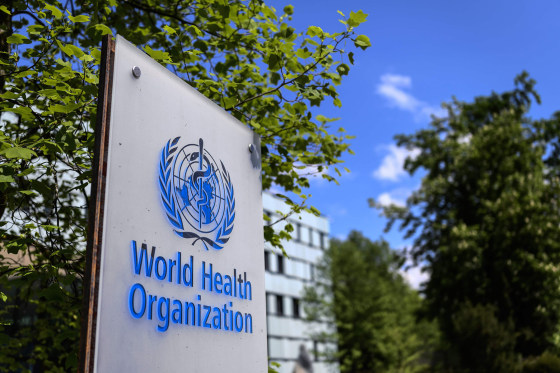
The United States (U.S) government has officially completed its withdrawal from the World Health Organization (WHO).
The move follows an executive order U.S President Donald Trump issued on the first day of his second term last January announcing that the U.S would complete its withdrawal from the WHO within a year.
In recent days the Trump administration has also withdrawn the U.S from dozens of other international organizations, including global climate talks, and established a Board of Peace chaired by Trump that critics say could undermine the United Nations.
The U.S Department of Health and Human Services said it decided due to the WHO’s alleged “mishandling” of the pandemic, an inability to reform, and political influence from member states.
This was contained in a joint statement by Secretary of State Rubio and Secretary of Health and Human Services Robert F. Kennedy Jr.
The statement reads: “Today, the United States withdrew from the World Health Organization (WHO), freeing itself from its constraints, as President Trump promised on his first day in office by signing E.O. 14155.
“This action responds to the WHO’s failures during the COVID-19 pandemic and seeks to rectify the harm from those failures inflicted on the American people. Promises made, promises kept. Like many international organizations, the WHO abandoned its core mission and acted repeatedly against the interests of the United States.
“Although the United States was a founding member and the WHO’s largest financial contributor, the organization pursued a politicized, bureaucratic agenda driven by nations hostile to American interests. In doing so, the WHO obstructed the timely and accurate sharing of critical information that could have saved American lives and then concealed those failures under the pretext of acting “in the interest of public health.”
“Even on our way out of the organization, the WHO tarnished and trashed everything that America has done for it. The WHO refuses to hand over the American flag that hung in front of it, arguing it has not approved our withdrawal and, in fact, claims that we owe it compensation.
“From our days as its primary founder, primary financial backer, and primary champion until now, our final day, the insults to America continue.
“Going forward, U.S. engagement with the WHO will be limited strictly to effectuate our withdrawal and to safeguard the health and safety of the American people. All U.S. funding for, and staffing of, WHO initiatives has ceased.
“The United States will continue to lead the world in public health, saving millions of lives and protecting Americans at home by preventing infectious disease threats from reaching our shores while advancing global health security through direct, bilateral, and results-driven partnerships.
“We will continue to work with countries and trusted health institutions to share best practices, strengthen preparedness, and protect our communities through a more focused, transparent, and effective model which delivers real outcomes rather than the bloated and inefficient bureaucracy of the WHO.”
However, a spokesperson for the WHO said members of its executive board would discuss how to react after the U.S completed withdrawal from the WHO at their meeting next month.
Director General Tedros Adhanom Ghebreyesus said last week that the withdrawal would make both the U.S. and the rest of the world less safe.
“It’s not really the right decision. I want to say it bluntly,” he told reporters.
Also, infectious disease experts warned that the exit from WHO is likely to leave dangerous blind spots in disease surveillance and preparedness — particularly when it comes to one of the most vexing and deadly illnesses the U.S. encounters every year: the flu.
The break-up comes ahead of an annual meeting the WHO convened to discuss which flu strains vaccine manufacturers should include in next season’s shots. The U.S. has long played a major role in the meeting.
Jesse Bump, a global public health expert at the Harvard T.H. Chan School of Public Health, called the administration’s action “an act of monumental stupidity.”
“The reason this matters, in the most immediate sense, is that WHO has a network of 127 laboratories all around the world, and those laboratories detect and sequence flu strains,” Bump said. “WHO is sort of like a library, and the U.S. has had a card to walk right in, get the information you want. We no longer have access. We don’t have that library card.”