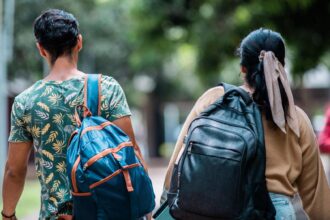

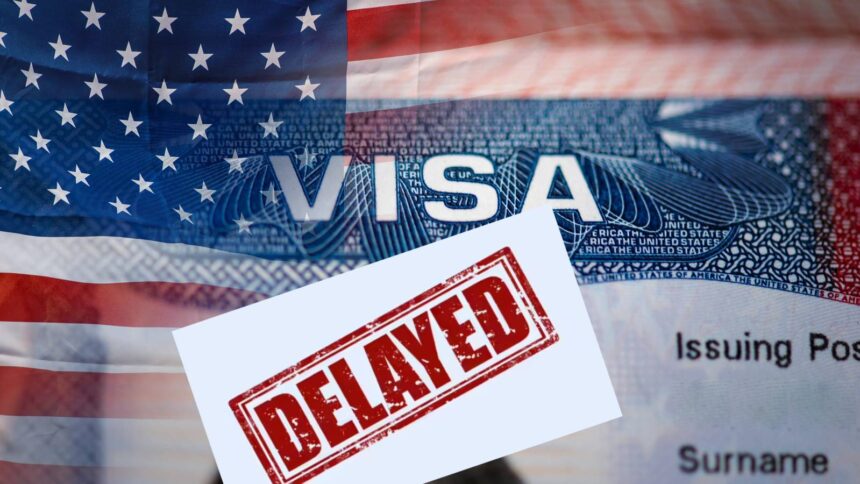
Thousands of Nigerian students who have been admitted into several United States (U.S) universities are facing a possible collapse of their academic dreams amid visa delays.
Following the expansion of Presidential Proclamation 10998 in late 2025, the U.S government under the administration of President Donald Trump moved Nigeria to a “restricted” list, effectively halting the issuance of new F, M, and J study visas for most applicants.
In May 2025, the U.S government halted the scheduling of all new F-1, M-1, and J-1 visa interviews worldwide.
The move was to accommodate new vetting protocols that include expanded screening of applicants’ social media histories.
Also, since June 18, 2025, students have been required to submit all social media handles used in the last five years and set those accounts to public visibility.
Pan-Atlantic Kompass gathered that many Nigerian students admitted across U.S schools have been struggling to meet school resumption deadlines since last year when most of Trump’s aggressive immigration policies took effect.
Students who have secured admissions, received their Form I-20 (the certificate of eligibility for non-immigrant student status in the U.S), completed their Student and Exchange Visitor Information System (SEVIS) requirements, and still find themselves stuck because they cannot get a timely visa appointment or final decision.
Experiences of Nigerian Students
A media executive, Akintunde Babatunde, who took to his LinkedIn account narrated the experience of a student who was admitted into a U.S university but faced uncertainty over a visa.
Babatunde narrated: “A few days ago, a mentee sent me a message that stayed with me longer than I expected.
“He had just received admission into a U.S. graduate programme. Fully funded. The kind of message that normally comes with excitement, relief, and celebration. But this time the tone was different. There was confusion in it.
“He asked a simple question: What do I do now?
The admission was real, and the full funding was confirmed. But the visa situation with many Africans restricted from getting a US visa meant he could not move forward with certainty. He did not know whether to wait, make alternative plans, or assume the opportunity had slipped away before it even began.
“We had a few discussions on next steps and I realised that many young Africans are in this exact position right now. Especially because he was not the first person and there are a few other people.”
Also, a student enrolled at one of the Ivy League universities in Ithaca, Abdul Oluwa, expressed frustration, after missing his school resumption date in August 2025.
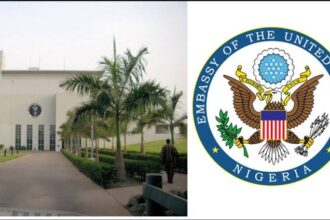
He said: “I was interviewed at the Lagos embassy on June 17 by a male American VO who promised that I would get my visa after two weeks. He told me they only needed to vet my social media accounts which I provided in my application. From then till today, which makes it exactly 45 days, there has been no communication from the embassy.
“I keep wondering why I was fated to experience this, because if he had worked on my case, I would have known that I had two years multiple entry visa before the changes on July 8. On July 8, the U.S began a reciprocal visa and started issuing a three-month single-entry visa. Yet, this officer is unmoved to approve our visas.
“Many students are already prepared for the semester which begins in August. I can’t prepare because I don’t know what’s going on anymore. Flight costs are getting more expensive as the semester approaches.”
Also, a student of the University of New Mexico, who only identified as Tobi, decried the delayed visa processing.
He stated that while students from other countries had their visas processed, Nigerians were still left waiting.
“I had my interview on July 1, 2025, at the US Embassy in Lagos. I wanted to book my flight the following day thinking the administrative processing would not go beyond two weeks. I was however advised to wait till approval before I book my flight.
“My friends in other countries (Ghana and Bangladesh) that I did my interview with have all got their visas approved and issued,” he added.
Another student, Olu Seyi, said they were missing out on other opportunities due to the prolonged wait for their visas.
He said, “Up till now, there has been no update from the embassy (the last visible update according to someone was on June 20th) and many people are losing other opportunities because their passports are being held up.
“I had my interview on June 13, 2025, at the US Embassy, Abuja. During the interview, I was informed that I would be placed on Administrative Processing for social media review and they would get back to me before my class start date. My school start date is August 11, meaning I am required to be in school at least some days before this.”
Why U.S Visa Delays Are Increasing in 2026
Pan-Atlantic Kompass reports that the delays experienced by many Nigerian students are not a result of individual errors on their applications but due to the broader shifts in how the U.S processes visas.
Below are some of the reasons for visa delays;
• Embassy Backlogs
The U.S embassies in countries with high numbers of study-abroad applicants are still dealing with cases from previous years. Even though operations have improved, the number of visa applications is growing faster than embassies can process them.
For instance, applicants in Nigeria experience a 2-3 months wait time for a U.S study visa, while Paris and Beijing offer waits of four days and 13 days, respectively.
• Record-high Demand for U.S Education
Although new international student enrollments fell by 17% in the 2025–2026 academic year, according to the Institute of International Education’s (IIE) Fall 2025 Snapshot survey, the overall demand for U.S education remains extremely high. It is because consulates are not only processing first-time student applicants, but also those of:
- Returning students.
- Students reapplying after previous refusals.
- Dependents applying for F-2 visas.
• Additional Security and Background Checks
Some students are placed under what the embassy calls Administrative Processing, often referred to as 221(g). This means the application needs extra background checks before a final decision can be made.
How Visa Delays Affect Students in Real Time
Visa delays are disrupting students at a time when they should be preparing to start classes. Even after completing every requirement.
Many students are unable to travel or start classes because their visa interview or final decision is still pending. This creates uncertainty around arrival dates, academic planning, and personal commitments, making it difficult to move confidently into the new academic year.
Some students get appointments only after the semester begins. Others face last-minute administrative checks. Some receive their visa too late to travel, even though their academic admission is still valid.
With the situation, many students have begun to defer their admissions. A deferral allows students to keep their admissions until the next available intake.
According to the Open Doors 2025 institutional survey:
- 72% of US institutions are offering deferrals for Spring 2026.
- 56% are providing deferrals to Fall 2026.
- Deferrals increased by 39% compared to the previous year.
- 37% of universities offer online or late-start options to support students facing delays.
- Deferrals are now a standard option, widely accepted and used by institutions across the U.S.
How to Navigate Visa Delays
With the high cases of visa delays affecting Nigerian students admitted across several U.S schools, it is important to know how to navigate the new realities.
Most universities now anticipate visa delays and have support systems ready. This means students are allowed to contact the university early to make inquiries about late arrival windows, deferral procedures, and documentation for expedited appointment requests.
The University of Wisconsin-Madison on its official website explained the process.
The University said: “There can sometimes be a delay in your F or J visa processing at the U.S. embassy or consulate. This is called administrative processing.
Unfortunately, there is typically nothing ISS or UW-Madison can do to assist during administrative processing. If your visa delay prevents you from entering the U.S. or arriving at UW-Madison before your I-20/DS-2019 start date or the start date of classes for a fall or spring semester, you must contact ISS immediately.
If you are not able to arrive by the start date of classes, you may need to take a leave of absence or request admission for a later semester and reapply for your F or J visa. You must notify ISS within the first 30 days of the semester. This is the deadline for ISS to report your U.S. address and full-time enrollment in SEVIS.
If you need to request admission for a later semester, you should be admitted and request a change to your I-20/DS-2019 start date within 60 days of the program start date on your initial I-20. If you are granted admission for another semester 60+ days after the program start date on your initial I-20, you must request a new initial attendance I-20/DS-2019 from your admissions office. In this case, you must pay the SEVIS I-901 fee on the new I-20/DS-2019, or request a SEVIS I-901 fee transfer.”