

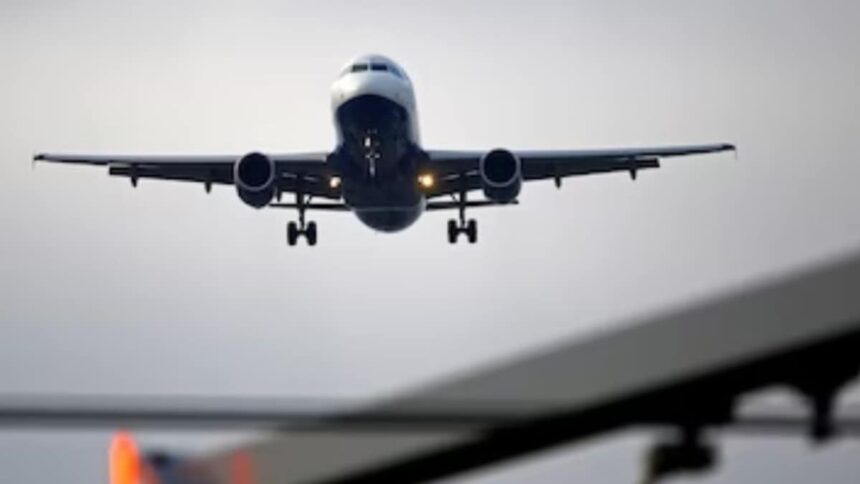
The escalating Middle East crisis has continued to bite hard on the global aviation industry, as international airlines operating in Nigeria have lost a staggering N7.5bn in just four days.
As several Middle Eastern countries shut their airspaces following missile exchanges involving the United States, Israel, and Iran, major international carriers operating out of Nigeria have been forced to ground their fleets.
This sudden halt in operations has left thousands of passengers stranded in Lagos and Abuja.
Pan-Atlantic Kompass reports that the financial hemorrhage, estimated at over N7,537,348,640, stemmed from the grounding of high-capacity aircraft that serve as the primary link between Nigeria and the Middle East. Carriers such as Emirates and Qatar Airways have been hit the hardest.
According to industry data, Emirates typically deploys its Boeing 777-300ER, which seats up to 360 passengers, on the Lagos-Dubai route, while Qatar Airways utilizes the Boeing 787-800.
With one-way tickets ranging from N1.3 million to over N2.4 million at current exchange rates, the cancellation of multiple rotations over 96 hours has wiped out billions in potential revenue.
Using the conservative seating figures of 354 passengers for Emirates and 210 for Qatar Airways, a minimum of 554 passengers were expected to depart Nigeria on a single rotation, with the cumulative average put at about 560 passengers.
Further checks on the airlines’ official websites showed that Qatar Airways sells one-way tickets within the range of N1.3m to N1.8m, while Emirates’ fares range between $1,380 and $2,395.
Using the lowest fare benchmarks of N1.3m for Qatar Airways and $1,380 for Emirates, and applying the official exchange rate of $1 to N1,379, an Emirates one-way ticket converts to N1,903,020.
At a seating capacity of 354 passengers, Emirates would have airlifted at least 1,416 passengers out of Nigeria between Saturday and Tuesday across multiple rotations. At N1,903,020 per passenger, this amounts to N2,694,674,320 for one-way trips and N5,389,348,640 for round trips.
Similarly, Qatar Airways, operating at 210 passengers per flight, was expected to transport 840 passengers within the same period. At N1.3m per passenger, the airline stood to generate N1,092,000,000 on one-way trips and N2,184,000,000 on round trips.
Cumulatively, both international airlines operating in Nigeria are projected to have lost N7.5bn within the period under review.
Beyond the airlines, the disruption also affects Nigeria’s economy and that of the carriers’ home countries through lost taxes and associated aviation revenues.
Pan-Atlantic Kompass also reports that the Israel-Iran war’s impact on the international airlines operating in Nigeria goes beyond mere scheduling inconveniences.
The closure of airspaces in Jordan, Kuwait, Syria, and Qatar has created a logistical nightmare.
This means airlines that choose to remain operational must take longer, costlier routes to avoid conflict zones, significantly increasing fuel consumption.
Already in Nigeria, the price of aviation fuel (Jet A1) has surged alongside global crude oil prices, which have climbed above $80 per barrel.
Similarly, aircraft belonging to major carriers have been held back at the Murtala Muhammed International Airport (MMIA), unable to return to their home hubs due to safety protocols.
Findings revealed that two major airlines flying into Doha, Qatar, and the United Arab Emirates were held back in Nigeria as hostilities escalated, and the airspace in parts of the region was shut.
Checks also revealed that Emirates and Qatar Airways have remained grounded at the Lagos airport due to the closure of the airspace in their home countries.
Pan-Atlantic Kompass also reports that when international aircraft are grounded, they become high-maintenance liabilities that strain airport infrastructure and airline finances.
Airports like Murtala Muhammed International Airport (MMIA) charge based on the Maximum All-Up Weight (MAUW) of the aircraft.
Checks on the official website of the Federal Airports Authority of Nigeria (FAAN) revealed that the agency $0.00114 per kg per hour for parking fee after the first three free hours.
A Boeing 777-300ER (approx. 350,000 kg) could accrue nearly $400 per hour in parking alone. Over four days, a single stranded aircraft can cost an airline over $38,000 (approx. N60 million) just for sitting on the tarmac.
Also, when wide-body aircraft are stranded, they take up premium real estate on the apron. This forces arriving flights from other regions (Europe or the U.S) to wait for parking space or use “remote stands,” which requires bussing passengers, a development that can slow down airport efficiency and frustrate travelers.