

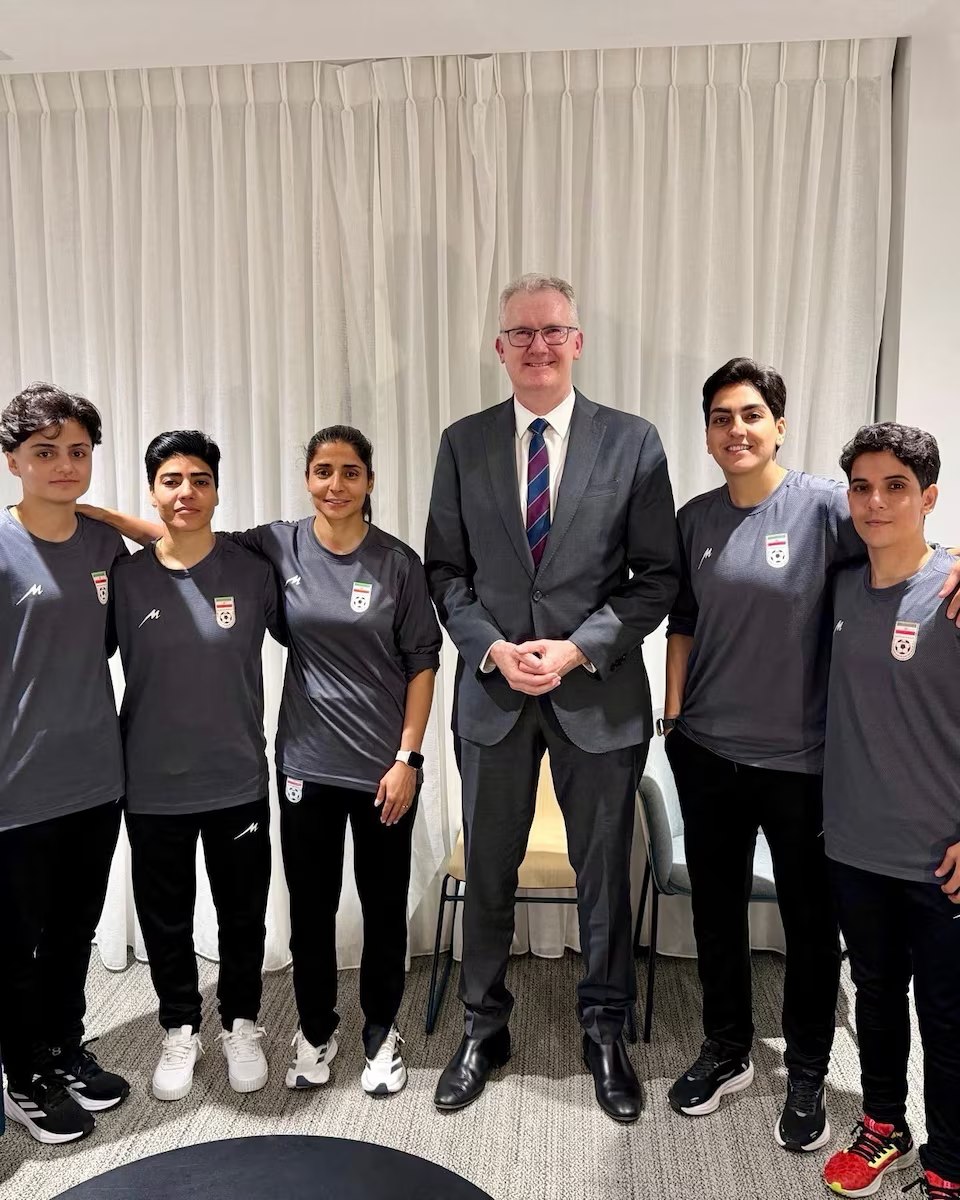
Five footballers of the Iranian women’s national football team have been successfully extracted from their hotel by Australian authorities.
It was gathered that the Australian police helped the five Iranian women footballers escape hotel grounds following a tense standoff with government “minders” during the 2026 AFC Women’s Asian Cup.
The rescue unfolded in the early hours of Monday morning at a luxury resort on the Gold Coast.
According to Home Affairs Minister Tony Burke, the players managed to slip away from their handlers under the cover of darkness.
Burke revealed that the Australian police help Iranian women footballers escape through hotel surveillance was a coordinated effort with the Queensland authorities.
The minister added that they ensured the athletes reached a “safe house” without being intercepted by Iranian officials.
The five players, including team captain Zahra Ghanbari, sought protection after the team were branded “wartime traitors” for refusing to sing their national anthem before an Asian Cup match.
The players granted asylum were Ghanbari, Zahra Sarbali Alishah, Mona Hamoudi and Atefeh Ramezanizadeh – all in their early 30s – as well as 21-year-old Fatemeh Pasandideh.
The five players were moved to a safe location by the Australian Federal Police on Monday evening, where they remain under their protection, Burke said.
Even before their defection, Australia had deployed its own officers to protect the women.
“There’s been a good police presence at different points and we just made sure that opportunity was there,” he said.
Once immigration officials completed the processing of the women’s humanitarian visas around 1:30 a.m. on Tuesday (1530 GMT Monday), celebrations broke out among those present.
“Once everything had been signed off last night, there were lots of photos, lots of celebrating, and then a spontaneous outcry of ‘Aussie, Aussie, Aussie, oi, oi, oi’,” Burke said.
“These women are great athletes, great people, and they’re going to feel very much at home in Australia.”
Four of the players are teammates at the Bam Khatoon club, which has won the Iranian women’s championship a record 11 times and is where Ghanbari also played until she moved to Persepolis for this season.
Captain Ghanbari was suspended for several days in 2024 after her hijab, the head covering that all Iranian women players must wear, slipped off during a goal celebration in an Asian Champions League fixture.
The 33-year-old striker, Iran’s record international goalscorer in the women’s game, was allowed to return to play only after she and Bam Khatoon issued apologies.
Ghanbari’s head scarf also slipped off her head several times during Iran’s final Asian Cup match against the Philippines on Sunday, when defeat ended their participation in the tournament.
Burke said the offer of asylum remained open for the other 21 members of the squad who were still at the Gold Coast hotel, though he said it was likely some would return home to Iran.
“These women have been weighing up an incredibly difficult decision,” he said.
This revelation comes after United States President Donald Trump revealed that Australia agreed to grant asylum to Iranian women footballers.