
Nigerians may yet again face another jump in the prices of Premium Motor Spirit (PMS) also known as petrol after a series of explosions rocked three tankers in the Strait of Hormuz.
On Wednesday, March 11, 2026, global energy markets were thrown into chaos after three commercial vessels, including oil tankers and bulk carriers, were set ablaze by projectiles in the Strait of Hormuz.
The attacks, which occurred on the 12th day of the escalating war involving the U.S., Israel, and Iran, have effectively paralyzed the world’s most critical oil chokepoint.
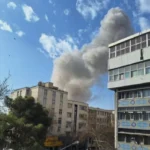
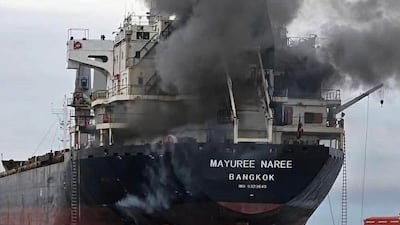
Images circulating from the scene show thick black smoke billowing from one of the damaged ships as rescue operations were launched for its crew. Officials confirmed that 23 crew members aboard the vessel are being rescued as emergency teams respond to the incident.
The attacks occurred in one of the world’s most critical maritime chokepoints, through which a significant portion of global oil supplies passes each day. Disruptions in the Strait of Hormuz can have immediate impacts on international energy markets and shipping routes.
Further information revealed that a Japan-flagged container ship called One Majesty was among the three tankers that exploded in the Strait of Hormuz.
It was gathered that the vessel had been left with a 10cm (4in) hole after an attack about 29 miles (47km) north of the UAE’s port city of Ras Al Khaimah and is now heading for a safe harbour.
The second vessel, a Marshall Islands-flagged bulk carrier called Star Gwyneth, has reported that its crew is all safe after a strike from an unknown source damaged the ship’s hull about 57 miles (92km) north of Dubai.
It was also revealed that Mayuree Naree was about 12 miles (19km) north of Oman when it was struck, causing a fire on board.
Similarly, UK Maritime Trade Operations revealed that it has received reports of 13 ships being attacked in the Middle East since the start of the conflict.
Pan-Atlantic Kompass also reports that around 3,000 ships a month would normally pass through the Strait of Hormuz in the Middle East.
It’s the world’s busiest oil shipping channel. About 20% of the world’s oil is carried through it.
It is deep enough for the biggest crude oil tankers and is used by the Middle East’s major oil and gas producers, Iran, Iraq, Kuwait, Qatar, Saudi Arabia, and the UAE.
Oil surged past $100 a barrel on Monday, before U.S President Donald Trump said the war was “very complete, pretty much”, leading to a fall in the oil price, which is now closer to $90 a barrel.
In Nigeria, the impact has been felt as the prices of fuel rose three times within one week.
On Monday, the Dangote Petroleum Refinery increased its ex-gantry price of petrol by N180 to N1,175 per litre.
However, after global oil prices dropped to $90 per barrel, the Dangote Petroleum Refinery reduced its ex-gantry petrol price to N1,075 per litre, marking the first price cut after three successive hikes.
As of press time, the pump price of fuel ranges between N1,200 and N1,300 across the country.
Meanwhile, after the attack on the three tankers in the Strait of Hormuz, Iran has declared that it will “not allow even a single litre of oil” to pass through the Strait of Hormuz to reach the US, Israel, and their partners, according to a spokesman for Tehran’s Khatam al-Anbiya military command headquarters.
“Any vessel or tanker bound to them will be a legitimate target.”
“Get ready for the oil barrel to be at $200 because the oil price depends on the regional security which you have destabilised,” the spokesman added.
This incident also comes shortly after the United States military reported a major operation in the area. According to the U.S Central Command (CENTCOM), American forces “eliminated 16 Iranian mine-laying ships” operating near the strait.
Earlier, Trump issued a warning to Tehran, saying Iran should “not put out any mines” in the vital shipping corridor.
In separate footage released by the United States Central Command, an Iranian vessel can be seen moments before being struck by a US missile during the ongoing maritime operations.
The maritime incident comes amid a widening conflict across the Middle East. Iranian forces have continued to launch strikes targeting multiple countries in the region, including Saudi Arabia, the United Arab Emirates, and Kuwait.