
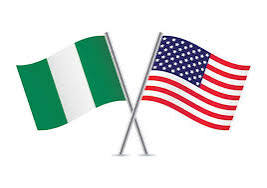
The United States (U.S) government has officially launched a forced labor probe into Nigeria and 59 other countries.
Pan-Atlantic Kompass gathered that the investigation, launched by the United States Trade Representative (USTR) is aimed at determining whether these nations have failed to effectively prohibit the importation of goods produced through exploitative labor practices.
According to official notices, the U.S forced labor probe is not only against Nigeria but also against other countries like China, India, Brazil, and the European Union.
The notice was signed by the General Counsel at the Office of the United States Trade Representative, Jennifer Thornton.
Thornton stated that the absence of strict import bans on forced-labor goods in these countries creates “unreasonable and discriminatory” conditions that disadvantage American workers and businesses.
The investigation, which was initiated on March 12, 2026, will examine whether Nigeria and other listed economies have failed to introduce or effectively enforce bans on the importation of goods made with forced labour.
The notice stated: “The Trade Representative is initiating investigations with respect to acts, policies, and practices of the economies listed in Annex A of this notice related to the failure to impose and effectively enforce a prohibition on the importation of goods produced with forced labour.”
“For almost 100 years, US law has prohibited the importation of goods mined, produced, or manufactured in whole or in part with forced labour,” the notice stated, adding that the policy reflects humanitarian, foreign policy, and national security concerns.
The probe focuses on whether foreign governments are taking sufficient steps to keep “abhorrent” labor practices out of the global market.
It was gathered that the investigation identified high-risk sectors such as agricultural commodities, textiles, minerals, fish products, and palm oil derivatives.
The U.S is also examining if these failures lead to lost American exports, reduced economic output, or downward pressure on domestic wages.
It explained that forced labour gives producers an artificial cost advantage, allowing them to sell goods at lower prices and distort competition in international markets.
Global estimates cited by the USTR show that forced labour remains widespread. The International Labour Organisation estimates that about 28 million people were trapped in forced labour worldwide as of 2021, representing roughly 3.5 out of every 1,000 people.
The notice added that the number of people subjected to forced labour increased by about 2.7 million between 2016 and 2021, largely driven by exploitation in the private sector. The ILO also estimated that profits generated from forced labour in the global private economy reached about $63.9bn annually in 2024.
According to the USTR, the practice contaminates entire global supply chains. Products identified as being linked to forced labour include agricultural commodities, textiles, minerals, fish products, and palm oil derivatives used in food and biofuel production.
Nigeria’s inclusion in the Section 301 forced labor probe comes at a delicate time for its trade relations.
While Nigeria prohibits forced labor domestically, the U.S alleges that the lack of rigorous import controls allows contaminated goods to seep into international commerce.
This scrutiny could potentially affect Nigeria’s eligibility for trade preference programs like the African Growth and Opportunity Act (AGOA) if the findings suggest a persistent pattern of neglect.
The USTR has invited public comments on the matter, with a deadline set for April 15, 2026. Following this, public hearings are scheduled to begin on April 28, 2026, at the U.S. International Trade Commission in Washington, D.C.
As part of the investigation process, the USTR will consult with the governments of the economies under review and gather evidence from stakeholders. The agency has also invited written submissions from businesses, labour groups, and other interested parties on whether the affected economies have implemented or are developing laws to prohibit the importation of forced-labour goods.
Following the hearings and consultations, the Trade Representative will determine whether the practices of the economies under investigation are actionable under Section 301 of the Trade Act.
If the findings confirm unfair trade practices, the United States could impose trade remedies, including additional duties or import restrictions on goods from the affected economies.