
A growing coalition of the United States’ partners has signaled a refusal to join President Donald Trump’s mission to free up the Strait of Hormuz.
It appears that the U.S government might be isolated in its attempt to secure the world’s most vital energy chokepoint.
Following a series of U.S.-Israeli strikes on Iranian targets since February 2026, the waterway, which carries approximately 20% of the world’s oil, has been effectively paralyzed by Iranian mines, drones, and missile threats.
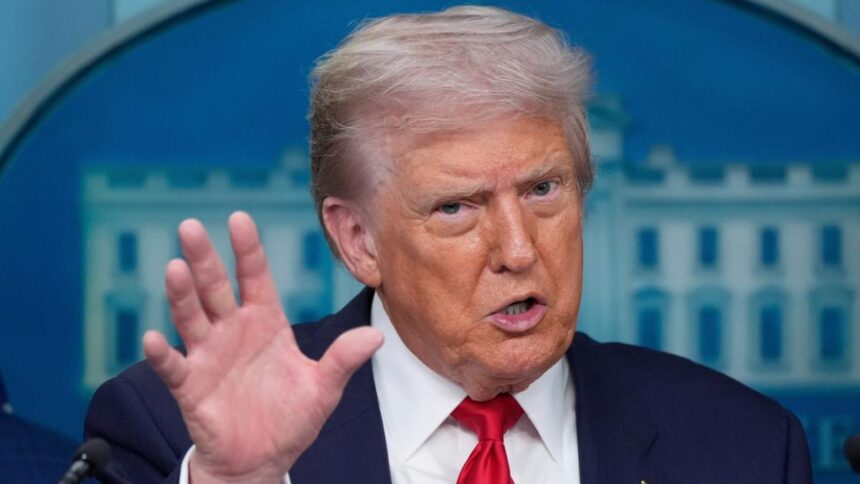
Trump, speaking from Air Force One over the weekend, demanded that allies in Europe and Asia deploy warships to “protect their own territory,” arguing that the U.S. is now energy independent and should not bear the burden of policing the Gulf alone.
Trump claimed that his administration has contacted seven countries for support without disclosing the names.
In a social media post on Truth Social, Trump said that he hopes China, France, Japan, South Korea, Britain, and others will participate in the operation.
He further warned that NATO faces a bad future if they do not help with the Strait of Hormuz. “We have a thing called NATO… We’ve been very sweet. We didn’t have to help them with Ukraine… But we helped them. Now we’ll see if they help us.”
However, the response from capitals across the globe has revealed that many countries are reluctant to join Trump’s mission to free up the Strait of Hormuz.
Despite the President’s warnings that failure to assist could have dire consequences for the future of NATO, key members including Germany, Italy, and Spain have ruled out military participation.
Germany’s Defence Minister Boris Pistorius explicitly stated, “This is not our war,” questioning what a handful of European frigates could achieve that the U.S. Navy cannot.
United Kingdom’s Prime Minister Keir Starmer has resisted the call for a full naval mission, opting instead to discuss “viable plans” for de-escalation while avoiding being drawn into a wider regional conflict.
Starmer told a news conference Monday he was “working with all of our allies, including our European partners,” to “restore the freedom of navigation” as quickly as possible.
“Ultimately, we have to reopen the Strait of Hormuz to ensure stability on the market,” he said. “That is not a simple task.”
But Starmer made it clear that he would not be drawn into “the wider war,” and that any Hormuz mission should be a broader effort — including the U.S. and Gulf states — rather than something for NATO.
“Spain will never accept any stopgap measures” to keep the strait open, Defense Minister Margarita Robles said, “because the objective must be for the war to end, and for it to end now.”
Europe needed to understand Trump’s “strategic goals. What will be the plan?” Estonian Foreign Minister Margus Tsahkna said.
Meanwhile, Japan and Australia said they had no plans to send ships to aid Trump’s request.
“We won’t be sending a ship to the Strait of Hormuz. We know how incredibly important that is, but that’s not something that we’ve been asked or that we’re contributing to,” said Australian Cabinet Minister Catherine King.
Australian Defence shadow minister, James Paterson have said that they have to assess if they have the naval capability for these kinds of missions.
Japan was more hesitant; instead of outright denial, it said that it wants to pursue options within the “legal framework”. “We have not made any decisions whatsoever about dispatching escort ships. We are continuing to examine what Japan can do independently and what can be done within the legal framework,” said Japanese Prime Minister Sanae Takaichi.
South Korea said it would continue consultation with Washington and will make a decision “after careful review.”