

After three weeks of delay, the Federal Government of Nigeria has officially activated a plan to evacuate citizens caught amidst the military actions in the Middle East.
Following coordinated military strikes involving the United States, Israel, and Iran that began in late February 2026, the Ministry of Foreign Affairs confirmed that Nigeria has begun administrative procedures and the release of emergency funds to facilitate the plan to evacuate citizens in the Middle East.
The spokesperson for the Ministry of Foreign Affairs, Kimiebi Ebienfa, made this disclosure while speaking with the press.
“The government is working out the necessary administrative details and the release of funds to commence evacuation,” he said.
The update follows earlier concerns over the safety of Nigerians stranded in countries including Iran, Israel, the United Arab Emirates, Kuwait, and Qatar, among others, after regional hostilities disrupted flights and travel plans.
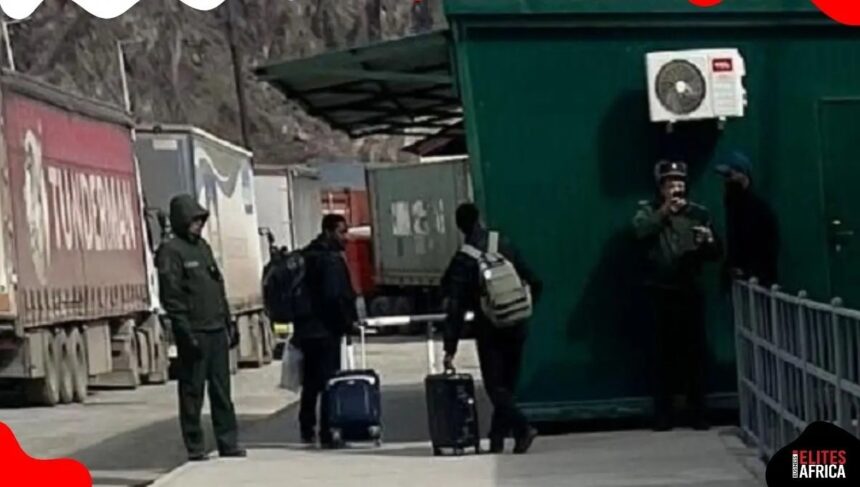
The ministry had explained that the evacuation process from Iran involves significant logistical challenges, including transporting stranded students from various universities to the Armenian border and meeting entry conditions set by Armenian authorities.
Giving updates on the latest development, Ebienfa stated: “Qatar Airways has started operating flights to Nigeria. There was a flight to Lagos today (Monday) from Doha.
“So, in a few days, the category of Nigerian stranded due to transit flights that were affected by the crisis will all be in Nigeria. This is in addition to flights to Cairo, Egypt, and Nairobi, Kenya that included some Nigerians.”
In a similar development, the Ambassador of the Islamic Republic of Iran to Nigeria, Gholamreza Raja, has announced that the Iranian government is willing to back Nigeria in its plan to evacuate citizens in the Middle East.
Raja who spoke with the press maintained that Iran remained committed to ensuring the safety and welfare of foreign nationals, including Nigerians, currently residing in the country.
According to him, the Embassy of Nigeria in Tehran has already taken necessary steps to assist all foreign citizens and has continued to maintain communication with members of the Nigerian community.
“Naturally, the Nigerian Embassy in Tehran has taken the necessary measures to assist and support its nationals, and it remains in contact with members of the Nigerian community to provide guidance where needed.
“At the same time, the Government of the Islamic Republic of Iran is ready to cooperate in facilitating the departure of Nigerian nationals if they wish to leave the country,” Raja stated.
The envoy explained that Iran’s land borders with neighbouring countries remained open and are currently being used by foreign nationals for travel.
“Currently, Iran’s land borders with neighbouring countries are open, and normal movement through these routes is ongoing. Many foreign nationals are already using these land routes for travel or departure.
“Reports indicate that the routes are safe and can be used without difficulty. Nigerian citizens can therefore make use of these routes if they choose to do so,” Raja said.
Pan-Atlantic Kompass reports this latest development comes after three weeks of silence from the Nigerian government over plans to evacuate stranded citizens in the Middle East.
Several countries had been sending military jets and chartered planes to the Middle East to evacuate their citizens while the Nigerian government had only issued advisory notes.
The development also comes after the Ministry of Defence of the UAE confirmed that at least one Nigerian was injured after Iran launched a drone attack on the country.
The ministry disclosed that its air defence systems engaged nine ballistic missiles and 33 unmanned aerial vehicles on March 14, describing the incidents as part of a broader wave of attacks since the beginning of what it termed Iranian aggression.
Authorities also confirmed that casualties from the attacks included residents and foreign workers from several countries, with six people reportedly killed and more than 140 others sustaining injuries of varying degrees.
The UAE Ministry of Defence had earlier stated that its forces remained on high alert and ready to respond to any threats to the country’s security.
Since the beginning of the hostilities, the ministry said its air defence systems had intercepted 294 ballistic missiles, 15 cruise missiles, and about 1,600 drones launched from Iran.
Officials said the casualties recorded involved individuals from multiple countries, including Egypt, Sudan, Ethiopia, the Philippines, Pakistan, India, Bangladesh, Sri Lanka, Azerbaijan, Yemen, Uganda, Eritrea, Lebanon, Afghanistan, Bahrain, Comoros, Iraq, Nepal, Nigeria, Oman, Jordan, Palestine, Ghana, Indonesia, and Sweden.