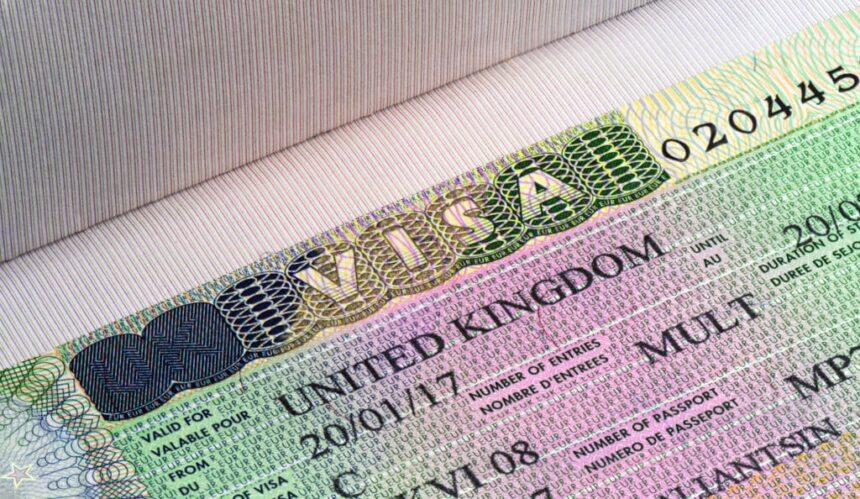
Nigeria, Jamaica alongside other African and Caribbean countries are at risk of visa restrictions from the United Kingdom (UK).
This proposed policy was made known by Reform UK, a political party in the UK ahead of the country’s general election.
Nigeria and other countries are facing the risk of UK visa restrictions for formally demanding reparations for slavery.
The Reform UK’s home affairs spokesperson, Zia Yusuf, defended the plan, saying: “A growing number of countries are demanding reparations from Britain. They ignore the fact that Britain made huge sacrifices to be the first major power to outlaw slavery and enforce this prohibition.
“Astonishingly, these countries have received 3.8 million visas and £6.6 billion in foreign aid over the past 20 years. Enough is enough.”
Several African and Caribbean countries, such as Nigeria and Jamaica, have made requests, raising the prospect that their nationals could be barred from entering the UK.
Other nations mentioned by Reform UK include Kenya, Haiti, Guyana, Barbados, and The Bahamas.
Pan-Atlantic Kompass reports that this development comes after the United Nations called on former colonial powers to pay reparations for slavery.
The resolution described the forced displacement of Africans as one of the “gravest crimes against humanity.”
This resolution, pushed by Ghana and supported by many African and Caribbean states, called for reparations to remedy historical wrongs, including apologies, restitution of cultural items, and dialogue on justice.
The vote was 123 in favour, with 3 (the United States, Israel, and Argentina) against and 52 abstentions, including the UK.
Reacting to the UN’s call then, Reform UK leader Nigel Farage said: “It is now the UN telling us we should go bankrupt, to apologise for what people did in 1775 or whatever it might have been. Forget it. The UN has no legitimacy over this country whatsoever.”
The party also vowed to cap foreign aid spending at £1 billion annually, a 90% reduction from current levels.
A Foreign Office spokesman said the UK acknowledges the horrors of the slave trade but reiterated that its position on reparations remains unchanged. Opposition leader Keir Starmer has similarly ruled out an apology or payments, saying: “I want to look at the future rather than spend a lot of time on the past.”
Centuries ago, millions of Africans were torn from their homes, forced onto ships, and sold into slavery across the Americas and Europe.
Families were destroyed, communities uprooted, and entire cultures disrupted. The scars of these atrocities have endured across generations, shaping nations and peoples long after slavery ended.
In modern times, countries directly affected by this history have begun formally asking for reparations. Ghana has taken a leading role, advocating at the United Nations for recognition of the transatlantic slave trade as one of the “gravest crimes against humanity.” The African nation calls for formal apologies, restitution of stolen cultural items, and reparatory justice to address the lasting impact of slavery.
The UN added that the following countries and groups asking for reparations are Ghana, Caribbean Community (CARICOM) Nations, African Union, Antigua and Barbuda, Guyana, and Haiti.
Recall also that the UK recently announced new visa restrictions under an activated “visa brake” mechanism.
This legislative tool allows the British government to suspend or severely limit visa processing for specific nationalities if their citizens are deemed to have a high rate of asylum claims or immigration rule violations.
Four nations—Afghanistan, Cameroon, Myanmar, and Sudan—have already seen immediate bans on student and skilled worker routes as of March 26, 2026.