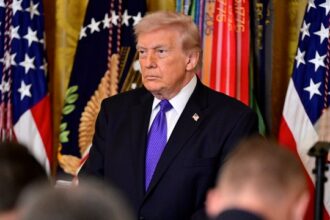

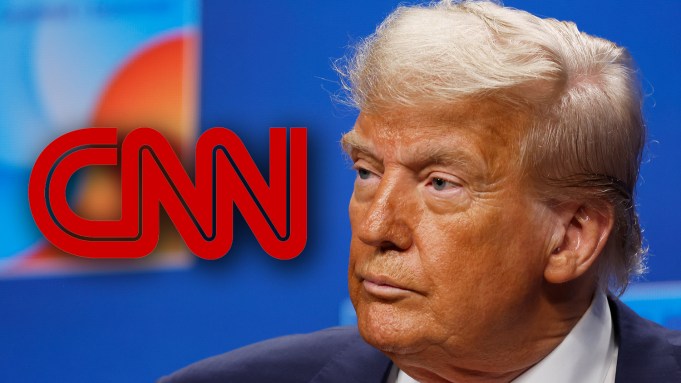
Nigeria has found itself at the center of a heated media war after the United States President Donald Trump slammed global news giant CNN over an alleged fake report.
Trump sparked the diplomatic firestorm on Wednesday by alleging that a fake news report from Nigeria served as the basis for CNN’s coverage of a sensitive U.S.-Iran ceasefire agreement.
The controversy erupted after the Trump administration announced a tentative two-week ceasefire with Tehran, aimed at reopening the strategic Strait of Hormuz.
Shortly after the announcement, CNN aired a report quoting the Iranian Supreme National Security Council, which claimed the deal was a “crushing defeat” for the United States.
Trump immediately took to Truth Social to debunk the report, labeling it a “fraud” and a “hoax.”
In a series of explosive posts, Trump slammed CNN, claiming the information originated from a “new, trouble-making site” based in Nigeria.
The U.S President asserted that a fake news report from Nigeria had been “blared out” by CNN as a legitimate headline to undermine his administration’s foreign policy success.
Trump stated: “The alleged statement put out by CNN World News is a fraud, as CNN well knows.
“The false statement was linked to a Fake News site (from Nigeria) and, of course, immediately picked up by CNN, and blared out as a ‘legitimate’ headline.”
Trump further insisted that the version circulated by CNN did not reflect Iran’s official position, stating, “The Official Statement by Iran was just released, and posted on TRUTH, below.”
In a follow-up post, the U.S president intensified his criticism, saying, “No one can believe that Fake News CNN put out a knowingly false and dangerous statement pretending it came from the upper levels of the Iranian Government. It didn’t! It was totally made up and posted, as a headline, for, perhaps, inflaming a very delicate situation.”
He further alleged that the report originated from “a new, trouble-making site from Nigeria,” adding that “CNN just got caught cheating — a very dangerous thing to do.”
He added: “Authorities are looking to determine whether or not a crime was committed on the issuance of the Fake CNN World Statement, or was it a sick rogue player.
“CNN is being ordered to immediately withdraw this statement with full apologies for their, as usual, terrible ‘reporting.’ Results of the investigation will be announced in the near future.”
The mention of Nigeria has drawn attention locally, although Trump did not provide evidence to substantiate his claim that the report originated from a Nigerian-based platform.
Backing the president, Chairman of the U.S Federal Communications Commission, Brendan Carr, criticised the network’s handling of the report.
Carr said: “Fake news is bad enough for the country, but pushing out a hoax headline in such a sensitive national security moment as this requires accountability.”
However, CNN firmly stood by its reporting and refused to retract the statement.
A spokesperson for the network said the report was based on information obtained directly from Iranian officials and corroborated by multiple Iranian state media outlets.
The spokesperson stated, “We received the statement from specific official Iranian spokespeople who are known to us,” adding that versions of the same statement were widely circulated in both English and Farsi across Iranian state platforms.
CNN maintained that its reporting reflected what was communicated by Iranian authorities at the time, stressing that the network relied on verified sources and standard journalistic processes in publishing the report.
The development comes amid global reactions to the ceasefire agreement between the United States and Iran, reached shortly before a deadline set by Trump for possible military action.
While both Washington and Tehran have claimed victory in the conflict, the truce has been broadly welcomed as a step toward de-escalation, especially given the strategic importance of the Strait of Hormuz to global energy supplies.