
The South African government has officially launched an aggressive workplace crackdown targeting businesses nationwide to curb what it described as the employment of undocumented foreign nationals.
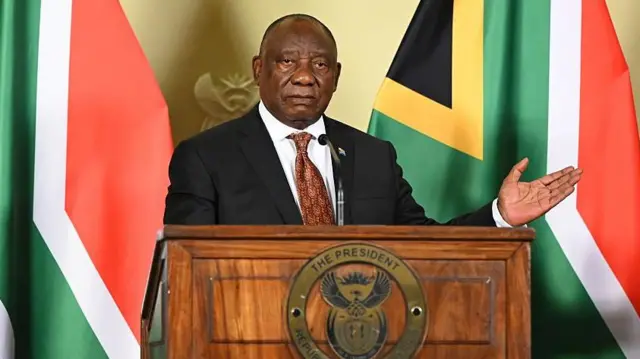
Following a televised address by South African President Cyril Ramaphosa, authorities have activated a coordinated workplace crackdown involving the Department of Home Affairs (DHA), the Department of Employment and Labour, and the South African Police Service (SAPS) to ensure absolute compliance with national labor laws.
Labor and law enforcement inspectors will now conduct unannounced, on-site raids in sectors historically dependent on migrant labor.
Employers hiring undocumented migrants could now face imprisonment instead of just fines, marking a tougher stance from the government.
A broader enforcement package includes the setup of special courts to expedite deportation cases and deploying 10,000 labour inspectors for workplace checks.
Plans also include a national biometric population register to improve identity verification and combat identity fraud linked to undocumented migration.
Authorities also plan to deploy up to 10,000 labour inspectors to identify businesses employing undocumented workers and ensure stricter compliance with labour laws. The move is expected to significantly increase workplace inspections across key sectors where migrant labour is commonly used.
The announcement comes amid growing political and social tensions over unemployment and public frustration linked to migration pressures.
Ramaphosa also addressed rising anti-foreigner sentiment, warning against xenophobia and discrimination while stressing that South Africa’s identity has been shaped by migration.
He said illegal migration routes are increasingly overlapping with organised crime networks, complicating enforcement efforts.
He said: “I must make it clear that only the authorised government officials may act against violations of the law, including violations of our immigration laws.
“No other person is allowed, for example, to confront someone in the street to demand proof of nationality.”
Some analysts have suggested the resurgence of anti-migrant sentiment in South Africa could be linked to local elections scheduled for November.
The president said the authorities would not allow groups to use legitimate concerns “to destabilise” the country by inciting violence.
“We will act against forces who are exploiting the concerns of our people about illegal immigration to further their own political, personal, or criminal agendas,” he said, cautioning against social media campaigns that spread misinformation and lies about foreign nationals.
He also told South Africans there was “no space for xenophobia, racism, sexism, Afrophobia or any other forms of intolerance in South Africa”.
“Our country – like many others throughout history – is a product of migration. It is the reason for our diversity and contributes to our vibrancy,” he said.
The measures arrive amidst a sharp rise in anti-immigrant protests, and xenophobic attacks.
Several anti-migrant mob groups have been conducting a door-to-door campaign to give migrants an ultimatum to leave the country.
The government’s mobilization is seen as a direct effort to regain control of the narrative as vigilante groups and localized anti-foreigner movements increasingly take policing into their own hands.