
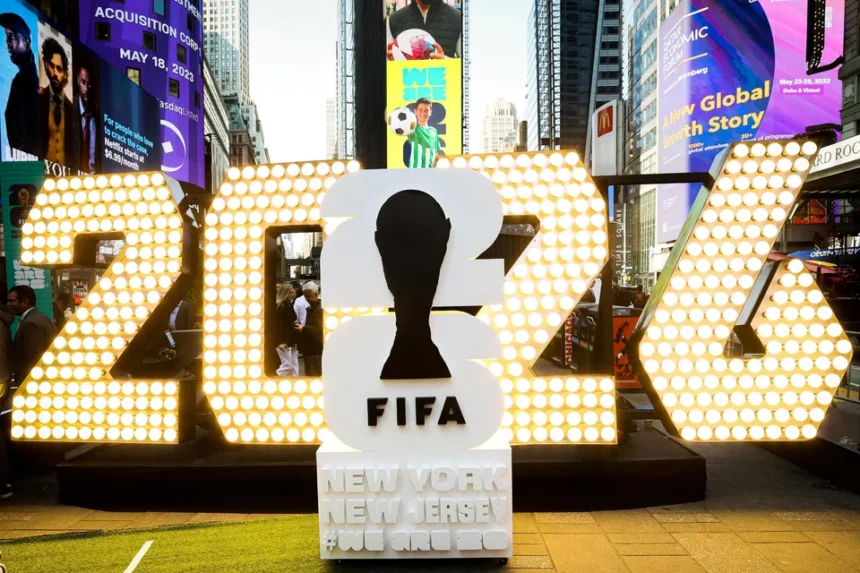
The United States (U.S) is set to receive a huge income boost in tourism spending as the country prepares for an influx of international visitors for the 2026 World Cup.
With the tournament expanding to 48 teams and 104 matches—78 of them on U.S soil—analysts project significant economic gains from tourism.
One standout forecast highlights how the event is set to deliver an $80bn income boost in tourism spending to the U.S government, injecting fresh revenue into local economies through hotels, restaurants, attractions, and transportation.
BMO Economics made the prediction that the 2026 World Cup is expected to generate about $80bn income boost for the U.S.
“Despite bookings lagging behind initial expectations in the United States, the sheer volume of matches being played in the U.S. nearly assures the bulk of the economic benefit still lands domestically,” said Scott Anderson, US Chief Economist, BMO.
The analysis shows the United States is expected to attract roughly four-fifths of total fan spending across North America, supported by:
- A higher concentration of host cities
- Larger stadium capacities
- Increased international and domestic travel demand
“Mega sporting events create a meaningful but temporary demand boost,” said Douglas Porter, Chief Economist, BMO. “In the U.S., we expect strong gains across tourism, accommodation, food services, and entertainment, particularly in host markets.”
Also, tourism experts at Oxford Economics predict that incremental hotel room revenue in the U.S. alone will approach $900 million during the June and July matches.
The FIFA World Cup tournament could provide a much-needed boost for the U.S. tourism sector, which saw foreign visits drop for the first time since 2020 last year.
Hotels, tourist traps, and many other parts of the U.S. economy are all hoping for a similar windfall.
The State Department estimates will bring in 5 million to 7 million visitors. BMO estimates that foreign fans will bring a much larger economic benefit than domestic fans, since U.S residents who travel to the matches are likely just shifting money they would have spent elsewhere in the country.
An influx of tourism dollars would be a welcome boost to the economy. The hospitality industry has felt the impacts of a decrease in foreign tourists to the U.S. The number of international visitors declined 5.5% in 2025, according to the International Trade Administration.
Venues in San Francisco, the site of six matches, have rolled out red carpets for international visitors, organizing watch parties, fan zones, and special events in anticipation of throngs of visitors.
Other kinds of businesses hope to get a boost from people looking for things to do between matches.
In the Kansas City area, businesses many miles from Arrowhead Stadium—where six matches are being played—hope to benefit from the arrival of tourists.
Lisa and Ron Lessman, the owners of the Truckhenge junk sculpture roadside attraction about an hour’s drive from the stadium, are hoping for a few sports fans making a detour to see their unique piece of Americana.
However, this potential 2026 World Cup tourism boost faces headwinds from U.S visa policies.
High refusal rates at American embassies worldwide, combined with travel bans affecting citizens from multiple participating nations, are creating barriers for fans eager to attend.
Reports indicate that visa rejection rates exceed 40% for applicants from several qualified countries—well above the global average—raising concerns that fewer visitors could diminish the projected economic impact.
Several countries, including Iran, have complained about visa rejections for team officials and fans.
Recall also that a Somalian Referee, Omar Artan was also denied entry into the U.S, due to travel restrictions imposed on his country.