
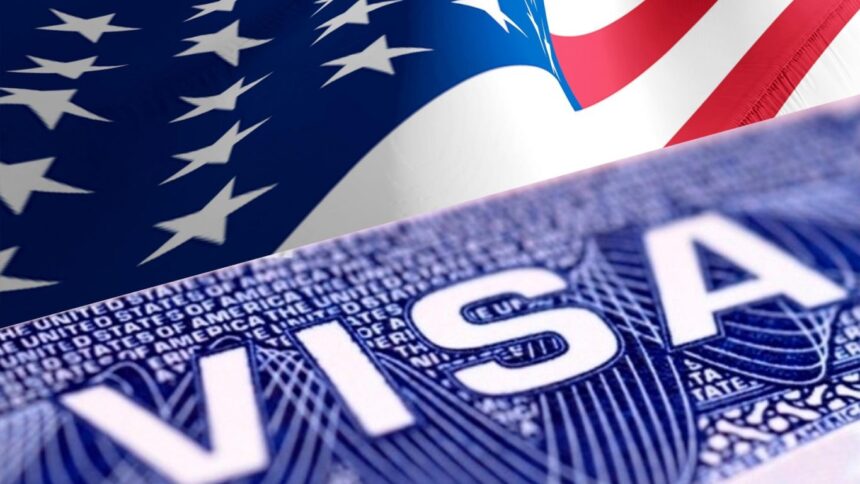
Despite a tightening squeeze on immigration rules and fluctuating approval ratings, a new analysis has revealed that Nigerians have spent over N50bn on U.S visa applications within two years.
A comprehensive evaluation of data from the U.S Department of State highlighted that Nigerians spent the N50bn on U.S visa applications between 2023 and 2024 alone, solidifying the country’s status as one of the most significant source markets for American travel on the African continent.
The financial analysis, originally published by Intelpoint using official immigration records, shows that about 201,200 non-immigrant visas were processed for Nigerian citizens over the two-year window.
With the standard application fee set at $185 per applicant for tourist, business, and student categories, the baseline capital outbound reached roughly $37.2 million.
When calculated at an average parallel and official market window exchange rate of N1,360 to the dollar, it becomes clear how Nigerians spent N50bn on U.S visa applications merely to secure an interview slot.
What makes this multi-billion Naira expenditure particularly striking is that these processing fees are entirely non-refundable. Whether an applicant walks away with a stamped passport or a standard denial letter, the money remains with the U.S government
Further breakdown revealed that visa issuances declined by about 23 per cent, falling to 87,300 in 2024 from 113,900 in 2023, a reduction of 26,600 visas.
Meanwhile, the comparable figures for 2025 could not be obtained at the time of reporting.
It was also gathered that business and tourism travel dominated approvals in 2024, with B1/B2 visas accounting for 83 per cent of total issuances, while student visas (F1) represented about seven per cent. Exchange visitor visas (J1) and other temporary categories made up the remainder.
Africa’s most populous nation remained a significant source market for the United States, accounting for about 0.8 per cent of global non-immigrant visa issuances in 2024, the data showed.
Reacting to significant financial spending, former President of the National Association of Nigerian Travel Agencies, Susan Akporiaye, said Nigerians’ travel behaviour is driven by more than economic conditions, noting a strong cultural inclination toward mobility.
“People would say it’s because of the economy, but I share a different view. Nigerians are generally migrants; they love travelling. We are like the Chinese of Africa,” Akporiaye said.
The executive argued that most Nigerians who travel abroad return home, and only a small proportion remain outside the country permanently. “There is so much noise about Nigerians staying back. The ones who travel and return are far more than those who stay back. It’s not up to 10 per cent that don’t return,” she stated.
This information also emerged after Pan-Atlantic Kompass reported that Nigerians lost over N2.9 billion (£1.6m) in non-refundable application fees in a single twelve-month period due to visa refusals by the UK government.
Concurrently, the British Home Office pocketed about £9,348,684 from these failed applications, shining a harsh spotlight on the rising financial toll of UK visa refusals for immigrants amid tightening frameworks.
These high figures are due to a UK policy that enforces a strict non-refundable policy on processing fees—regardless of whether a visa is granted or denied—the money vanished entirely from the local economy, leaving thousands of families, students, and professionals with both shattered plans and empty pockets.