
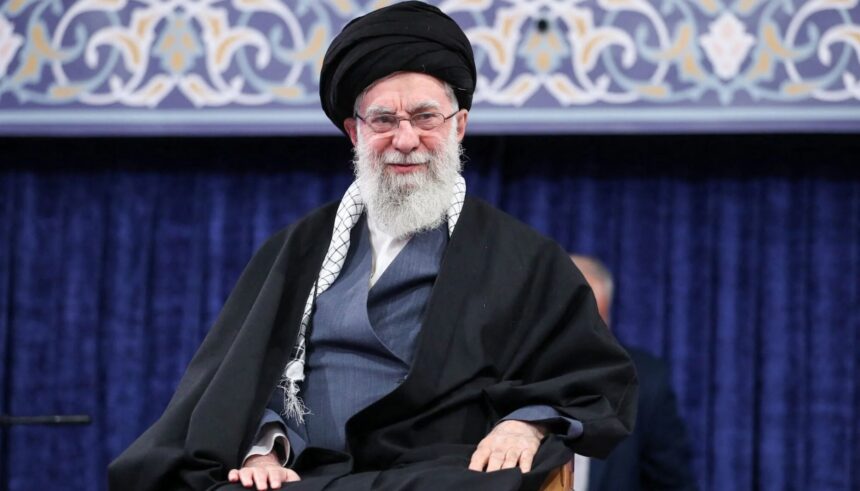
The burial date of Iran’s former supreme leader Ali Khamenei, who ruled the country for nearly 37 years before being killed by Israeli and U.S airstrikes on February 28, has officially been announced.
According to Iran’s state television, Khamenei will be buried on July 9, 2026.
The burial in his hometown, the northeastern city of Mashhad will follow three days of funeral ceremonies in the capital Tehran beginning July 4, and another in the holy city of Qom on July 7, it said.
July 4, the start date of the national funeral, will coincide with the United States’ Independence Day, which this year celebrates its 250th anniversary.
The final ceremonies were originally scheduled to take place immediately following his death on February 28, 2026, but intense military operations and widespread instability forced authorities to delay the events indefinitely.
The disclosure of the official burial date of Khamenei arrives alongside reports from international mediators indicating that a comprehensive ceasefire and an agreement to end the war may be finalized.
Iranian officials are preparing for an unprecedented logistical undertaking, expecting anywhere between 15 million and 20 million people to participate across the multi-day event.
The national farewell will move sequentially through major religious and political hubs:
July 4–6: Three days of public funeral processions will commence in the capital city of Tehran. Notably, the start of the national funeral coincides directly with the 250th anniversary of U.S. Independence Day.
July 7: The body will be transported to the holy city of Qom for regional ceremonies.
July 9: The procession culminates on the official Iran Supreme Leader burial date in Mashhad, Khamenei’s northeastern hometown.
Per Khamenei’s final wishes, his final resting place will be at the shrine of Imam Reza in Mashhad. Municipal authorities have noted that each major city’s procession will logistically last at least 24 hours to accommodate the massive influx of local mourners and international pilgrims arriving from neighboring regions like Pakistan, Afghanistan, and India.
Khamenei’s death ended a 37-year reign that defined Iran’s modern direct-confrontation foreign policy and consolidated absolute political control domestically.
Ali Khamenei’s son, Mojtaba, succeeded him as supreme leader in early March, the third since the establishment of the Islamic Republic in 1979.
Mojtaba Khamenei, wounded in the strikes that killed his father and numerous other officials, has not appeared in public since his appointment and communicates only through statements attributed to him.