
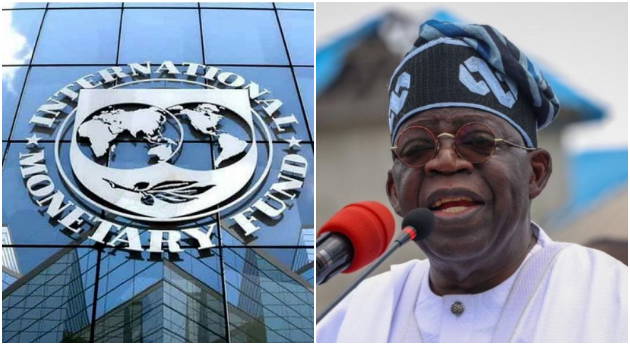
A wave of public outrage has begun to erupt across Nigeria after the International Monetary Fund (IMF) issued a recommendation advising the Nigerian government to impose fuel and telecom taxes on Nigerians.
In its 2026 Article IV Consultation Report, the Washington-based lender urged the administration to extend Value Added Tax (VAT) to petroleum products and introduce new excise duties on telecommunications services to cushion a widening fiscal deficit.
The IMF warned that despite recent tax reforms, additional fuel and telecom taxes would likely be required over the medium term to support critical social and infrastructure spending.
According to the Fund, Nigeria’s revenue mobilisation efforts must go beyond administrative improvements to address the country’s persistently low revenue-to-GDP ratio and rising expenditure pressures.
The IMF stated: “Further tax policy changes will likely be needed, such as increasing the VAT rate, extending VAT to fuel products, rationalising tax expenditures, particularly VAT exemptions on extractive industries and some customs duties, and introducing telecom excises, to complement administrative gains.”
It noted that while recently enacted tax reforms are expected to improve revenue collection over time, some measures could reduce revenue in the short term and may take time to yield significant gains.
The IMF stressed that sustained revenue mobilisation is essential if the government is to maintain higher capital expenditure and expand social intervention programmes aimed at cushioning the impact of economic reforms on vulnerable Nigerians.
“Over the medium term, continued revenue mobilisation is essential to creating fiscal space for development and social spending,” the Fund said, adding that there was limited scope to sustain projected increases in capital expenditure without additional revenue sources.
However, the Bretton Woods institution cautioned that the timing of any new tax measures should take into account worsening poverty and food insecurity in the country.
It emphasised that any tax increases should be accompanied by a fully funded and effective cash transfer programme to shield vulnerable households from additional economic hardship.
“The timing of reforms must consider the poverty and food insecurity situation and ensure that the cash transfer system is in place and funded,” the report stated.
However, citizens, consumer advocacy groups, and economic experts have sharply rejected these fuel and telecom taxes recommendations by the IMF, warning that taxing basic fuel and digital connectivity will push millions deeper into financial hardship.
Reacting to the recommendation, Professor of Economics at the University of Benin, Hassan Oaikhenan, cautioned the Federal Government against implementing the IMF’s proposals to increase VAT and introduce excise duties on telecommunications services.
He described the recommendations as “overkill” and warned that they could worsen the economic burden on Nigerians already struggling with rising living costs.
“Nigerians are already overstressed,” he said. “The government is already generating substantial revenues, and adding more taxes through higher VAT and excise duties on telecommunications would be an overkill.”
The economist noted that recent increases in electricity tariffs and telecommunications charges had placed additional pressure on household incomes, warning that further taxes could deepen economic hardship.
According to him, imposing new tax burdens at a time when many citizens are grappling with inflation and declining purchasing power would amount to “tightening the noose further”.
He urged the government not to give serious consideration to the IMF’s recommendation, insisting that the proposal was ill-advised under current economic conditions.
Oaikhenan also questioned the rationale for adopting policies that could further reduce the disposable income of workers and households.
“As far as I am concerned, it is ill-advised,” he said.
On his part, the Chief Executive Officer of CFG Advisory, Tilewa Adebajo, said this was not the appropriate time for the government to consider increasing taxes or introducing new ones, particularly as implementation of the new tax law only commenced this year.
Adebajo, who is also an economist, argued that the IMF’s suggestion that the government may need to raise VAT contradicts its acknowledgement of the progress being made through the administration’s tax reforms.
He noted that the reforms, which began implementation in January, are only beginning to gain traction and produce results. Consequently, he said, introducing additional taxes or increasing existing ones at this stage would be premature.
According to him, imposing higher taxes on an economy still struggling to achieve robust growth, while businesses contend with the effects of global economic uncertainty, could undermine the gains already achieved through ongoing reforms.
Similarly, the Head of Financial Institutions Ratings at Agusto & Co, Ayokunle Olubunmi, said the present economic climate does not support the introduction of new taxes or increases in existing ones, given the hardship facing both households and businesses.
“While I appreciate the IMF’s perspective, this may not be the best time to introduce such taxes,” he said.
“Nigerians are still grappling with the impact of ongoing economic reforms, including subsidy removal, the foreign exchange market reset, and the implementation of the new tax law.
“The President himself acknowledged these challenges in his Democracy Day address. Moreover, 2027 is an election year.”
Another economist, Dr Justin Amase, says the International Monetary Fund’s (IMF) recommendation that Nigeria consider increasing Value Added Tax (VAT) and introducing excise duties on telecommunications services, is inappropriate under current economic conditions.
Amase said that although Nigeria’s tax-to-GDP ratio remains among the lowest in Africa, raising taxes at a time of high inflation, weak household incomes, and challenging business conditions would place additional pressure on citizens and businesses.