
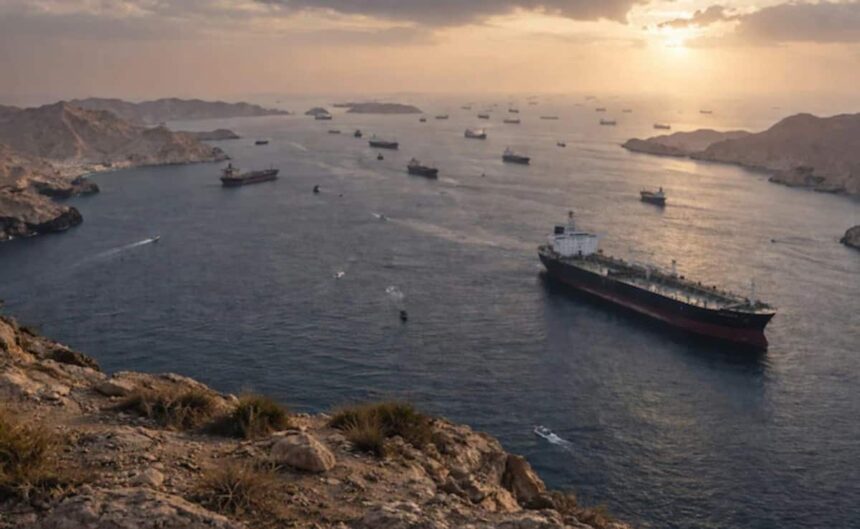
The central military command of Iran has announced move to close Strait of Hormuz again on Saturday, June 20, 2026.
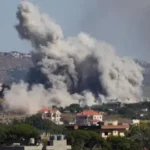
Iran said the move to close Strait of Hormuz is because Israeli military continued launching strikes in southern Lebanon, characterizing the actions as a direct breach of a recently brokered interim agreement with the United States.
Pan-Atlantic Kompass reports that the closure comes just days after Iranian President Masoud Pezeshkian and U.S President Donald Trump signed a highly anticipated Memorandum of Understanding (MoU) aimed at bringing an end to the multi-front Middle East war.
Under the preliminary terms of the MoU, Iran had agreed to gradually reopen the crucial shipping lane in exchange for the U.S lifting its naval blockade on Iranian ports.
However, the Khatam-al Anbiya Central Headquarters, Iran’s top joint military command, stated on state television that the blockade’s reinstatement is a response to “the enemy’s breach of promise”:
“In view of the United States’ bad faith and its clear breach of its commitments by failing to implement the first article of the memorandum ending the war, and in response to the continuous and ongoing violation of the ceasefire by the Zionist regime in southern Lebanon… It hereby announces that the Strait of Hormuz will be closed to the passage of vessels,” Iran’s top joint military command, Khatam al-Anbiya Central Headquarters, said in a statement that was reported by state broadcaster IRIB.
Before the war, vessels transported about one-fifth of global oil supplies through the crucial waterway. But after US-Israeli strikes on Iran in February, Tehran effectively closed the strait and global oil prices spiked.
Prices started to drop earlier this week, after the U.S and Iran signed a memorandum of understanding (MOU) to end hostilities and reopen the strait.
However, efforts to move forward with the deal have been scuppered by Israel’s ongoing campaign in Lebanon.
The 14-point MOU stipulates an “immediate and permanent termination of military operations on all fronts, including in Lebanon,” according to a readout issued by a senior U.S administration official.