

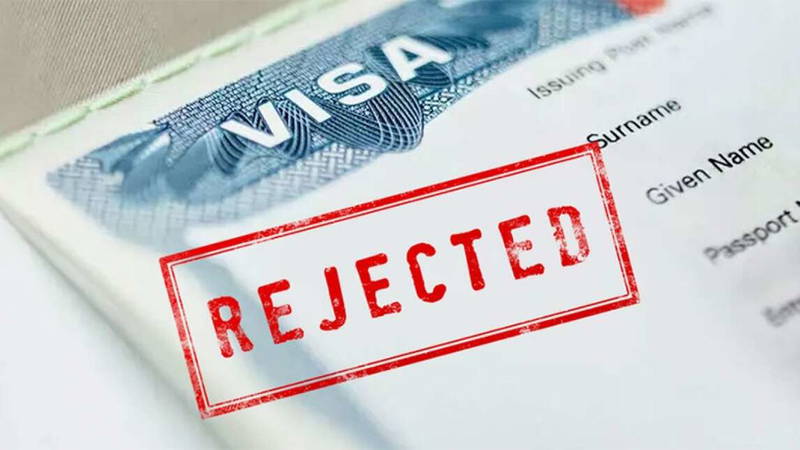
A revelation from the United Kingdom (UK) Home Office has revealed that at least 1,344,595 Nigerians were denied visas in 21 years; between 2005 and the first quarter of 2026.
This massive surge in rejections places Nigeria second globally for total UK visa refusals, behind only India.
Within Africa, Nigerians denied UK visas alone accounted for 44.4% of all UK visa rejections throughout this period of 21 years.
Over the 21 years, the UK also granted 2,723,558 visas to Nigerians, making it the third-highest total issued to any nationality in the world, behind only India and China.
The data showed that Nigeria was the largest single recipient of UK entry clearance visas in Africa, ahead of South Africa (1,638,538) and Egypt (695,606).
Pan-Atlantic Kompass reports that this dataset covers all decisions across visitor, study, work, family, and other visa routes.
For Nigeria, the cumulative refusal rate over the 21 years stood at 33.1 per cent, more than double the UK’s global average of 14.8 per cent.
Of the approximately 4.09 million Nigerian applications submitted, 4,068,153 received issued or refused decisions.
Nigeria’s 1.34 million refusals accounted for 15.2 per cent of all 8,829,638 UK visa refusals worldwide.
Over the 21 years, about one in every seven rejected UK visas went to a Nigerian applicant, even as Nigerians submitted just 6.8 per cent of all global applications.
The data revealed that the overwhelming majority of heartbreaks happened in the tourism and short-stay categories.
- Visitor Visas: Accounted for 1,127,088 refusals—a staggering 83.8% of Nigeria’s total denials. The rejection rate specifically for visitors stood at 37.1% over the two-decade span.
- Study Visas: Saw 130,712 rejections (a 20.5% refusal rate).
- Work Visas: Logged 41,410 rejections.
- Family Visas: Saw 12,217 applications declined.
Historically, the mid-2000s were the most difficult time for applicants. In 2006, the UK denied nearly half of all Nigerian applications (49.6%), shooting down 117,968 requests. Fortunately, approval numbers have stabilized significantly in recent years. By 2023, following a post-pandemic travel boom, the refusal rate dropped to 21% as the UK granted a historic record of 281,658 visas to Nigerians in a single year.
As stated earlier, Nigeria topped the list of nationalities with the most rejected UK visas in 21 years.
Of the 3,027,198 total UK visa refusals for all African nationalities over the period, Nigeria’s 1,344,595 constituted 44.4 per cent.
Ghana ranked second among African countries with 374,108 refusals at a 40.5 per cent rate, followed by Algeria (191,903 refusals at 41.7 per cent rate), Egypt (134,055 at 16.2 per cent rate), Zimbabwe (102,246 at 26 per cent rate), Morocco (93,722 at 22.2 per cent rate), Kenya (75,973 at 18.8 per cent rate), Uganda (64,759 at 34.9 per cent rate), South Africa (61,521 at 3.6 per cent rate), and Sudan (59,069 at 31 per cent rate).
Across all nationalities, the UK processed 60,063,475 visa applications between 2005 and Q1 2026, issuing 50,873,344 and refusing 8,829,638.
African applicants submitted 11,433,508 of those visa requests, making up nine per cent of the global total, yet received 3,027,198 refusals, representing 34.3 per cent of all UK rejections worldwide.
African nations accounted for nearly double the share of applications, yet generated only about half the volume of refusals.
Why Do Nigerian Applications Fail Most Often?
According to UK immigration experts and legal analysts, the UK Visas and Immigration (UKVI) department relies on rigid frameworks under Part 9 of the UK Immigration Rules. The most common reasons for refusals include:
Irregular Fund Transfers: Bulk “money drops” or large, unexplainable deposits into a bank account right before applying often look like a temporary loan meant to deceive immigration officials.
Weak Economic Ties: Failing to prove strong ties to Nigeria (such as stable employment, property ownership, or close family ties) leads case officers to believe the applicant will not return home.
Disorganized Documentation: Incomplete application forms, missing certificates, or unverified documents result in automatic rejections, as the UKVI rarely requests missing data after submission.
The Deception Trap: Omitting minor past details, like a driving violation or a previous visa refusal from another country, is often flagged as deliberate deception, triggering a harsh 10-year ban from entering the UK.