
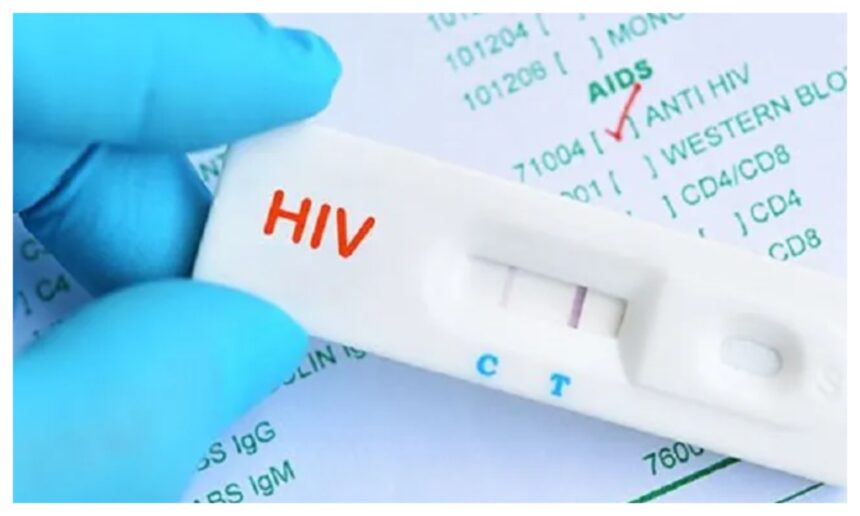
A new report from the Federal Ministry of Health and Social Welfare has revealed that Nigeria recorded a staggering 102,025 new HIV infections across its 36 states and the Federal Capital Territory (FCT) in 2025.
The data, published in the State of the Health of the Nation report, highlighted the persistence of the virus as a major public health crisis despite decades of domestic and international prevention initiatives.
While access to life-saving antiretroviral therapy (ART) has expanded immensely, health officials warn that transmission rates remain critically high—particularly among young adults, adolescent girls, and vulnerable key populations.
According to the official data breakdown, the HIV infections recorded in Nigeria remains highly concentrated geographically, with a handful of high-density states driving the majority of new cases in 2025.
Lagos State recorded the highest burden by a wide margin, accounting for 10,430 new cases. Rivers State followed with 6,287 new cases, while Kano State rounded out the top three with 6,106 recorded transmissions.
Akwa Ibom reported 5,413 new infections, Taraba had 4,854, Benue recorded 4,804, and Anambra accounted for 4,468 cases. Kaduna registered 3,659 new infections, while Adamawa and the Federal Capital Territory recorded 2,989 and 2,764 cases, respectively, completing the list of the 10 states with the highest number of new HIV infections during the year.
Other states recording more than 2,000 new infections included Sokoto (2,592), Cross River (2,595), Abia (2,546), Imo (2,537), Delta (2,469), Borno (2,311), Ogun (2,107), Plateau (2,084), Niger (2,020) and Ebonyi (2,015).
By contrast, the lowest figures were recorded in Ekiti State (462 cases), Bayelsa State (982 cases), Gombe State (1,083 cases), Osun (1,093), Kwara (1,371), Enugu (1,429), Yobe (1,483), Katsina (1,541) and Kebbi (1,572).
The figures underscore that HIV remains a significant public health challenge in Nigeria despite years of progress in expanding access to treatment and reducing AIDS-related deaths.
Nigeria is home to one of the largest HIV treatment programmes in the world, with millions of people living with the virus receiving life-saving antiretroviral therapy through government-supported facilities and donor-funded interventions.
However, public health experts have consistently warned that reducing new infections remains one of the country’s greatest challenges, particularly among young people, adolescent girls and young women, infants exposed to HIV, and key populations.
Data from the National Agency for the Control of AIDS (NACA) and UNAIDS highlight an ongoing gender and demographic imbalance:
Young Women & Girls: Gender inequalities, economic vulnerabilities, and gaps in comprehensive sexual health education leave young women (ages 15–24) significantly more exposed to contracting the virus than young men.
Key Populations: High-risk groups and their sexual partners account for a substantial percentage of transmissions in the West and Central African region, frequently hindered by social stigma from accessing routine testing.
Mother-to-Child Transmission: Halting pediatric infections remains a top priority, with health officials advocating for universal testing during antenatal care to protect newborns.