
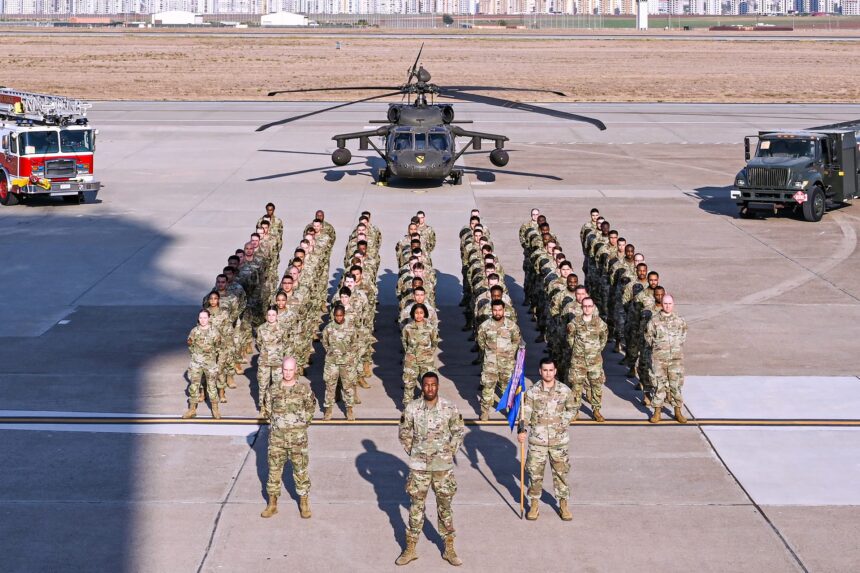
The United States (U.S) government has pulled back the majority of its military troops deployed to Nigeria.
The decision comes on the heels of a massive, highly coordinated joint counterterrorism surge in the Lake Chad Basin and Northeastern Nigeria.
For months, speculation grew around whether U.S was planning a long-term, direct military footprint in Nigeria.
However, U.S Africa Command (AFRICOM) has clarified that the troops pulled back from Nigeria are not in retreat, but rather in a “mission accomplished” transition toward a new phase of warfare.
According to AFRICOM officials, the primary reason for the withdrawal is because the specific joint operation that the troops were deployed for has concluded successfully.
The U.S. military footprint—which included special forces, advanced equipment, and kinetic support—was spun up to disrupt entrenched terror networks.
Dagvin Anderson, Commander of U.S. Africa Command (AFRICOM), announced the development at a press briefing in Luanda, Angola, following the conclusion of the 2026 African Chiefs of Defence Conference.
He said the U.S, would however, retain its intelligence partnership with Nigeria.
Speaking on security challenges in Africa and the U.S approach to supporting partners without external interference, the AFRICOM commander cited the operation that killed Al-Minuki as an example.
“One quick example of not having external interference is I think the partnership that we’ve shown recently with Nigeria, where Nigeria’s a very capable and large country – it’s got a strong economy; it’s got a large, educated population; it’s got a very capable military,” Anderson said.
“But there are things that we have learned in the counterterrorist fight over several years that we were able to assist and integrate with them to help them with their intelligence and help with the intelligence sharing that eventually led to a cooperative effort to where we were able to bring some unique capabilities that the US brings and be able to prosecute together the number two leader within the ISIS or Daesh organisation who is responsible for much of the – their global operations, their global media, and their recruiting.
“And so that operation in the Lake Chad Basin of Nigeria not only helped the countries in that immediate region; it also helps countries globally as that disrupts the ISIS network.
“And so, we have withdrawn much of our forces that were just there for that operation but are continuing the partnership that Nigeria has asked for to help continue with the intelligence sharing and the understanding that’s necessary to be able to prosecute these difficult tasks.”
Anderson said the operation significantly degraded ISIS’ leadership in Nigeria and globally.
He added that Nigeria has been “very active” since the May operation, working to eliminate terrorists’ self-sufficiency.