
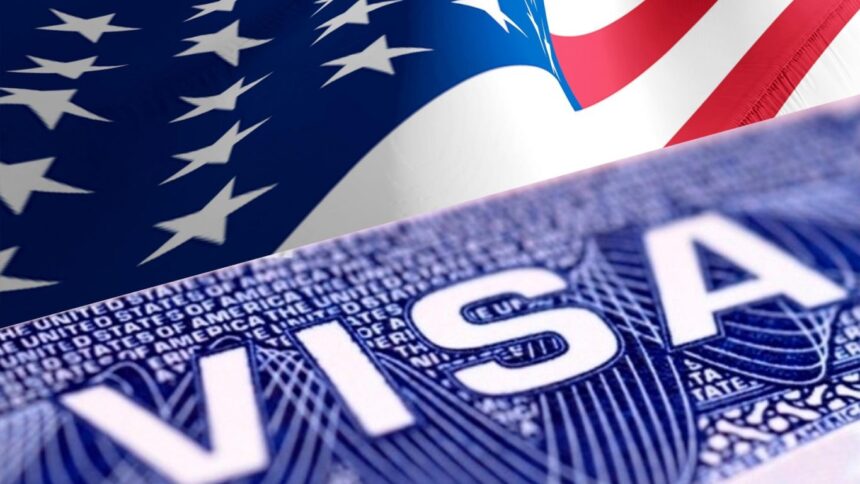
The United States government has officially imposed a $15,000 visa bond requirement on Nigerians and citizens of 37 other nations.
Under the new policy, which began rolling out in late 2025 and expanded significantly in January 2026, applicants for B1/B2 business and tourism visas may be required to pay a refundable deposit of up to $15,000 to secure their entry into the country.
This was made known in information published on the U.S Department of State’s travel.state.gov website, which noted that payment of a bond does not guarantee visa issuance and that any fee paid without the express direction of a consular officer will not be refunded.
The U.S Department of State announced that the $15,000 visa bond requirement for Nigerians will take effect on January 21, 2026.
The U.S Department of State explained that nationals from the affected countries who are otherwise eligible for a B1/B2 visa will be required to post a bond of $5,000, $10,000, or $15,000, with the exact amount determined during the visa interview.
According to the directive: “Any citizen or national travelling on a passport issued by one of these countries, who is otherwise found eligible for a B1/B2 visa, must post a bond of $5,000, $10,000, or $15,000.”
Applicants will also be required to submit the Department of Homeland Security’s Form I-352 and agree to the bond terms through the US Treasury’s Pay.gov platform.
The requirement applies regardless of where the visa application is submitted.
Visa holders who post bonds will also be restricted to entering the United States through designated airports, including John F. Kennedy International Airport (New York), Boston Logan International Airport, and Washington Dulles International Airport (Virginia).
The statement added: “The bond will only be refunded if one of the following conditions is met:
The visa holder departs the United States on or before the expiration of their authorised stay
The applicant does not travel before the visa expires
The traveller applies for admission at a US port of entry and is denied
Failure to meet these conditions could result in forfeiture of the bond.”
Nigeria joins several other African and non-African countries on the list, including Algeria, Angola, Benin, Côte d’Ivoire, Senegal, Uganda, Tanzania, Zimbabwe, Bangladesh, Nepal, Venezuela, and others, with implementation dates varying between August 2025 and January 2026.
Pan-Atlantic Kompass reports that the introduction of the $15,000 visa bond requirement on Nigerian nationals follows the partial travel restrictions imposed on Nigeria on December 16.
The U.S government cited security concerns, including the activities of terrorist groups such as Boko Haram and the Islamic State, as the reason for the decision to add Nigeria to the partial travel ban list.
The U.S government also referenced visa overstay data, citing an overstay rate of 5.56% for B1/B2 visas and 11.90% for F, M, and J visas as justification for Nigeria’s inclusion.
As a result, the earlier travel suspension affected both immigrant visas and several non-immigrant categories, including B-1, B-2, B-1/B-2, F, M, and J visas.