
The United States (U.S) is bracing for a potential 2026 government shutdown after the Senate failed to advance a critical six-bill funding package on Thursday.
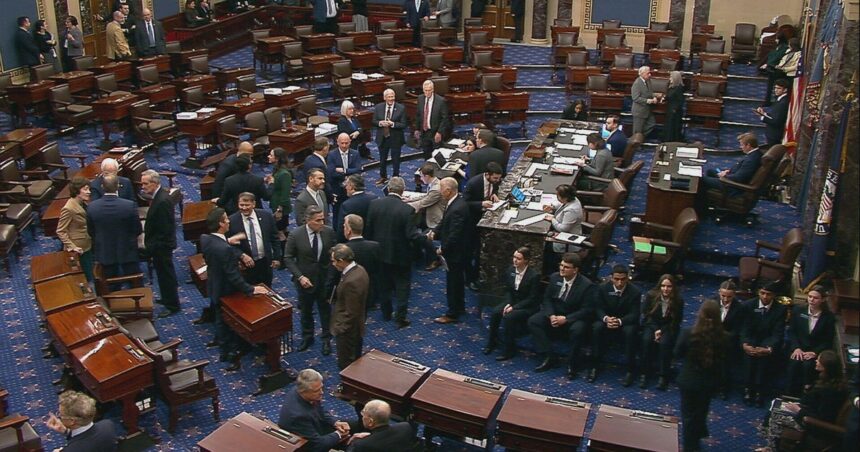
Despite the House passing the $1.2 trillion measure earlier this week, the upper chamber stalled in a 45-55 procedural vote, falling short of the 60 votes required to move forward.
With the current funding set to expire at midnight on Friday, January 30, federal agencies are now preparing for a lapse in operations.
Pan-Atlantic Kompass reports that the U.S is bracing for a government shutdown over a heated dispute over Department of Homeland Security (DHS) funding.
Senate Democrats have vowed to block the package unless significant reforms are made to Immigration and Customs Enforcement (ICE).
This push follows a wave of national outcry after the fatal shooting of a U.S. citizen, Alex Pretti, by federal agents in Minneapolis.
Senate Minority Leader Chuck Schumer (D-NY) emphasized that the 2026 government shutdown could be avoided if Republicans agree to separate the DHS bill from the other five appropriations measures.
“Until ICE is properly reined in and overhauled legislatively, the DHS funding bill doesn’t have the votes to pass,” Schumer stated following the vote.
Also, seven Republicans bucked their leadership and voted against moving forward, underscoring the need for Democratic support to advance the package for a final vote.
Though Congress has approved six of the 12 measures to fund the government, many agencies and programs will begin shutting down on Saturday unless the funding is approved. The bills had been expected to sail through the Senate this week, but the deadly shooting of Alex Pretti by federal agents in Minneapolis prompted Democrats to seek changes to how immigration agencies operate.
Democrats have for days pledged to oppose the package unless money for DHS, which oversees Immigration and Customs Enforcement and Customs and Border Protection, is removed. With 53 Republicans, GOP leaders need support from Democrats to advance the funding measures.
A resolution to the impasse, which began emerging early Thursday morning, would involve the Senate removing the DHS funding bill from the six-bill package and passing the remaining five bills. Senators would then approve a continuing resolution to fund DHS at current levels while talks about reforming ICE practices continue.
Democrats must allow the package to move forward before it can be amended to strip out the DHS funding. Maine Sen. Susan Collins, the top GOP appropriator in the Senate, said ahead of the vote that Democrats need to recognize that “if we don’t get onto this package, we cannot change this package.”
“This morning’s vote is about taking the first step, not the final step, to consider the package on the Senate floor,” Collins added.
Sen. Patty Murray of Washington, the top Democratic appropriator, said on the floor that she is “very glad to see the White House and Republicans are now talking with Democrats to finalize a plan to pass the five bills and split off DHS.” But “until that bill is finalized, I will be a no on this vote,” she said.
Should the plan make it through the Senate, it would also require the House’s approval, since the lower chamber passed the remaining bills and sent them to the Senate as a package last week. House lawmakers aren’t set to return to Washington until Monday, meaning there could be a partial shutdown beginning Saturday, even if all sides agree on the way forward. A short funding lapse would have minimal effects, since most of the government is closed over the weekend.
Thune, asked whether he has assurances that the House would return this weekend, told reporters that his “hope and expectation would be to avoid a government shutdown and do what’s necessary to keep the government funded.”
“It’s not ideal, for sure, and it certainly wasn’t our hope,” Thune said. “We hoped to process all of the six bills and send them to the White House, but we are where we are, and so we’ve got to try and sort it out and get the best possible outcome given the hand we’ve been dealt.”
Pan-Atlantic Kompass reports that if an agreement is not reached by Saturday morning, the U.S will be bracing for a government shutdown.
The 2026 government shutdown would mark the second major funding lapse in just four months.
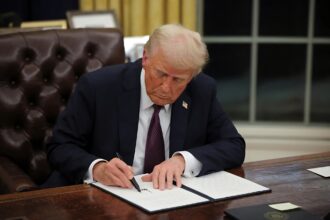
During Trump’s time in office, the United States has experienced several government shutdowns. Most notably, his administration holds the records for the two longest shutdowns in U.S. history.
Beginning on October 1, 2025, this 43-day shutdown became the longest ever, surpassing the previous record set during Trump’s first term.