Republican lawmakers in the United States have officially introduced the Nigeria Religious Freedom and Accountability Act of 2026, seeking to designate Fulani militias as terrorists.
The lawmakers explained that the legislative move seeks to address years of escalating violence in Nigeria’s Middle Belt by formally pressuring the State Department to evaluate and designate radical Fulani militias as Terrorists.
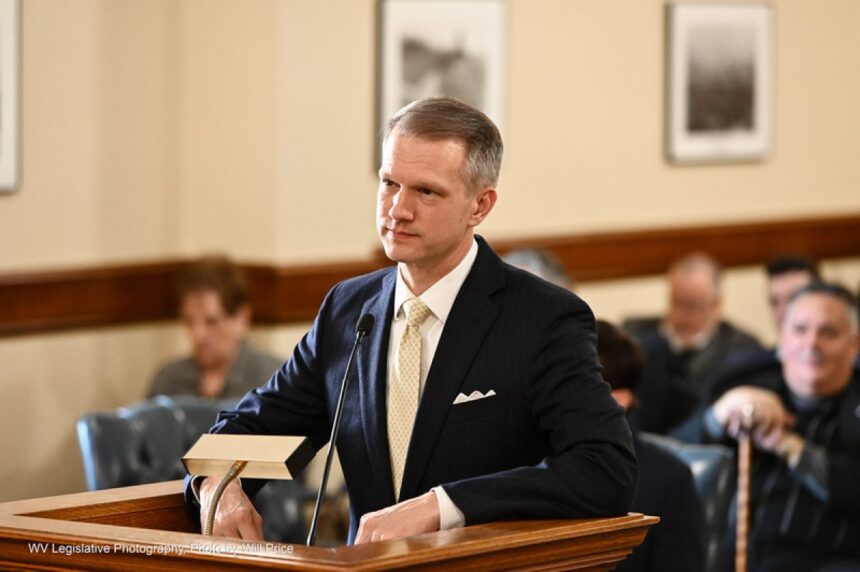
The bill, designated as H.R. 7457, was spearheaded by Representatives Chris Smith (R-NJ), Chairman of the House Foreign Affairs Africa Subcommittee, and Riley Moore (R-WV).
It comes on the heels of U.S President Donald Trump’s redesignation of Nigeria as a “Country of Particular Concern” (CPC), a label reserved for nations that engage in or tolerate severe violations of religious freedom.
For over a decade, human rights organizations have documented a surge in mass kidnappings, village raids, and the destruction of churches across Nigeria.
Lawmakers argue that these are not merely “farmer-herder clashes” but organized campaigns of terror.
Taking to his official X handle, Moore, a Republican representative from West Virginia, announced the proposed legislation seeking to designate Fulani militias as terrorists.
The post reads: “Today, I am proud to introduce the Nigeria Religious Freedom and Accountability Act of 2026 with Rep. Chris Smith.
“The U.S. is a Christian nation. As such, we must stand with persecuted Christians around the world.
“Our legislation will build upon the momentum of President Trump designating Nigeria as a Country of Particular Concern and the recent US-Nigeria security framework agreement.”
It was also gathered that the bill calls on the U.S Secretary of State to submit an annual report to the foreign affairs committees in the House of Representatives and the Senate detailing efforts to address the Christian persecution in Nigeria.
Smith, chairman of the House Foreign Affairs Africa subcommittee, said the United States has a responsibility to pressure Nigeria to act against systemic violence.
“The Nigerian government’s blatant denial of the religious persecution occurring within its borders has only enabled the religious-based violence in the country to fester, with Christian deaths and church attacks reaching unprecedented numbers,” Smith said.
The bill references destruction of churches, kidnappings, sexual violence, and attacks on villages, estimating that between 50,000 and 125,000 Christians were killed between 2009 and 2025.
Moore said he visited Nigeria as part of an investigation initiated by Trump.
“As part of the investigation President Trump asked me to lead, I visited Nigeria and witnessed firsthand the horrors our brothers and sisters in Christ face and saw the security challenges Nigeria faces,” Moore said.
He added that the bill demonstrates that “the United States stands with our persecuted Christians”.
Tom Cole, a Republican representative from Oklahoma and chairman of the House Appropriations Committee, said that defending religious liberty globally aligns with U.S. interests and responsibilities.
Cole said the proposed law would reinforce efforts to ensure that “religious persecution will not be tolerated”.
The legislation also calls on the Secretary of State to counter what it describes as “the hostile foreign exploitation” of illegal Chinese mining operations in Nigeria.
Brian Mast, republican representative from Florida and chairman of the House Foreign Affairs Committee; Mario Diaz-Balart, republican representative from Florida; and Bill Huizenga, republican representative from Michigan; are among other co-sponsors of the bill.
In November 2025, Trump designated Nigeria as a country of particular concern, a move that allows the U.S executive branch to apply diplomatic and economic measures.
Trump also authorised coordinated strikes with the Nigerian government against suspected militants on Christmas Day 2025.