
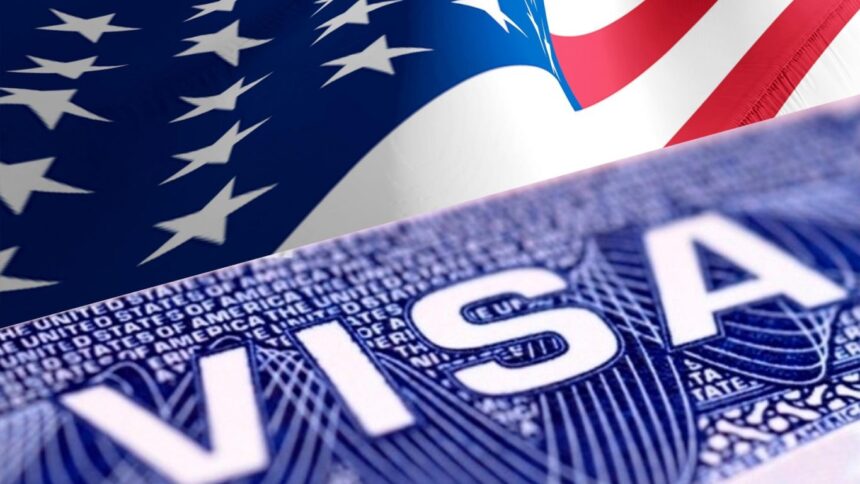
The U.S Embassy in Abuja has announced the suspension of visa appointments today, Wednesday, March 4, 2026, as officials cited potential Iran protests.
The move follows a series of regional tensions linked to ongoing conflicts and recent U.S combat operations in Iran.
While the embassy remains functional for emergency citizen services, all routine non-immigrant and immigrant visa appointments have been cancelled until further notice to ensure the safety of both staff and the public.
It was gathered that the reason for the suspension of visa appointments after a high-potential security alert was issued for the Federal Capital Territory.
The embassy said in a statement posted on X on Wednesday that it would contact applicants on how to reschedule.
The statement reads: “Due to the potential for protests in Abuja, the U.S. Embassy in Abuja has cancelled all visa appointments on Wednesday, March 4, 2026. Applicants will be contacted with information on how to reschedule. Please monitor our website and social media channels for further updates.
“For emergency assistance, please contact the U.S. Embassy at +234 209 461 4328 or visit the website.
“Thank you for your understanding and cooperation.”
Pan-Atlantic Kompass reports that on Monday, members of the Islamic Movement of Nigeria (IMN), also known as Shi’ites, staged protests in several states over the killing of Ali Khamenei, Iran’s supreme leader, during recent U.S-Israeli strikes on Tehran.
Demonstrators were seen in Lagos, Kano, Niger, Sokoto, Gombe, and Kaduna states condemning the joint military action by the US and Israel, which led to Khamenei’s death alongside members of his family.
Similar protests were reported in Bauchi and Yobe states.
The protesters waved Iranian flags, displayed portraits of Khamenei, and carried placards denouncing both the United States and Israel while expressing solidarity with Iran.
The demonstrations followed heightened tensions in the Middle East following coordinated airstrikes by the U.S and Israel on Iranian targets.
In Nigeria, the Shi’ites have historically expressed solidarity with Iran and its leadership, often organising processions and demonstrations in response to developments involving the Islamic Republic.
Tunji Disu, the Inspector-General of Police (IGP), has ordered commissioners of police across the country to heighten security measures in response to the development.
Specifically, police commissioners in the Northwest, the Northeast, and Northcentral zones have been asked to heighten surveillance and intelligence gathering; strengthen collaboration with traditional and religious leaders, enhance visibility policing around worship centres and public spaces, as well as swiftly address any attempt by individuals or groups to exploit global developments to incite unrest or sectarian tension.
“While Nigeria remains stable and its internal security situation firmly under control, the Force has reinforced proactive, intelligence-led policing measures across the country.
“The IGP has directed all commissioners of Police in the 36 states and the Federal Capital Territory (FCT), with particular attention to the Northwest, the Northeast, and the Northcentral zones, to heighten surveillance and intelligence gathering, strengthen collaboration with traditional and religious leaders, enhance visibility policing around worship centres and public spaces, and swiftly address any attempt by individuals or groups to exploit global developments to incite unrest or sectarian tension.
“The Nigeria Police Force reiterates that Nigeria will not serve as a theatre for foreign conflicts. Any attempt to import external ideological or religious tensions into the country will be met with the full weight of the law.
“IGP Disu calls on community leaders nationwide to continue promoting peace and urges citizens to remain calm, vigilant, and law-abiding, and to report any suspicious activity to the nearest police formation.