
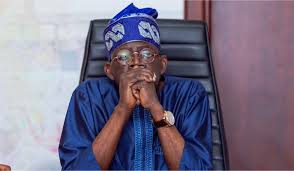
The Nigerian Presidency has officially responded to the wave of public outcry after President Bola Ahmed Tinubu met with Plateau State attack victims at the Airport on Thursday.
Many citizens and opposition leaders have criticized the president for meeting with the victims of the recent Palm Sunday attacks at the airport rather than visiting the affected communities or hospitals.
This decision of Tinubu to meet the Plateau attack victims at the airport ignited controversy on social media, with many Nigerians labeling the 10-minute engagement as “insensitive” and “detached” from the reality of the grieving families.
Former Labour Party presidential candidate Peter Obi has launched a scathing critique of Tinubu, describing the President’s recent meeting with victims of the Plateau State attacks at the Jos airport as “deeply insensitive” and a “normalization of tragedy.”
In a strongly worded statement released via his official X (formerly Twitter) handle, Peter Obi expressed disappointment that the President’s “on-the-spot assessment” failed to reach the actual scenes of the massacre.
Obi, in a post on X on Friday, described the approach as lacking compassion, insisting that true leadership requires physical presence and empathy in moments of crisis.
“What happened in Plateau yesterday highlights a complete absence of leadership. True leadership requires presence, empathy, compassion, and a willingness to meet people where their pain truly lies.
“For citizens who have just lost loved ones, homes, and their sense of safety, being addressed from an airport tarmac is profoundly inadequate,” Obi said.
Obi also referenced a similar visit by the President to Benue State in 2025, where he said Tinubu did not visit the scene of an attack.
“This approach exacerbates the sense of abandonment already felt by innocent Nigerians who have endured repeated cycles of violence without meaningful protection or justice.
“Plateau deserves more than distant words; it requires urgent action and a clear commitment to ending the insecurity that continues to claim innocent lives,” Obi added.
However, a statement issued on Friday by the President’s Special Adviser on Information and Strategy, Bayo Onanuga said Tinubu had initially planned to travel to Iperu in Ogun State on Thursday after receiving the President of Chad, Mahamat Idriss Déby Itno, but altered his schedule following a security briefing from Plateau State Governor Caleb Mutfwang.
Onanuga said Tinubu decided to suspend the Ogun trip and arranged an emergency visit to Jos after being briefed on the attacks.
However, the visit was delayed due to a bilateral meeting with the Chadian leader at the Presidential Villa in Abuja.
“The President of Chad was at the Presidential Villa for a very important bilateral meeting focused on strengthening security collaboration between the two countries. The meeting ran longer than expected, affecting President Tinubu’s scheduled departure for Jos,” the statement said.
The presidency explained that upon arrival in Jos, further logistical limitations prevented the President from travelling into the city to meet the Plateau attack victims directly at the affected communities.
While the road journey from the airport to Jos town takes about 40 minutes, officials said the airport runway does not support night operations due to the absence of navigational aids.
According to the statement, the time constraint made it impossible for the President to drive into the city and return to the airport before dusk.
“The constraints made it unfeasible to drive into town, meet victims for on-the-spot assessment, and return to the airport before dusk,” the statement said.
As a result, federal and state officials arranged for representatives of the affected communities to meet the President at a hall adjoining the airport.
Among those present were the Minister of Defence, the Chief of Army Staff, and the Inspector General of Police, who had earlier visited Rukuba, identified as the epicentre of the conflict.
Onanuga said Tinubu’s visit to Jos was aimed at engaging stakeholders and addressing the root causes of the long-running violence in Plateau State.
He said the President also deployed a high-level delegation, including his Senior Special Assistant on Community Engagement, to carry out groundwork in the affected communities ahead of his arrival.
Beyond expressing condolences to victims, Tinubu held discussions with local leaders and other stakeholders on ways to end the recurring violence that has plagued the state for decades.
During the engagement, the President assured residents that the federal government would ensure justice for victims and bring an end to the cycle of attacks.
Tinubu also announced plans to deploy 5,000 artificial intelligence-enabled surveillance cameras across Jos to improve security monitoring and assist law enforcement agencies in identifying and apprehending perpetrators.
The President also invited community leaders from Plateau State to Abuja for further consultations aimed at finding a lasting solution to the recurring crisis.
According to the presidency, the meeting – which was televised live – provided an opportunity for victims and community leaders to speak directly to the President.
“The meeting was solemn and reassuring, boosting residents’ confidence,” the statement said.
Onanuga added that despite criticism from some quarters, the President’s visit achieved its objective of directly engaging affected communities and reinforcing the federal government’s commitment to restoring peace.
“President Tinubu achieved the purpose of his visit despite the naysayers’ attempts to ridicule it,” the statement said.
“He dropped an unmistakable message: sustainable peace must be built with the people, not imposed on them.”