
The fragile optimism surrounding the ongoing regional peace talks was shattered early Saturday as the military command of Iran reclosed the Strait of Hormuz.
The move comes just hours after Iran had declared the vital energy corridor opened on Friday amid ceasefire talks.
On Friday, Iranian Foreign Minister Abbas Araghchi had signaled a de-escalation, declaring the strait “completely open” for all commercial traffic.
The announcement followed a two-week ceasefire in Lebanon, which began on April 8, intended to serve as a foundation for broader negotiations currently being mediated in Pakistan.
However, the situation deteriorated rapidly on Saturday morning. The Islamic Revolutionary Guard Corps (IRGC) of Iran declared that it has reclosed the Strait of Hormuz.
The IRGC stated that control of the waterway had “returned to its previous state” under the “strict management and control of the armed forces.”
They cited the continued U.S naval blockade—which the IRGC labeled as “piracy”—as the primary justification for the closure.
The announcement came as maritime tracking sites showed several ships dashing through the narrow waterway, hugging close to Iranian territorial waters as instructed by Tehran and, for some, broadcasting their identity as Indian or Chinese in an apparent attempt to show their neutrality.
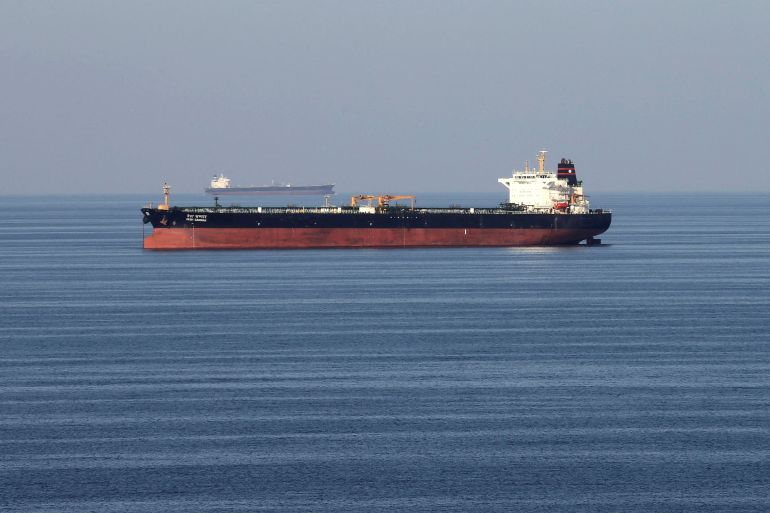
By 1030 GMT on Saturday, no fewer than eight oil and gas tankers had crossed the strait, but at least as many ships appeared to have turned back, having begun to exit the Gulf.
The announcement caught several commercial vessels in the middle of their transit. According to maritime tracking data, at least eight oil and gas tankers were navigating the bottleneck when the order was issued.
While some ships managed to clear the area by hugging close to Iranian territorial waters others were forced to turn back.
The incident highlights the high-stakes environment in the Gulf, where vessels are now effectively caught between the conflicting mandates of two global powers.
The conflicting actions on the ground contrast sharply with the diplomatic tone in Washington. U.S President Donald Trump had expressed high confidence on Friday, describing potential peace efforts as “great and brilliant.”
However, the administration has maintained that the naval blockade—intended to restrict ships traveling to and from Iranian facilities—will remain firmly in place until a formal agreement is reached.