
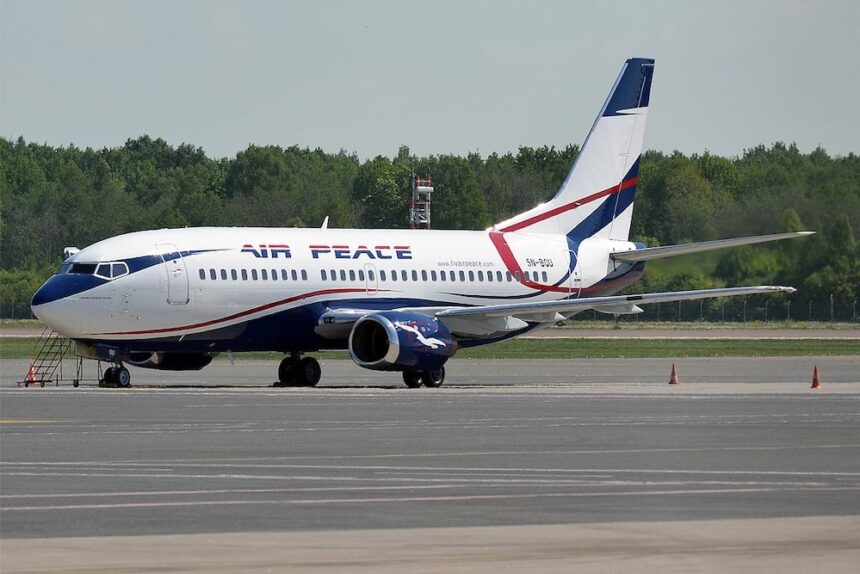
Air Peace has announced its decision to cut the frequency of the Abuja-London flights.
The airline announced that the move to cut the Abuja-London flights is due to the exorbitant cost and supply volatility of aviation fuel as a primary driver.
This comes as the aviation industry is facing immense pressure recently over cost of aviation fuel, known as Jet A1.
Air Peace said the reduced schedule will remain in place until July 1, 2026, when full flight frequency is expected to resume, subject to improvements in Jet A1 supply.
The airline explained that the decision was necessary to maintain operational stability amid persistent fuel challenges.
“Due to the current Jet A1 (aviation fuel) supply constraints affecting flight operations nationwide and around the world, we wish to inform you that our Abuja-London service has been temporarily adjusted to three weekly flights until 01 July, 2026,” the statement read in part.
The airline added that the move is aimed at ensuring service continuity while managing the impact of fuel shortages on its operations.
The Jet A1 crisis in Nigeria has intensified in recent weeks, driven largely by a sharp increase in prices and supply disruptions. The surge has significantly strained airline operations, forcing operators to consider cost-cutting measures and schedule adjustments.
Aviation fuel prices rose from around N900 per litre to over N3,000 between late February and April.
Nigerian airlines had earlier threatened to suspend nationwide operations from April 20, 2026, citing unsustainable operating costs.
The Airline Operators of Nigeria (AON) described the price spike as “artificial” and disconnected from global crude oil trends.
The Federal Government intervened, urging airlines to suspend the planned shutdown while engaging stakeholders.
Recent developments include a 30% relief on statutory fees approved by President Bola Tinubu to cushion the impact on airlines, covering obligations such as parking charges, navigational fees, and other regulatory costs.
The continued rise in aviation fuel prices is partly linked to geopolitical tensions in the Middle East, which led to restrictions around the Strait of Hormuz, a key channel responsible for about 20% of global energy shipments. This disruption has added pressure to global energy markets and aviation fuel pricing benchmarks.
Industry sources say most of the jet fuel used in Nigeria is sourced from the Dangote Refinery, which remains the dominant supplier.
However, the Middle East tensions have driven global pricing indices such as Platts on an upward trend in recent weeks. The rise in Platts has translated into higher landing costs for aviation fuel despite local sourcing.
This sustained price pressure continues to affect airline operating costs, fares, and flight stability in Nigeria.
The combination of global supply shocks and local procurement dynamics has kept aviation fuel prices elevated, intensifying cost pressures across the aviation sector.