
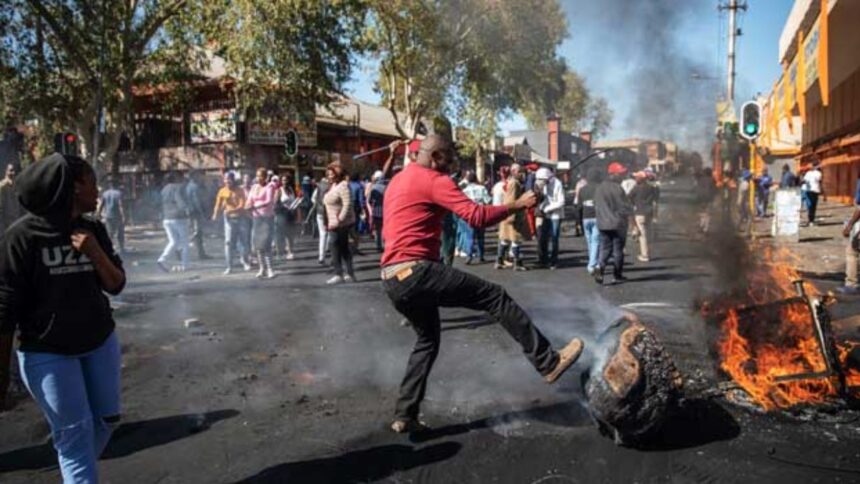
Several African countries have begun to react to the rising cases of xenophobic attacks in South Africa over the past weeks.
Pan-Atlantic Kompass had reported that since April, a series of anti-immigrant protests escalated into targeted attacks against foreign nationals, particularly those from Nigeria, Ethiopia, and Mozambique.
With reports of fatalities and widespread looting of foreign-owned businesses, major African countries have been forced to react to the xenophobic attacks in South Africa, moving beyond mere statements of concern, demanding concrete action and protection for their citizens living in the Rainbow Nation.
Nigeria
Nigeria has taken a leading role in the African diplomatic response to xenophobia by summoning South Africa’s acting High Commissioner in Abuja. Following reports of the deaths of several Nigerian nationals, Minister of Foreign Affairs Bianca Odumegwu-Ojukwu expressed the government’s “grave displeasure” and announced plans for voluntary evacuation flights for citizens wishing to flee the unrest. This move mirrors actions taken during previous crises, signaling a breakdown in the perceived “brotherly” relations between the two economic giants of the continent.
The Nigerian government has also begun arrangements for the voluntary repatriation of its citizens. As of May 3, 130 Nigerians have registered with the Nigerian mission in South Africa for evacuation flights, and officials say the number is likely to increase ahead of another planned demonstration scheduled for May 4-8.
Similarly, lawmakers of the House of Representatives had passed a resolution to review all bilateral agreements with South Africa over the recent spike in xenophobic attacks.
Ghana
Ghana has followed suit, with its Ministry of Foreign Affairs summoning South Africa’s acting High Commissioner, Thando Dalamba, to protest the harassment and intimidation of Ghanaian citizens.
The move came after viral videos surfaced showing a Ghanaian man in KwaZulu-Natal being confronted by a vigilante group and ordered to leave the country.
Accra has warned that it will not tolerate the mistreatment of its nationals, adding that it was coordinating with regional bodies to address the crisis.
Botswana
Botswana is also taking a hard stance, with indications that it may seal its land border and restrict electricity supply to parts of South Africa.
While officials have yet to release full details of the disruption, the move signals a willingness to use economic leverage in response to what Gaborone described as sustained hostility toward Batswana nationals.
In a nationally televised address, President Duma Boko struck an emotional tone, invoking history as both a warning and a rebuke. “We stood with you during your fight against oppression,” he said. “Today, our citizens are humiliated.”
Mozambique
Mozambique is reportedly considering restrictions at the Ressano Garcia border, where South African trucks and citizens could be barred from entry in retaliation for the attacks.
The border point is a major trade corridor, and any disruption could have significant economic consequences for both countries.
Kenya
With concerns about xenophobic violence and attacks in South Africa intensifying, the Kenyan government issued an advisory warning its citizens in the country to be cautious and steer clear of areas where protests are taking place.
In an advisory issued on Monday, the Kenya High Commission in Pretoria urged Kenyans “to avoid, as far as possible, protest or demonstration sites.”
It also urged them to always carry valid identification and relevant documentation when stepping out.
“In the event of any incident or emergency, Kenyan nationals are advised to report the same to the South African Police Service and to inform the Kenyan High Commission in Pretoria for appropriate assistance.”
It also said, “Kenyan nationals residing in the Republic of South Africa to exercise caution and remain vigilant in light of recent demonstrations and isolated incidents reported in some parts of the Republic of South Africa affecting foreign nationals.”