

The United States (U.S) government is set to reduce the number of embassies processing visas in Africa from 50 to 20.
This decision was contained in an internal memo from the U.S State Department.
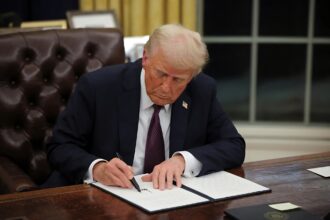
The directive, signed by Secretary of State Marco Rubio, represents one of the most significant overhauls to U.S consular services in Africa in recent history and is expected to take full effect in June 2026.
It was gathered that the move by the U.S government to slash embassies processing visas in Africa is aimed at tightening borders, curbing visa overstays, and maximising the efficiency of taxpayer resources.
Under the freshly mandated Africa visa restructuring plan, any country not designated as an official regional hub will lose its standard immigrant and non-immigrant visa-processing capabilities.
Consular offices in non-hub nations will remain operational but will restrict their workflows entirely to serving American citizens—such as handling emergency requests and passport renewals—alongside processing specialized diplomatic or national interest visas.
Under the new system, citizens from countries that do not host one of the designated hubs will be required to travel to another country to submit visa applications and attend interviews.
According to the memo, the 20 African locations that will continue offering full visa processing services are located in Abidjan (Ivory Coast), Accra (Ghana), Addis Ababa (Ethiopia), Cape Town and Johannesburg (South Africa), Dakar (Senegal), Dar es Salaam (Tanzania), Djibouti, Kampala (Uganda), Kigali (Rwanda), Kinshasa (Democratic Republic of Congo), Lagos (Nigeria), Lomé (Togo), Luanda (Angola), Malabo (Equatorial Guinea), Monrovia (Liberia), Nairobi (Kenya), Port Louis (Mauritius), Praia (Cape Verde) and Yaoundé (Cameroon).
For millions of citizens living outside these 20 jurisdictions, the real-world implications of the Africa visa restructuring plan are daunting. Prospective students, business professionals, and tourists from up to 30 countries will now be forced to undertake international travel just to attend a mandatory, in-person visa interview.
Beyond standard visa fees, applicants from affected non-hub countries must now factor in international flights, cross-border hotel stays, and the logistical challenge of securing third-party transit visas simply to submit their documentation to a U.S. official.
This consolidation compounds an already stringent environment for African applicants, who have recently navigated strict country-specific travel bans, medical restrictions, and high-value visa bonds reaching up to $15,000 for certain demographics.
The move comes six months after the administration of the U.S President Donald Trump recalled ambassadors in over two dozen countries, including Nigeria. Africa was the most impacted continent.
The reduction in consular services also comes as the US continues to restrict immigration flows into the country.
A handful of African nationals, including Nigerians, already face the possibility of paying bonds of up to $15,000 as a requirement for B1/B2 visa applications.
African countries also make up the largest share of countries currently under U.S partial travel suspensions.