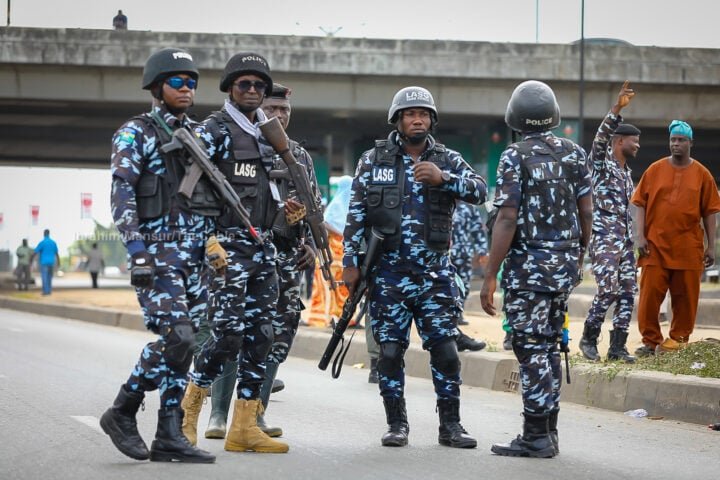
On Wednesday, June 24, 2026, the Nigerian Senate passed the State Police bill, advancing calls for decentralised policing in Nigeria.
The bill titled the Constitution of the Federal Republic of Nigeria (Alteration) (State Police) Bill 2026, followed the House of Representatives’ approval earlier in the month.
Pan-Atlantic Kompass reports that this Sixth Alteration Bill establishes a dual policing system—Federal Police alongside optional State Police Services—while embedding multiple safeguards against abuse.
As Nigeria grapples with banditry, kidnapping, insurgency, and rural insecurity, this reform is being touted to improve local response times and intelligence.
In this report, Pan-Atlantic Kompass looks into the State Police bill and provides a detailed, clause-by-clause breakdown of what the bill entails.
Clause 1: Enactment Clause
This foundational clause designates the 1999 Constitution (as altered) as the “Principal Act” and frames all subsequent changes as constitutional amendments.
Implication: Once ratified by two-thirds of state Houses of Assembly and assented to by the President, these changes gain supreme constitutional status and cannot be easily reversed by ordinary legislation.
Clauses 2–5: Updates to Fundamental Rights Provisions
These clauses amend Sections 34, 35, 39, and 42 by replacing generic references to “police” with “Nigeria Police Force.”
Implication: This housekeeping update ensures constitutional protections against arbitrary arrest, forced labour, discrimination, and related rights apply clearly in the new dual structure. It maintains uniformity while adapting to the existence of both federal and state forces.
Clause 6: Remuneration of Officers (Section 84)
Updates the list of officials whose pay is charged to the Consolidated Revenue Fund, aligning oversight bodies with new names like the National Police Council and Police Service Commission.
Implication: Protects the financial independence of key police oversight institutions from political budget interference.
Clauses 7–8: Legislative Enforcement Powers (Sections 89 & 129)
Harmonizes language on serving summonses and warrants issued by the National Assembly and state assemblies, using unified “Nigeria Police Force” terminology.
Implication: Ensures both federal and state police can lawfully support legislative inquiries without jurisdictional confusion.
Clause 9: Federal Executive Bodies (Section 153)
Renames the Nigeria Police Council to the National Police Council and creates a distinct Federal Police Service Commission.
Implication: Signals a shift to national-level oversight that includes state police, while establishing parallel commissions at the federal level. State Police Service Commissions are created via a later clause.
Clause 10: State Executive Bodies (Section 197)
Inserts a new paragraph establishing State Police Service Commissions in each state.
Implication: Provides a constitutional mechanism for recruitment, discipline, and management at the state level, aiming to reduce direct gubernatorial control over day-to-day operations.
Clause 11: Chapter Heading Update
Changes the subheading from “B Nigeria Police Force” to “B Federal and State Police.”
Implication: Symbolically recognizes the end of the federal monopoly on policing.
Clause 12: Core Provision – Establishment of Federal and State Police (Section 214)
This is the heart of the bill. It replaces the old Section 214 and:
- Establishes both Federal and State Police constitutionally.
- Empowers the National Assembly to set structures, powers, and minimum national standards for state forces.
- Requires states to pass their own laws and obtain certification before operations begin.
- Allows Federal Police to continue operating in states without their own forces and to handle federal crimes.
- Limits Federal intervention in state matters to cases of complete breakdown of law and order (with National Police Council approval), the governor’s request, or when state forces are non-functional.
- Keeps the FCT under Federal jurisdiction.
Implication: Promotes decentralization while retaining federal backstops. Critics note the broad “breakdown of law and order” clause could enable federal overreach, but oversight requirements add checks.
Clause 13: Appointment and Command (Section 215)
Inspector-General of Police (Federal): Appointed by the President on the National Police Council’s advice, confirmed by the National Assembly.
State Commissioner of Police: Appointed by the Governor on the National Police Council’s advice, confirmed by the State House of Assembly.
Governors can issue lawful directions on public safety; Commissioners can refer unlawful ones to the National Police Council for final decision.
Implication: Balances state autonomy with professional safeguards. The referral mechanism is a key protection against political misuse.
Clause 14: Removal and Funding (Section 216)
Sets strict removal procedures requiring National Police Council recommendations and two-thirds legislative approval for grave misconduct or similar grounds. Also provides for federal grants to support state police.
Implication: Enhances security of tenure and addresses funding gaps in less-resourced states, though grants could create dependency.
Clause 15 and Beyond: Legislative Lists and Other Amendments
Modifies the Exclusive Legislative List to allow states limited access to arms/ammunition for policing and criminal records management.
Renames and adjusts the police item to reflect the new dual system.
Additional provisions include explicit bans on using state police to arrest or detain people solely for criticizing the government.
Key Safeguards Against Abuse
Lawmakers built in multiple layers of protection:
- National minimum standards and certification.
- National Police Council oversight.
- Commissioner referral rights on unlawful orders.
- Ban on politically motivated arrests for criticism.
- Two-thirds legislative approval for key appointments/removals.
- Federal intervention limits with approvals required.
What Happens Next?
The bill requires ratification by at least two-thirds of state Houses of Assembly before presidential assent. States that wish to establish police forces must then enact enabling laws and meet certification standards.
What Are Nigerians Saying on the State Police Bill
As expected, the State Police bill has been generating massive reactions from Nigerians.
Some Nigerians view the bill as long-overdue reform, while others have raised reservations.
Some supporters of the State Police bill argue that the legislation will enable faster local responses, better intelligence, and community-oriented policing. Improved
Supporters highlight that governors and local authorities will address threats more effectively without relying on distant federal commands.
However, many Nigerians have raised concerns that state governors could weaponize police against political opponents, critics, or ethnic/religious minorities.
Some have also pointed out the massive salary bills state governments will incur due to the legislation, raising questions about poorer states’ ability to sustain forces without federal grants that could create dependency or uneven standards.
Below are some of the reactions;