
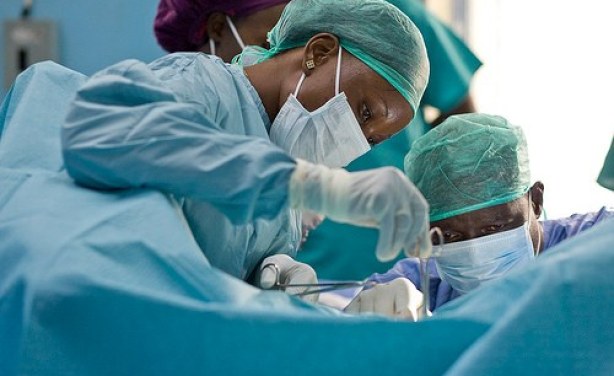
A severe healthcare crisis is deepening across Nigeria as new official data reveals that 20,966 Nigerian health workers migrated abroad within a single 12-month period.
The alarming exodus was detailed in the newly released State of Health of the Nation Report 2025.
This development highlighted a compounding “brain drain” that is leaving hospitals severely understaffed and pushing the nation’s remaining medical professionals to the brink of burnout.
According to the report, the Nigerian health workers who migrated to other countries span virtually every critical specialization within the healthcare sector.
It was also gathered that high-income destination countries—primarily the United Kingdom, United States, Canada, and Saudi Arabia—continue to actively recruit trained African health professionals.
The mass exodus includes 3,919 doctors, 7,487 nurses and midwives, 6,861 medical laboratory professionals, 702 pharmacists, 658 physiotherapists and hundreds of other specialists, according to the State of Health of the Nation Report 2025.
The latest data also comes amid the emergence of further data from the United Kingdom’s General Medical Council (GMC) that showed that 4,691 Nigerian-trained doctors joined the UK medical register between May 2023 and April 2026.
According to the GMC register, 15,896 Nigerian-trained doctors — comprising 9,664 males and 6,232 females — are currently licensed to practise in the UK.
An analysis of the State of Health of the Nation Report showed that only 60,551 of the country’s 95,456 registered doctors currently hold active practising licences, representing just 63 per cent, with only 51 per cent of licensed doctors actively employed within Nigeria’s health system.
The nursing and midwifery workforce, Nigeria’s largest health profession, has also suffered substantial losses, recording the highest level of migration among all health professions.
Although Nigeria has 267,951 registered nurses and midwives, comprising 73,130 nurses, 21,031 midwives and 173,790 nurses with post-basic qualifications, only 113,123 currently possess active practising licences, representing an effective licensing ratio of 42 per cent.
Of those licensed, 78 per cent remain employed in the country.
According to the report, 658 physiotherapists have migrated, leaving only 852 of the country’s 8,642 registered physiotherapists with active practising licences.
Similarly, 21 occupational therapists have migrated, while just 11 of the 176 registered professionals currently possess active licences.
There are 257 registered occupational therapist assistants, but only 51 currently hold practising licences.
The report showed that 431 optometrists have migrated abroad.
Of the 6,975 registered optometrists, only 2,156 possess active practising licences, while 66 per cent remain employed locally.
Among opticians, only 307 of the 2,976 registered professionals currently hold practising licences, while 18 have migrated.
Findings revealed that the United Kingdom remains the leading destination for Nigerian health workers, particularly doctors and nurses, driven by easier professional registration, better remuneration, structured specialist training and persistent workforce shortages within the National Health Service.
Although international recruitment has slowed since 2025, Nigeria remains one of the major source countries for overseas-trained nurses practising in the UK.
A breakdown of data obtained from the UK GMC register indicated that 7,875 Nigerian-trained doctors were licensed to practise in 2020, while 9,976 were licensed in 2022.
In 2023, the number of Nigerian-trained doctors licensed to practise in the UK rose to 12,198, making Nigeria the third-largest source of foreign-trained doctors in the UK, behind India with 38,228 doctors and Pakistan with 27,739.
Figures from the UK’s Nursing and Midwifery Council show that the number of internationally educated nurses and midwives on its register has risen sharply in recent years, driven largely by recruitment from countries such as Nigeria, India, Ghana and the Philippines.
According to the Council, the number of Nigerian nurses and midwives in the UK has risen above 16,000.
Beyond the UK, the U.S and Canada have become increasingly attractive destinations.
As of 2020, a total of 3,895 Nigerian-trained doctors were licensed to practise medicine in the U.S.
Australia has also intensified recruitment of overseas-trained doctors and nurses to address shortages in regional and rural health services, while Saudi Arabia and the United Arab Emirates continue to attract Nigerian healthcare professionals with tax-free salaries, subsidised accommodation and other employment benefits.
Representatives from medical associations and doctors in the diaspora point to a combination of economic hardship, unsafe working conditions, and structural neglect as the primary drivers of Nigerian health workers migrating to other countries.
Experts have pointed out that junior doctors often earn around ₦300,000 per month, a figure severely eroded by inflation and currency devaluation. Unpaid or delayed salaries remain widespread across state healthcare facilities.