
The government of the United Kingdom (UK) has threatened Eritrea with a visa ban on its citizens unless the East African country resumes accepting the return of its nationals who have no legal right to remain in Britain, making it the fourth African country to face such pressure.
Home Secretary Shabana Mahmood announced the measures, warning that Eritrea must rapidly improve cooperation on returns or face a total visa shutdown.
From Thursday, Eritrean VIPs and government officials have already lost preferential fast-track visa processing.
Eritrean diplomats in the UK have also been restricted from travelling more than about 37 miles (60 km) outside London without Foreign Office permission, mirroring limits placed on British officials in Asmara.
Mahmood said: “Eritrea has had every chance to accept the return of criminals and those with no right to be in the UK. Unlike other countries, it has refused. My message to the Eritrean government is simple: take back your nationals or face a complete ban on your citizens entering the UK. I will not hesitate to impose further measures on other countries refusing to co-operate.”
The new threats of a visa ban by the UK government follow earlier threats against Angola, Namibia and the Democratic Republic of Congo.
Angola and Namibia improved cooperation after the warnings, while temporary visa restrictions on the DRC were lifted once returns resumed. Officials say the approach has proven effective in securing the removal of people with no right to stay, including foreign national offenders and failed asylum seekers.
Eritrea had previously cooperated on returns, including issuing emergency travel documents, but the Home Office says the country abruptly withdrew that cooperation earlier this year. Private efforts to resolve the issue failed, according to the government, prompting the public escalation.
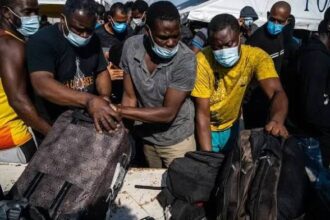
Eritreans have featured prominently among small-boat arrivals across the English Channel.
In the year to June, they accounted for a significant share of such crossings, at one point the highest of any nationality, and the nationality has a relatively high asylum grant rate.
The UK argued that countries must take back their own citizens when claims fail or when individuals commit crimes; otherwise, the asylum and immigration system becomes unsustainable.
However, Eritrea’s embassy in London rejected the pressure, describing the threat as a “perfunctory political gimmick.” It claimed the UK had not issued a single visa to an Eritrean official since 2023 (a claim the Home Office denies) and accused Britain of politicising its asylum system.
The embassy also pointed to UK country guidance on Eritrea and argued against enforced repatriation.
The use of visa penalties forms part of a broader government strategy to increase returns and deter irregular migration. Ministers have signalled that other countries seen as uncooperative on removals could face similar measures.
Removals of people with no right to remain in the UK have risen under the current administration, and officials view leverage over visa access as a key tool when diplomatic engagement stalls.
Further talks between London and Asmara are expected in the coming weeks. Whether Eritrea follows the path of the previous three African nations and resumes returns, or whether the UK follows through with a full visa ban, remains to be seen.