
The United States has announced its decision to impose visa restrictions on individuals deemed to be ‘religious freedom violators’ in Nigeria.
The latest announcement comes after U.S President Donald Trump redesignated Nigeria as a Country of Particular Concern over alleged Christian genocide.
The U.S Secretary of State, Marco Rubio announced the decision of the U.S to impose visa restrictions on religious freedom violators in Nigeria.
Taking to his official X handle, Rubio, explained that the restrictions will affect those who “knowingly direct, authorize, fund, support, or carry out violations of religious freedom”.
He added that the visa restriction action on alleged religious freedom violators in Nigeria will out under a new policy based on Section 212(a)(3)(C) of the Immigration and Nationality Act.
Rubio stated: “The United States is taking decisive action in response to the atrocities and violence against Christians in Nigeria and around the world. The @StateDept will restrict U.S. visas for those who knowingly direct, authorize, fund, support, or carry out violations of religious freedom. This visa policy applies to Nigeria and other governments or individuals that persecute people for their religious beliefs.”
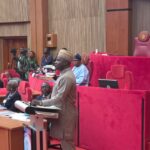
The announcement comes on the heels of an ongoing public hearing by the U.S Congress on alleged Christian genocide in Nigeria.
Trump, on October 31, instructed the House Appropriations Committee to investigate what he described as the slaughter of Christians in Nigeria and report their findings to the White House.
The U.S Congress has held two public hearings since Trump redesignated Nigeria as a Country of Particular Concern.
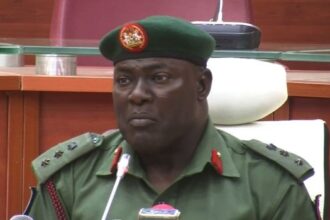
During the public hearing, Nigerian officials, religious organisations, and U.S lawmakers gave data on the situation of Nigeria’s security.
At Tuesday’s public hearing, Council on Foreign Relations Senior Fellow Dr. Ebenezer Obadare testified that the primary drivers of violence exploit Sharia frameworks and Hisbah officials to impose extremist ideology, enforce forced conversions, and operate with near-total impunity.
Obadare laid out a strategy for dealing with the violence and killings.
Obadare stated: “The policy goal should be two-fold: first, work with the Nigerian military to neutralise Boko Haram.
“Second, the United States should put pressure on President Tinubu to (1) make Sharia law unconstitutional in the twelve northern states where they has been adopted since 2000 and (2) disband the various Hisbah groups across northern states seeking to enforce and impose Islamic law on all citizens regardless of their religious identity.”
He argued that authorities downplayed the role of religion in the attacks and highlighted Nigeria’s blasphemy laws, which in some states permit the death penalty.