
Nigerians have begun to raise their concerns over the recent partnership between the Federal Inland Revenue Service (FIRS) and France’s tax authority, Direction Générale des Finances Publiques (DGFiP).
While the FIRS described the deal as a step towards modernising tax administration with automated compliance systems and data-driven audits, some Nigerians are sounding a warning about the exposure of sensitive national financial information to a foreign government.
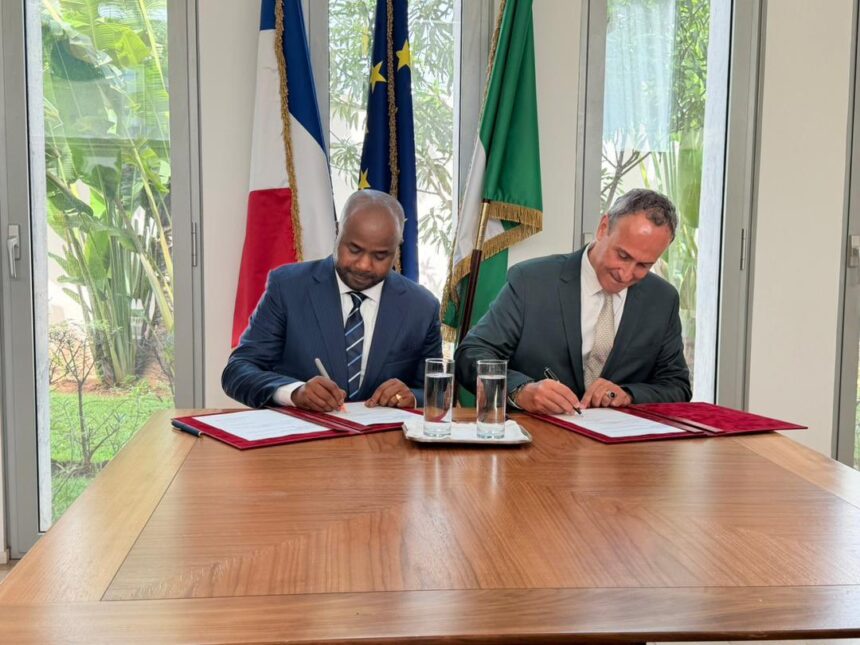
Pan-Atlantic Kompass reports that the FIRS-France digital tax pact was signed on Wednesday, December 10, 2025.
The FIRS-France digital tax pact also comes weeks before a formal transition into the Nigeria Revenue Service (NRS) in January 2026.
FIRS Chairman Zacch Adedeji emphasized that Nigeria intends to leverage France’s advanced experience in e-filing and real-time data analytics.
Adedeji said the partnership symbolises a shared ambition to build “stronger, more resilient and forward-looking” tax systems at a time global public finance is being reshaped by technology, artificial intelligence and cross-border digital commerce.
The FIRS chairman listed digital transformation as a central pillar of the pact, noting that Nigeria aims to leverage France’s experience in automated compliance systems, data-driven audits, and taxpayer service platforms.
According to him, France stands to benefit from Nigeria’s rapid digital expansion, its youthful and tech-savvy population, and the innovative solutions emerging from Africa’s largest market.
“This two-way exchange is essential as both countries adapt to emerging challenges such as artificial intelligence deployment, cybersecurity, and cross-border taxation,” Adedeji said.
He added that the MoU covers cooperation on international taxation, exchange of information, transfer pricing, and tackling Base Erosion and Profit Shifting, a growing concern for governments as businesses increasingly operate across borders.
“As economic activities become increasingly borderless, the ability of both our institutions to collaborate, share intelligence and harmonise approaches will be crucial,” Adedeji noted.
Meanwhile, the Center for African Policy Research and Advisory (CAfPRA), an independent think tank, has kicked against the FIRS-France digital tax pact.
In a press statement sent to the press, the organisation expressed worry that neglecting data protection could pose a threat to Nigeria.
The statement reads in part: “In an era where data is the new oil, control over financial and identity records is as crucial as control over natural resources. Yet, Nigeria faces a growing risk: the potential outsourcing of its tax data management to foreign entities.
“This is not merely a question of efficiency or convenience—it is a matter of national sovereignty, economic independence, and security. Allowing foreign organisations access to tax records exposes Nigeria to monetary manipulation, mass surveillance, and geopolitical coercion, turning the nation into a financial puppet.
“Neglecting proper data protection in taxation, particularly regarding access by foreign organisations to tax and identity records, poses severe threats to tax sovereignty and national security.
“If a country allows foreign organisations to manage or access its tax and identity records, it risks losing control over its economic destiny. Tax data is not just financial information; it is the foundation of a nation’s ability to govern its fiscal policies, plan budgets, and regulate economic activity. Any country that outsources tax data management to foreign actors effectively surrenders a crucial pillar of national sovereignty, leaving itself vulnerable to external economic manipulation and control.”
Below are some other reactions;
FIRS Reacts to Concerns of Nigerians
Meanwhile, the FIRS, in a statement issued on Friday and e-signed by Dr Umar Ahmed, FIRS Director of Intergovernmental Affairs, clarified the nature of the MoU with France’s DGFiP.
The agency assured Nigerians that France will not have access to Nigeria’s tax data, digital infrastructure, or operational control of its systems.
The statement reads: “The Federal Inland Revenue Service (FIRS) has noted recent publications and social media commentary expressing concerns regarding the Memorandum of Understanding (MoU) recently signed with France’s Direction Générale des Finances Publiques (DGFiP).
“While FIRS appreciates the public interest and patriotic concern, it is important to clarify that the MoU is a strictly technical assistance and capacity-building framework.
“At no point does it grant France access to Nigerian tax data, digital infrastructure, or operational control of our systems. All Nigerian laws regarding data protection, sovereignty, and cybersecurity remain fully in force, and the MoU includes robust confidentiality and data protection provisions.”