
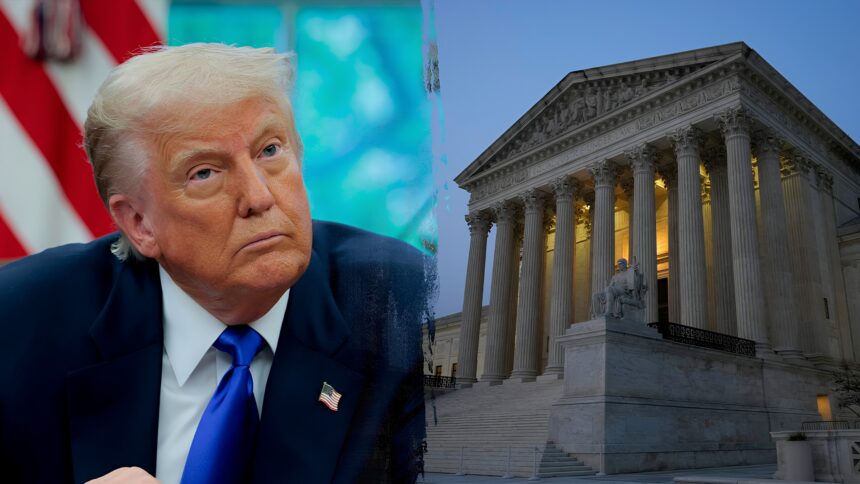
The White House on Tuesday, December 16, 2025, announced an expansion of its entry policies with Nigeria emerging on the partial travel restrictions list to the U.S.
The new proclamation, signed on December 16, 2025, adds Nigeria and 14 other nations to a growing list of countries facing limited access to the United States.
Nigeria was among 15 mostly African countries, including Angola, Antigua and Barbuda, Benin, Côte d’Ivoire, Dominica, Gabon, and The Gambia, slammed with partial travel restrictions to the U.S.
Others listed are Malawi, Mauritania, Senegal, Tanzania, Tonga, Zambia, and Zimbabwe.
The White House said the move is part of a broader national security initiative aimed at tightening vetting processes for countries deemed to have “deficient” information-sharing practices.
Unlike a “full travel ban,” which prohibits almost all entries, Nigeria’s partial travel restrictions to the U.S. primarily target specific visa categories.
“Radical Islamic terrorist groups such as Boko Haram and the Islamic State operate freely in certain parts of Nigeria, which creates substantial screening and vetting difficulties,” the White House said, justifying Nigeria’s addition to the partial travel restrictions list to the U.S.
“According to the Overstay Report, Nigeria had a B-1/B-2 visa overstay rate of 5.56 percent and an F, M, and J visa overstay rate of 11.90 percent.”
In the African continent, the Sahelian states of Burkina Faso, Mali, and Niger are among the five countries newly placed under full restrictions and entry limitations.
The White House cited operations of “terrorist organizations” in the countries as the reason for cutting.
The other two additions were South Sudan and Syria.
Full travel restrictions on nationals from Afghanistan, Burma, Chad, the Democratic Republic of the Congo, Equatorial Guinea, Eritrea, Haiti, Iran, Libya, Somalia, Sudan, and Yemen remain in effect.
Laos and Sierra Leone, previously under partial restrictions, have now been placed under full restrictions.
Pan-Atlantic Kompass reports that the development is a follow-up of U.S President Donald Trump’s decision to sign an executive order in June 2025, imposing a full travel ban on nationals of 12 countries.
Trump also placed heightened restrictions on people from seven countries.
The US government asked the affected countries to meet certain requirements within 60 days.
At the time, Nigeria was not included on either of the lists.
However, Nigeria has been battling with an increasing international scrutiny over allegations of a Christian genocide.
The scrutiny gained momentum after Trump announced his decision to officially redesignate Nigeria a ‘country of particular concern’ (CPC).
He blamed radical Islamists for the “mass slaughter”.
Below is the justification for the full list of those affected by the travel restrictions to the U.S;
Burkina Faso
According to the Department of State, terrorist organizations continue to plan and conduct terrorist activities throughout Burkina Faso. According to the Fiscal Year 2024, Department of Homeland Security (DHS) Entry/Exit Overstay Report (“Overstay Report”), Burkina Faso had a B-1/B-2 visa overstay rate of 9.16 percent and a student (F), vocational (M), and exchange visitor (J) visa overstay rate of 22.95 percent. Additionally, Burkina Faso has historically refused to accept back its removable nationals.
Laos
According to the Overstay Report, Laos had a B-1/B-2 visa overstay rate of 28.34 percent and an F, M, and J visa overstay rate of 11.41 percent. According to the Fiscal Year 2023, Department of Homeland Security (DHS) Entry/Exit Overstay Report (“2023 Overstay Report”), Laos had a B-1/B-2 visa overstay rate of 34.77 percent and an F, M, and J visa overstay rate of 6.49 percent. Additionally, Laos has historically failed to accept back its removable nationals.
Mali
According to the Department of State, armed conflict between the Malian government and armed groups is common throughout the country. Terrorist organizations operate freely in certain areas of Mali.
Niger
According to the Department of State, terrorists and their supporters are active in planning kidnappings in Niger, and they may attack anywhere in the country. According to the Overstay Report, Niger had a B-1/B-2 visa overstay rate of 13.41 percent and an F, M, and J visa overstay rate of 16.46 percent.
Sierra Leone
According to the Overstay Report, Sierra Leone had a B-1/B-2 overstay rate of 16.48 percent and an F, M, and J visa overstay rate of 35.83 percent. According to the 2023 Overstay Report, Sierra Leone had a B-1/B-2 visa overstay rate of 15.43 percent and an F, M, and J visa overstay rate of 35.83 percent. Additionally, Sierra Leone has historically failed to accept back its removable nationals.
South Sudan
According to the Overstay Report, South Sudan had a B-1/B-2 visa overstay rate of 6.99 percent and an F, M, and J visa overstay rate of 26.09 percent. Additionally, South Sudan has historically failed to accept back its removable nationals.
Syria
Syria is emerging from a protracted period of civil unrest and internal strife. While the country is working to address its security challenges in close coordination with the United States, Syria still lacks an adequate central authority for issuing passports or civil documents and does not have appropriate screening and vetting measures. According to the Overstay Report, Syria had a B1/B2 visa overstay rate of 7.09 percent and a F, M, and J visa overstay rate of 9.34 percent.
Palestinian Authority Documents
Several U.S.-designated terrorist groups operate actively in the West Bank or the Gaza Strip and have murdered American citizens. Also, the recent war in these areas likely resulted in compromised vetting and screening abilities. In light of these factors, and considering the weak or nonexistent control exercised over these areas by the PA, individuals attempting to travel on PA-issued or endorsed travel documents cannot currently be properly vetted and approved for entry into the United States.
JUSTIFICATION FOR PARTIAL SUSPENSION
(Immigrants and Nonimmigrants on B-1, B-2, B-1/B-2, F, M, and J Visas)
Angola
According to the Overstay Report, Angola had a B-1/B-2 visa overstay rate of 14.43 percent and an F, M, and J visa overstay rate of 21.92 percent.
Antigua and Barbuda
Antigua and Barbuda has historically had Citizenship by Investment (CBI) without residency.
Benin
According to the Overstay Report, Benin had a B-1/B-2 visa overstay rate of 12.34 percent and an F, M, and J visa overstay rate of 36.77 percent.
Cote d’Ivoire
According to the Overstay Report, Cote d’Ivoire had a B-1/B-2 visa overstay rate of 8.47 percent and an F, M, and J visa overstay rate of 19.09 percent.
Dominica
Dominica has historically had a CBI without residency.
Gabon
According to the Overstay Report, Gabon had a B-1/B-2 visa overstay rate of 13.72 percent and an F, M, and J visa overstay rate of 17.77 percent.
The Gambia
According to the Overstay Report, The Gambia had a B-1/B-2 visa overstay rate of 12.70 percent and an F, M, and J visa overstay rate of 38.79 percent. Additionally, The Gambia has historically refused to accept back its removable nationals.
Malawi
According to the Overstay Report, Malawi had a B-1/B-2 visa overstay rate of 22.45 percent and an F, M, and J visa overstay rate of 31.99 percent.
Mauritania
According to the Overstay Report, Mauritania had a B-1/B-2 visa overstay rate of 9.49 percent. According to the Department of State, the Government of Mauritania has little presence in certain parts of the country, which creates substantial screening and vetting difficulties.
Nigeria
Radical Islamic terrorist groups such as Boko Haram and the Islamic State operate freely in certain parts of Nigeria, which creates substantial screening and vetting difficulties. According to the Overstay Report, Nigeria had a B-1/B-2 visa overstay rate of 5.56 percent and an F, M, and J visa overstay rate of 11.90 percent.
Senegal
According to the Overstay Report, Senegal had a B-1/B-2 visa overstay rate of 4.30 percent and an F, M, and J visa overstay rate of 13.07 percent.
Tanzania
According to the Overstay Report, Tanzania had a B-1/B-2 visa overstay rate of 8.30 percent and an F, M, and J visa overstay rate of 13.97 percent.
Tonga
According to the Overstay Report, Tonga had a B-1/B-2 visa overstay rate of 6.45 percent and an F, M, and J visa overstay rate of 14.44 percent.
Turkmenistan
Since the issuance of Proclamation 10949, Turkmenistan has engaged productively with the United States and demonstrated significant progress in improving its identity-management and information-sharing procedures.
The suspension of entry into the United States of nationals of Turkmenistan as nonimmigrants on B-1, B-2, B-1/B-2, F, M, and J visas is lifted. Because some concerns remain, the entry into the United States of nationals of Turkmenistan as immigrants remains suspended.
Zambia
According to the Overstay Report, Zambia had a B-1/B-2 visa overstay rate of 10.73 percent and an F, M, and J visa overstay rate of 21.02 percent.
Zimbabwe
According to the Overstay Report, Zimbabwe had a B-1/B-2 visa overstay rate of 7.89 percent and an F, M, and J visa overstay rate of 15.15 percent.
By Continent
Africa: Burkina Faso, Mali, Niger, Sierra Leone, South Sudan, Angola, Benin, Cote d’Ivoire, Gabon, The Gambia, Malawi, Mauritania, Nigeria, Senegal, Tanzania, Zambia, Zimbabwe
Asia: Laos, Syria, Turkmenistan
Caribbean / Oceania: Antigua and Barbuda, Dominica, Tonga
Middle East / Palestinian Territories: Palestinian Authority-issued travel documents
The fact sheet emphasizes that these measures “are necessary to prevent the entry of foreign nationals about whom the United States lacks sufficient information to assess the risks they pose” and to enforce immigration laws while protecting American citizens.