

The United States Ambassador to Nigeria, Richard Mills, has explained the reason behind the U.S. government’s decision to impose visa restrictions on Nigeria.
Speaking on the matter at a news conference on Sunday in Abuja during the visit of a U.S. Congressional Delegation (CODEL) to Nigeria, the U.S. Ambassador to Nigeria stated that the decision to impose visa restrictions on Nigeria was driven primarily by bilateral security concerns, rather than an attempt to penalize Nigerian citizens.
According to the envoy, the measures are part of a broader global effort to enhance border integrity and ensure that the vetting process for all travelers remains rigorous and data-driven.
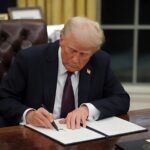
The envoy noted that the proclamation, which was signed earlier this month, focused on countries with identified deficiencies in information-sharing and screening protocols.
He added that the primary goal of the visa restrictions on Nigeria is to address bilateral security concerns by ensuring that travel documents are secure and that criminal or terrorist threats are identified before they reach U.S. soil.
Ambassador Mills also highlighted that the U.S. values its longstanding relationship with Nigeria but must prioritize the safety of its borders.
“The focus of the visa review is on ensuring proper vetting and credible information in the visa process, not on penalising Nigerians,” Mills said.
According to him, the proclamation clearly specifies the visa categories that may be affected, while also outlining exemptions for certain groups.
He listed the exemptions to include holders of official and diplomatic passports, as well as individuals travelling for religious work.
The ambassador urged visa applicants and members of the public to consult the U.S Embassy’s official website for detailed information on the proclamation, affected visa categories, and available exemptions.
He also urged those with specific enquiries to use the designated communication channels provided by the embassy for further guidance.
Also speaking on the matter, the leader of the U.S Congressional Delegation, Rep. Bill Huizenga, said visa reviews and restrictions were routine tools used to encourage compliance and cooperation, rather than punitive actions targeting citizens.
Huizenga said the focus of such measures was primarily on government systems and processes, not on the Nigerian people, adding that similar reviews were routinely applied in different parts of the world.
The latest suspension expands earlier restrictions announced in June, under which nationals of several countries faced partial limits on immigration processing. In the most recent proclamation, Laos and Sierra Leone — which previously faced partial restrictions — were upgraded to a full entry ban, prompting USCIS to extend the freeze on immigration petitions, including green card and citizenship applications.
Pan-Atlantic Kompass reports that this comes after the United States Department of State recently announced an update to its non-immigrant visa policy for Nigerian citizens.
According to a press release issued by the US Embassy in Abuja, most non-immigrant and non-diplomatic visas issued to citizens of Nigeria will be single-entry visas with a three-month validity period and the new visa restrictions take immediate effect.