
Ghanaian officials are distancing the country from the popular term Detty December.
Kofi Okyere-Darko (KOD), Director of Diaspora Affairs at the Presidency said the reason he is against the term Detty December is due to its potential negative connotations.
He said he preferred the official branding of “December in Ghana” to highlight cultural and tourism benefits.
Speaking at the Ghana Diaspora Summit in Accra, the Ghanaian official said: “On a personal level, I don’t want the word ‘detty’ to be associated with anything Ghana… that’s something I’m not very comfortable with.”
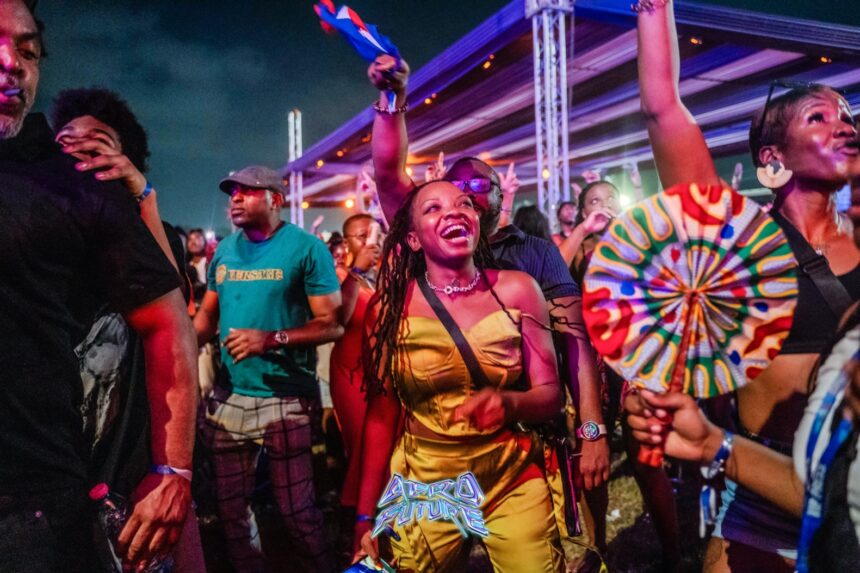
The term Detty December has become synonymous with vibrant end-of-year celebrations, featuring concerts, beach parties, and cultural events that attract thousands of diaspora visitors and tourists.
The term is also prevalent in Nigeria, particularly in Lagos State, where many people come to unwind for the festive period.
However, government initiatives like the Ghana Tourism Authority’s (GTA) “December in Ghana” campaign emphasize a broader appeal, including heritage tours, business opportunities, and family reunions, rather than just unrestricted partying.
Okyere-Darko noted that while young people favor Detty December, official branding avoids it to promote a more wholesome image.
He suggested rebranding possibilities, such as shortening “December in Ghana” to “D.I.G.” with the playful tagline “Let’s dig it!” to maintain youth appeal without what he described as negative undertones.
“The young people somehow prefer ‘Detty December’, but officially, that’s not the name,” he said.
“I don’t think December is what attracts people to Ghana. People started coming to Ghana a long time ago. I remember December in Ghana at the turn of the millennium, with initiatives like Akwaaba UK.”
The celebrations are thought to be a huge boost to Ghana’s economy. Last December more than 125,000 international visitors, many of whom were diasporans, flocked to Ghana.
It was a notable increase from the number of people arriving during any other month – and the same can be said for the three years before that.
Pan-Atlantic Kompass reports that Detty December has grown to become a cultural and economic phenomenon primarily in Lagos, Nigeria, and Accra, Ghana.
The term “Detty” is a corruption of the word “dirty” in Nigerian and Ghanaian Pidgin English.
In this context, it doesn’t mean “unclean” instead, it refers to “dirtying” yourself through unrestrained fun, dancing, and late-night celebrations.
While the tradition of end-of-year partying is decades old, the specific phrase is widely credited to Nigerian-born, Ghana-based artist Mr Eazi.
In 2016, he used it as a hashtag for his “Life is Eazi” concert in Lagos. His team (including Ghanaian brand consultant Bernard Kafui Sokpe) popularized it as a way to describe the high-energy, “no-regrets” lifestyle of the holiday season.
In Nigeria, the growth of Detty December is fueled by three major cultural shifts. They include the “I Just Got Back” (IJGB) phenomenon.
IJGB is the nickname for members of the Nigerian diaspora returning from the US, UK, and Canada for the holidays.
Their return brings a massive influx of foreign currency and a high demand for premium nightlife.
Also, the Rise of Afrobeats gave prominence to Detty December. As Afrobeats became a global genre, December became the “Homecoming” season where these global stars perform massive headline shows in their home countries.
In December 2024, Lagos alone reported generating over ₦111 billion in tourism and hospitality revenue, with hotels accounting for about half and short-term rentals contributing N21bn.