
2026 has seen an influx of changes to the United Kingdom (UK) visa requirements for Nigerians.
A series of immigration changes and updates has directly impacted thousands of Nigerian applicants seeking to visit, study, work, or settle in the United Kingdom.
With fee hikes effective from April 8, 2026, and the full rollout of digital eVisas, Nigerians must stay informed on the UK visa requirements in 2026.
The UK remains a top destination for Nigerians, whether for tourism, family visits, higher education, skilled employment, or long-term settlement.
In this report, Pan-Atlantic breaks down the UK visa requirements for Nigerians in 2026, the latest rules, exact fees in 2026, and the step-by-step application process.
Major Updates to UK Visa Rules in 2026
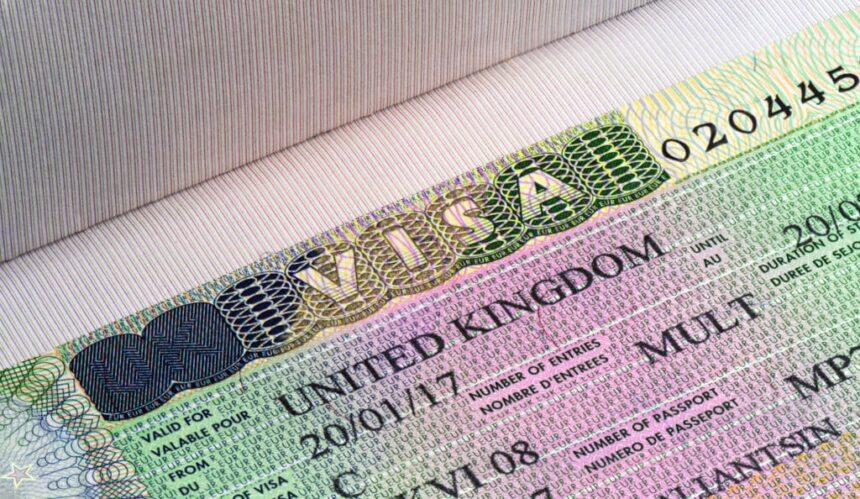
One of the biggest shifts in the UK visa requirements for Nigerians in 2026 is the transition to fully digital eVisas.
From 25 February 2026, all new UK visit visas issued to Nigerians are electronic only—no more physical vignette stickers in passports. Successful applicants must create a free UKVI account to access and share their eVisa digitally before travel. The core eligibility criteria, supporting documents, and biometrics process remain unchanged, but travellers now rely on their UKVI account for proof of permission.
Additionally, visa fees increased by approximately 6-7% across most categories from 8 April 2026 to cover inflation and service improvements. These hikes apply to applications submitted outside the UK, which covers nearly all Nigerian applicants.
Other notable rules include stricter scrutiny of financial evidence, proof of ties to Nigeria (to show intent to return for visitor visas), and specific restrictions on certain nationalities (though Nigerians are not currently subject to the “visa brake” affecting countries like Afghanistan and Cameroon for student routes).
Updated UK Visa Fees for Nigerians in 2026
Fees are paid in GBP during the online application and are non-refundable even if refused.
Below are the updated UK visa fee requirements for Nigerians in 2026;
Visit Visas:
- Short-term (up to 6 months): £135 (up from £127)
- Long-term (up to 2 years): £506 (up from £475)
- Long-term (up to 5 years): £903 (up from £848)
- Long-term (up to 10 years): £1,128 (up from £1,059)
- Visiting academic (6–12 months): £234
- Private medical treatment (6–11 months): £234
Student Visas:
- Student (main applicant and dependants): £558 (up from £524)
- Child Student: £558
- Short-term student (English language, 6–11 months): £228
Work Visas:
- Skilled Worker (up to 3 years): £819
- Skilled Worker (over 3 years): £1,618
- Skilled Worker – Health and Care Visa (up to 3 years): £324
- Innovator Founder: £1,357
- Global Talent: £766 (main applicant, no approval letter required)
Settlement and Citizenship Routes:
- Route to Settlement: £2,064
- Indefinite Leave to Enter (ILR, e.g., Armed Forces or domestic abuse victims): £3,226
- Naturalisation as a British citizen: £1,709
These figures are for applications made outside the UK. In-country extensions or changes carry separate fees.
Key Requirements by Visa Type
Standard Visitor Visa (tourism, business, family visits)
The Standard Visitor visa is the most commonly applied-for UK visa category from Nigeria. It covers tourism, family visits, business meetings, conferences, and medical treatment.
Under this visa type, the holder can stay for up to 6 months, but cannot work, study for more than 30 days, or access public funds.
The UK uses a points-based and discretionary system for visitor visas. There is no fixed minimum bank balance like some countries require, but the visa officer must be satisfied that the applicant can fund the trip and that he/she will return to Nigeria.
Standard Visitor Visa Document Checklist
- Valid Nigerian passport (ECOWAS biometric e-Passport) with at least 6 months validity beyond planned stay and at least 1 blank page
- Completed online application form via GOV.UK
- Passport-sized photograph (45mm x 35mm, white background, taken within the last 6 months)
- Bank statements for the last 6 months showing regular income and sufficient funds to cover your trip
- Employment letter on company letterhead stating your role, salary, leave approval, and confirmation that you will return to your position
- If self-employed: CAC registration, business bank statements (6 months), tax clearance certificate from FIRS
- Accommodation proof: hotel booking or letter of invitation from UK host with their passport copy and proof of UK immigration status
- Travel itinerary: flight reservation (not necessarily a paid ticket) and planned activities
- If sponsored: sponsor’s UK bank statements (3-6 months), sponsor’s employment letter, and sponsorship declaration letter
- Previous travel history: copies of previous visas and entry/exit stamps (if any)
- Evidence of ties to Nigeria: property documents, business ownership, family responsibilities, and enrolled children in school
- Cover letter explaining the purpose of your visit, planned activities, and reasons for returning to Nigeria
Student Visa (Child or Adult)
The UK Student visa (formerly Tier 4) is the second most popular UK visa category for Nigerians. The UK is home to four of the world’s top ten universities (Oxford, Cambridge, Imperial, and UCL) and over 150 institutions that accept Nigerian students.
Key Changes Affecting Nigerian Students in 2026:
Dependant restrictions: Only PhD and research-based postgraduate students can bring dependants. Master’s students can no longer bring spouses or children.
Graduate Route under review: The government reviewed the Graduate Route in 2024 and retained it, but future changes remain possible.
Student Visa Document Checklist
- Confirmation of Acceptance for Studies (CAS) from a licensed UK institution — this is mandatory and must be obtained before applying
- Valid Nigerian passport (ECOWAS biometric e-Passport) with at least 6 months’ validity
- Proof of English language proficiency: IELTS UKVI (minimum score depends on course level — typically 5.5 to 7.0), or a degree taught in English from a majority English-speaking country
- Financial evidence: bank statements showing you hold the required funds for at least 28 consecutive days ending no more than 31 days before your application date
- Tuition fee payment evidence: proof of fees already paid (shown on CAS) or sufficient funds to cover outstanding tuition
- Living cost funds: £1,334/month x 9 months (£12,006) for London courses, or £1,023/month x 9 months (£9,207) for courses outside London
- If sponsored by parents or a third party: sponsor’s bank statements, relationship proof, and a formal consent letter
- Academic qualifications: degree certificates, transcripts, and WAEC/NECO results
- Tuberculosis (TB) test certificate from an approved clinic in Nigeria (IOM Lagos or Abuja)
- ATAS certificate (if required — for certain postgraduate courses in sensitive subjects)
- Passport-sized photograph meeting UK specifications
- Accommodation details: university halls confirmation or private accommodation booking
Skilled Worker Visa
The Skilled Worker visa is the primary route for Nigerians who want to work legally in the UK. It replaced the old Tier 2 (General) visa.
Under this visa type, an applicant needs a job offer from a UK employer who holds a valid sponsor licence.
Skilled Worker Visa Document Checklist
- Certificate of Sponsorship (CoS) from a licensed UK employer — contains your job details, salary, and SOC code
- Valid Nigerian passport (ECOWAS biometric e-Passport)
- Proof of English language: IELTS (minimum B1 level — 4.0 in each component), or a degree taught in English, or a national from a majority English-speaking country
- Financial evidence: £1,270 held in your account for at least 28 consecutive days (unless your employer certifies maintenance on the CoS)
- Criminal record certificate from the Nigeria Police Force (for certain roles, especially healthcare and education)
- TB test certificate from an approved clinic in Nigeria
- Qualifications: degree certificates and professional registration (if applicable — e.g., NMC for nurses, GMC for doctors)
- Job must meet minimum salary threshold: £38,700 per year (general), or the going rate for the occupation, whichever is higher
- Job must be on the eligible occupations list at RQF Level 3 or above (A-level equivalent)
- ATAS certificate (if applicable for certain science and research roles)
Family/Spouse Visa
The Family visa allows Nigerians to join a spouse, partner, parent, or child who is a British citizen or has settled status (ILR) in the UK. The financial requirement is one of the highest barriers for Nigerian applicants.
Family Visa Key Requirements:
- Your UK-based sponsor must earn a minimum of £29,000 per year (this rose from £18,600 in April 2024)
- Genuine relationship evidence: photos, communication records, shared finances, visit history
- English language requirement: A1 level for initial application, A2 for extension, B1 for settlement
- Adequate accommodation in the UK (not relying on public housing)
- Visa fee: £1,846 (~N2,806,000) plus IHS of £1,035/year
- Valid for 2.5 years initially, then extend for another 2.5 years, then apply for ILR after 5 years total
- TB test certificate required from Nigeria
Step-by-Step UK Visa Application Process for Nigerians
Determine your visa type – Use the gov. UK “Check if you need a visa” tool.
Create a UKVI account and complete the online form – Provide accurate personal details, travel history, and upload documents.
Pay the visa fee – Online via debit/credit card.
Book a biometrics appointment – At TLScontact centres in Lagos, Abuja, or other locations. Fingerprints and a photo are required (reuse possible if enrolled recently).
Attend the appointment – Subpassportsport and documents.
Undergo TB test – Mandatory for stays over 6 months at approved IOM clinics in Nigeria.
Wait for the decision – Track via the UKVI account. For eVisas, create your account post-approval to view the digital record.
Travel – Present your passport and eVisa details at the UK border control.