

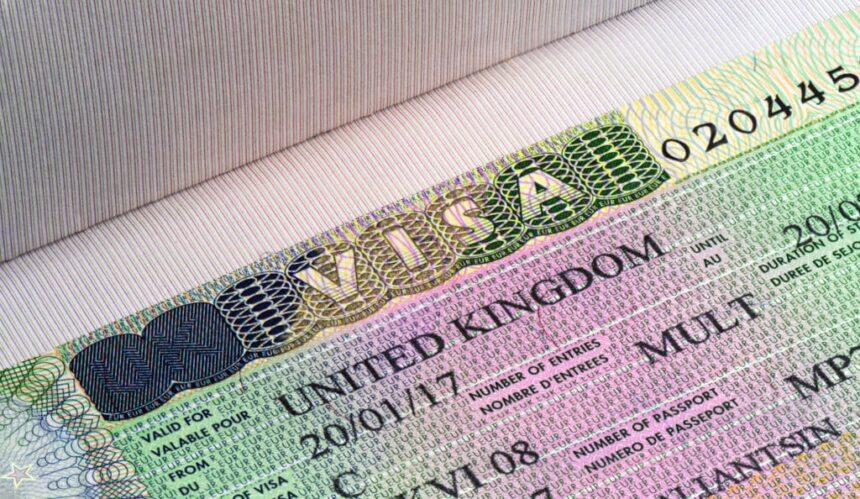
United Kingdom (UK) study visa issuance has plummeted by 32% in the first quarter of 2026 compared to the same period last year, according to the latest Home Office statistics.
This sharp decline signals shifting dynamics in international student recruitment and raises questions about the long-term appeal of UK higher education amid evolving immigration policies.
Several factors appear to be driving the drop in UK study visa issuance. Recent policy changes, including restrictions on dependents and higher financial requirements, have made the UK less attractive to prospective students from key source countries such as India, Nigeria, and China.
Between January and March 2026, the government granted just 35,625 sponsored study visas, marking the lowest first-quarter total since the pandemic in 2020.
The stark numbers confirm that UK study visa issuance trends 2026 are veering toward a sharp decline as a consequence of tightening government borders, higher institutional barriers, and a ten-year peak in visa rejection rates.
The primary engine behind this steep downturn is a dramatic spike in visa denials. The overall student visa refusal rate doubled to 13% during the first quarter of the year, up from 6% in early 2025.
While application volumes dropped by roughly 30% across the board, the actual volume of refused applications shot up by 56% year-on-year to 5,499.
The impact has not been felt equally, with specific source markets bearing the brunt of the Home Office’s strict approach:
Pakistan: Over 40% of applicants were rejected in Q1 2026, compared to a mere 6% refusal rate last year.
Nigeria, Bangladesh, Ghana, & Sri Lanka: All witnessed rejection rates soaring past 20%.
China & United States: Remained largely insulated, maintaining a tiny 1% refusal rate.
The figures come as the UK’s Labour government hails “real progress” in bringing total net migration to 171,000 in 2025, the lowest level since 2012, excluding the pandemic, according to the Office for National Statistics (ONS).
In what Home Secretary Shabana Mahmood called a restoration of “order and control to our borders”, the 2025 figure was nearly half the total for 2024, with the ONS citing the fall in non-EU nationals arriving for “work-related reasons” as the main driving force.
The total net migration figures – relating to 2025 – provide a backdrop to the Q1 2026 data that confirms sector fears about persistently high study visa rejection rates, as institutions prepare for heightened compliance measures coming into force next month.
A spokesperson from Universities UK International said the decline was “a clear signal that international demand is under serious pressure”, warning the UK “cannot afford to be complacent about its standing as a global destination for international students”.
They highlighted previous government data suggesting the drop is continuing into spring, with April marking the seventh consecutive month of year-on-year falls in UK study visas.
Meanwhile, India, the UK’s largest source market, recorded a denial rate of 6.7% in Q1 2026, falling from 8.6% the previous quarter, though more than double the 2.9% seen in Q1 2025. China stands out for its rejection rate of 0.4%.
Bucking the trend, Nepal’s rejection rate in Q4 2025 and Q1 2026 combined fell to 4.6%, down from 11.3% in Q4 2024 and Q1 2025.
UK institutions will be paying close attention to the data as the Home Office tightens university compliance requirements, with new Basic Compliance Assessment (BCA) metrics coming in on June 1, 2026, including a new RAG rating system.
Under the new rules, universities will be marked at ‘red’ for having a 5% visa refusal rate and ‘amber’ if it’s above 4%, alongside tighter enrolment rate and course completion thresholds.
UUKi said it was “urgently” calling on the Home Office to work with the sector on data and risk intelligence sharing: “So we successfully transition to the new regime, protect students and safeguard the UK’s reputation as a world-leading study destination.”