

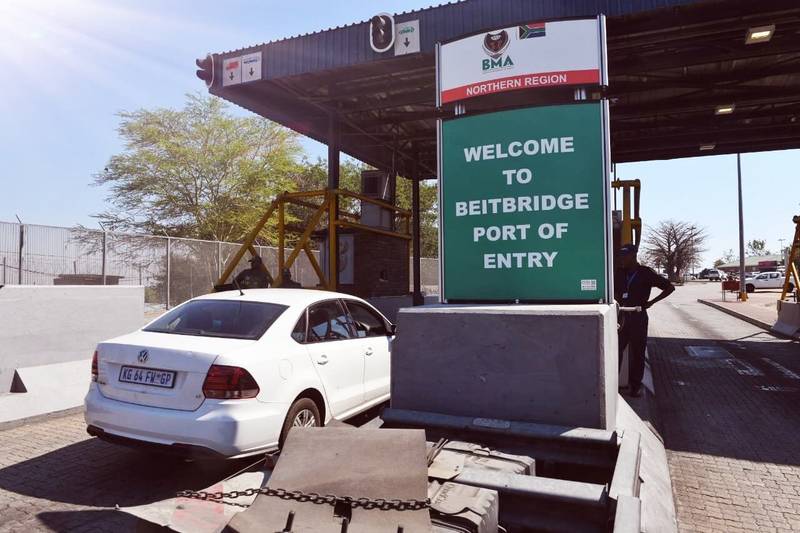
The government of South Africa through the South African Revenue Service (SARS) has officially rolled out a new policy that affects foreign-registered vehicles in the country.
Under the new policy, which officially took effect on June 1, 2026, all foreign-registered vehicles entering or leaving South Africa must be digitally declared on the SARS Traveller Management System (TMS).
While South African officials vehemently deny any underlying bias—maintaining that the system simply updates national security and financial transparency measures—critics have argued that the policy adds heavy operational friction for cross-border traders, commuters, and students from neighboring Southern African Customs Union (SACU) states like Lesotho, Zimbabwe, and Eswatini.
For decades, vehicles registered within the SACU economic bloc enjoyed unhindered movement across regional borders. The sudden enforcement of these new foreign-registered vehicles by the government of South Africa has broken that precedent.
According to SARS, the policy is designed to improve customs oversight, strengthen risk detection capabilities, and accelerate the digital transformation of South Africa’s border management systems.
SARS Commissioner Dr Johnstone Makhubu said that this measure aligns South Africa with established international Customs practice and forms part of SARS’ ongoing programme to modernise customs operations at ports of entry, strengthen compliance, and protect the integrity of the country’s ports of entry.
He further indicated that it delivers clear benefits which include “enabling better risk‑based screening, strengthening coordination with other authorities, and improving the overall traveller experience. It also supports South Africa’s financial transparency obligations and enhances national security by ensuring goods, currency, and vehicles are properly declared and assessed before entry or exit.”
Travelers are now required to provide passport details, vehicle registration information, the vehicle identification number (VIN), driver information, and the intended duration of stay. Foreign motorists entering South Africa will also receive a Temporary Import Permit valid for six months.
Failure to declare a foreign-registered vehicle could result in delays, inspections, or enforcement action under South Africa’s Customs and Excise Act.
The rule applies to vehicles from all countries, including neighboring SACU members, but does not affect trade agreements within the union.
The new system comes at a time when border management has become an increasingly sensitive political issue in South Africa.
In recent years, the country has faced growing pressure to tighten immigration controls amid concerns over undocumented migration, cross-border crime, vehicle smuggling, and pressure on public services.
This has led to a wave of xenophobic attacks as South African citizens attack foreign citizens perceived to be illegal migrants in the country.
Public debate around migration has intensified in South Africa following repeated anti-migrant protests and calls for stricter enforcement of immigration laws.