
President Bola Ahmed Tinubu on Tuesday directed the Independent Corrupt Practices and Other Related Offences Commission (ICPC) to launch a probe into the alleged fake agency, the Presidential Foreign Intervention Promotion Council (PFIPC).
The probe comes as the agency was allocated ₦1.3 billion in the 2026 national budget despite never existing as a legitimate federal body.
Special Adviser to the President on Information and Strategy, Bayo Onanuga, revealed the fresh directive in a statement he signed Tuesday titled ‘President Tinubu orders ICPC to investigate Presidential Foreign Intervention Promotion Council.’
Onanuga said: “The directive follows the discovery of the fictitious council, which the Presidency said was never established by the Federal Government and has no basis in the law, presidential instrument, executive approval or other lawful act of government.”
Tinubu directed the ICPC to investigate the forged appointment letters and official government documents allegedly used by one Adeniyi Adeyemi Mathew, who presented himself as Director-General of the so-called council and falsely claimed to be a presidential appointee, it stated.
It added: “The investigation is to examine the provenance and use of false official documents; the processes through which official recognition or diplomatic support may have been sought or obtained; the opening and operation of any related bank accounts; the source and movement of any funds involved; and the role of any public officer, private individual, financial institution, intermediary or other person or entity that may have facilitated, enabled or participated in the alleged scheme.”
Pan-Atlantic Kompass reports that the alleged fake agency scandal has highlighted not only brazen impersonation and forgery but also systemic failures and potential collusion by public servants who enabled the fraud to persist for over a year.
Experts and observers argue that the ICPC probe on the alleged fake agency scandal must go beyond the principal suspect to hold accountable complacent officials whose negligence or complicity allowed a ghost agency to secure office space in the Federal Secretariat, open bank accounts, engage diplomatic missions, and receive budgetary provisions.
Timeline of the PFIPC Scandal: How a Fake Agency Operated in Plain Sight
2024 (Alleged Inception): Adeniyi Adeyemi Matthew (also referred to as Prince Adeniyi Adeyemi Matthew) reportedly began setting up operations for the self-styled PFIPC, later linked in some claims to a Presidential Economic Advisory Council variant. He allegedly forged appointment letters purporting to come from the Presidency.
Early to Mid-2025: The fake council secured office space in the Federal Secretariat in Abuja. It operated with apparent legitimacy, hosting foreign ambassadors, receiving invitations to official events, and opening multiple bank accounts (reports mention up to 34 fraudulent accounts, including with the Central Bank of Nigeria). Despite a federal hiring freeze, a waiver is allegedly granted for around 300 staff positions.
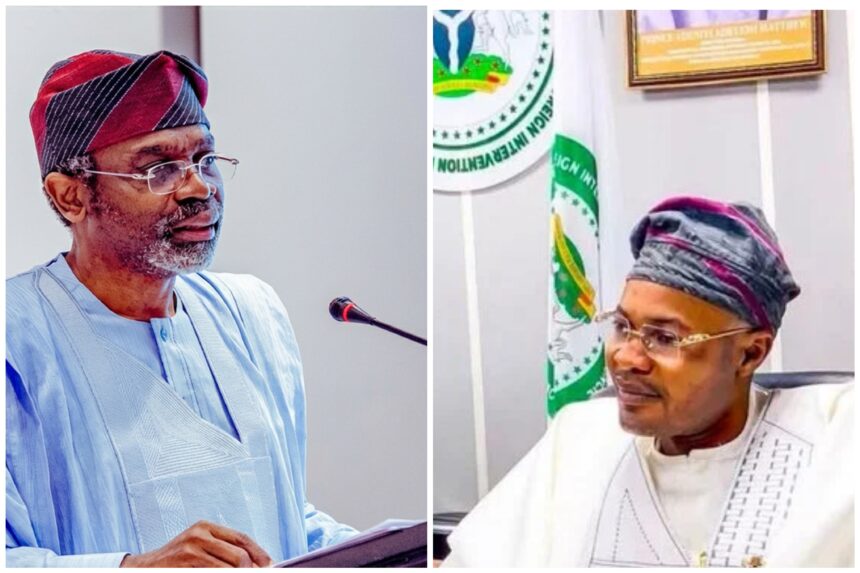
October 17, 2025: Chief of Staff to the President Femi Gbajabiamila alerted security agencies (DSS and Police) about the fraudulent operations and forged documents bearing his signature and seal.
October 27, 2025: Police arrested Adeyemi at the Secretariat office. Searches of his office and residence yielded documents supporting allegations of forgery, impersonation, and fraud.
November 27, 2025: Police filed an eight-count charge against Adeyemi and two accomplices at the Federal High Court in Abuja for conspiracy, forgery, and impersonation. Gbajabiamila and others are listed as prosecution witnesses. Forensic analysis reportedly confirmed signatures on key documents were forged. Adeyemi is granted bail and remains on bail.
June 11, 2026: Gbajabiamila issues a public disclaimer, warning foreign missions, financial institutions, and others against dealing with the non-existent PFIPC.
Late June 2026: Public outrage erupts after revelations that the 2026 Appropriation Act includes ₦1.3 billion for the PFIPC. Questions arise about how the line item entered the budget without proper scrutiny or defense before relevant committees. The Presidency reiterates the agency has no legal basis.
Early July 2026: Police arrest Adeyemi’s father in Ogbomoso (later released) amid a manhunt or questioning related to the suspect’s whereabouts. Adeyemi, represented by Femi Falana, maintained he will appear in court on July 27, 2026, and has vowed to clear his name. Allegations and counter-allegations intensify, including claims of internal collaborators.
July 7-8, 2026: President Tinubu ordered a 30-day ICPC probe. The Senate distanced itself, stating no petition was received and the matter is sub judice, emphasizing the budget line was not inserted by the legislature.
Why the Probe Must Target Complacent Public Servants
The Tinubu directive explicitly calls for examining “the wider circumstances” that enabled the fictitious body to gain legitimacy.
This includes:
Bureaucratic lapses: How forged documents were accepted by the Office of the Head of Civil Service, Budget Office, and other MDAs.
Budgetary oversights: Inclusion of a non-existent agency in the 2026 budget without verification.
Institutional failures: Processing of correspondence by the Office of the Secretary to the Government of the Federation and potential facilitation by financial institutions or public officers.
President Tinubu’s statement stresses identifying weaknesses in government procedures and recommending preventive measures. “The integrity of the Presidency and the institutions of the Federal Government must be protected against impersonation, forgery, abuse of official identity and the exploitation of weaknesses in the public service,” the directive noted. All culpable persons, including public officers, must face strict legal action.
Analysts argue this case exposes deeper governance vulnerabilities in Nigeria’s public service. Allowing a fake agency to function from a prime government location, draw potential funds, and interface with international entities for an extended period suggests either gross incompetence or deliberate collusion by insiders. The ICPC investigation is expected to trace fund movements, roles of intermediaries, and procedural loopholes.
As the ICPC begins its 30-day probe on the alleged fake agency, Nigerians await a thorough report that not only prosecutes the masterminds but also reforms the systems that made such an audacious fraud possible.
Meanwhile, the case remains before the courts, with Adeyemi’s next appearance scheduled for July 27, 2026. The outcome of both the judicial process and the ICPC investigation could have lasting ramifications for public trust in government institutions.