
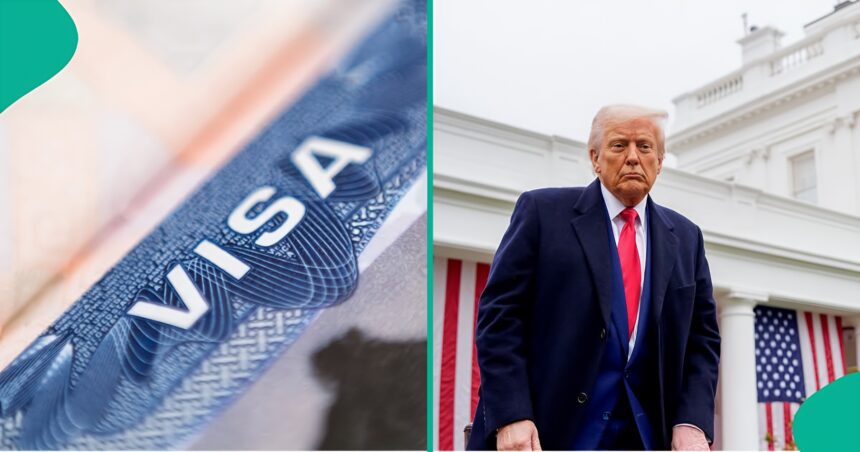
The policies of the administration of United States President Donald Trump have become evident after legal immigration in the U.S fell by half in the early months of 2026.
This was made possible through a series of executive policies that blocked or limited immigrant visas from nearly half the countries in the world.
According to an analysis of the most recent available State Department data published, the department issued only about 26,000 immigrant visas in February 2026, visas that grant green cards and legal permanent resident status. That figure represents roughly half the pre-administration monthly average of 52,000 visas.
This development ranks among the largest reductions in legal immigration in the U.S. since the Hoover administration’s unilateral visa denials during the Great Depression, according to David Bier, an immigration expert at the Cato Institute.
Unlike the pandemic-era disruptions, these declines stemmed directly from policy choices rather than external crises.
Pan-Atlantic Kompass reports that policies enacted in late 2025 and early 2026 made immigration effectively impossible from 91 countries and reduced available immigrant visas from another 61.
Africa and the Middle East experienced the most severe effects. Immigration from Muslim-majority countries fell by more than 90 percent.
Regional declines in February 2026, compared with monthly averages from 2023–2024, included:
- Central Asia: approximately 99 percent drop
- Africa: 89 percent
- Eastern Europe: 84 percent
- Middle East: 81 percent
- Australia and Oceania: 73 percent
- South Asia: 63 percent
- South America: 60 percent
- Caribbean: 53 percent
- East Asia: 33 percent
- Central America: 30 percent
- Western Europe: 16 percent
Canada and Mexico, which faced no restrictions, saw increases and together accounted for about 30 percent of all immigrant visas issued in February.
A detailed country-level breakdown showed:
- 131 countries experienced decreases of 80 percent or more, including Afghanistan, Cuba, Pakistan, Jamaica, Bangladesh, Colombia, Nigeria, Nepal, Ethiopia, Yemen, Haiti, Ghana, Egypt, Iran, Guatemala, Brazil, Russia, and many others across Africa, the Middle East, Central Asia, and beyond.
- 22 countries saw drops of 50 percent or more (examples: Guyana, Ukraine, Taiwan, South Africa, Saudi Arabia, Italy).
- 25 countries declined by 20 percent or more (including Vietnam, China, Peru, Ecuador, South Korea, Japan, Argentina, and several European nations).
- Only about 10 countries recorded increases (among them the Dominican Republic, India, Honduras, Germany, and a handful of others).
- A small group of roughly 28 places showed little change or minor shifts.
Effects on Non-Immigrant Visas and Pathways
While immigrant visas were hit hardest, non-immigrant categories also declined. Student and work visas fell about 30 percent compared with the prior year. Tourist and business visitor visas dropped roughly 25 percent in February.
The travel ban fully prevented nationals of the 39 banned countries from obtaining student or work visas. New rules and fees further reduced issuances even from unrestricted countries such as India and China.NYTimes
Visas for seasonal agricultural workers and certain exchange programs held roughly steady, while those for other seasonal workers in hospitality and tourism declined. The administration also narrowed other legal entry routes by sharply limiting the refugee program, blocking asylum applications at ports of entry, and using various administrative measures to encourage immigrants to leave.NYTimes
Immigration experts characterize the combination of these visa restrictions, the mass deportation campaign, and other executive actions as an effort to curb immigration of nearly all kinds—achieving effects similar to early-20th-century congressional restrictions through administrative means alone.
It is important to note that more recent data on legal immigration in the U.S. were not available, and the State Department hasn’t provided clarifications about why it had published visa statistics less frequently under Trump.