
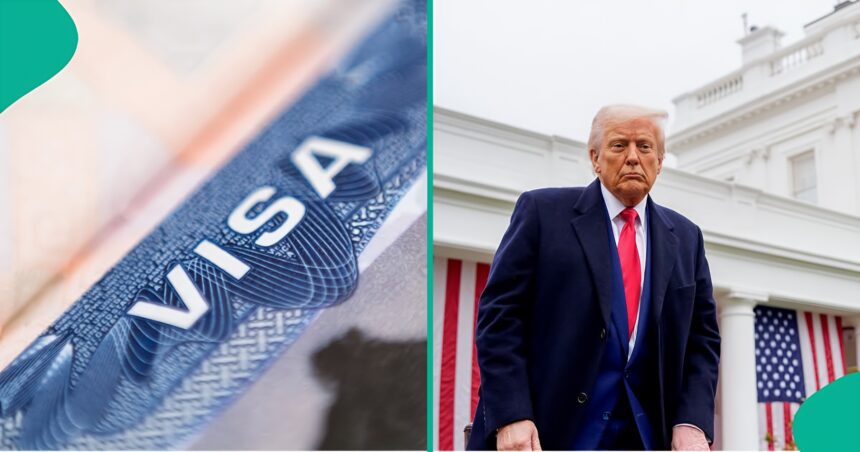
U.S Citizenship and Immigration Services (USCIS) has resumed H-1B work visa petition approvals without requiring employers to pay a controversial $100,000 fee.
The movement follows a series of federal court rulings that blocked the implementation and enforcement of the policy.
The decisions mark a critical turning point for U.S. technology companies, healthcare organizations, and foreign skilled workers who faced unprecedented financial hurdles under the executive order.
Pan-Atlantic Kompass reports that the $100,000 payment was initially enacted via presidential proclamation in September 2025.
Aimed primarily at foreign-based hires and initial cap-subject H-1B petitions, the rule required sponsoring employers to make a one-time six-figure payment per petition as a condition of eligibility.
The White House defended the fee as a measure to protect American labor and incentivize domestic hiring.
However, major industry groups and immigration law firms filed legal challenges, arguing that the executive branch overstepped its statutory authority by imposing what functioned as an unapproved tax on high-skilled labor.
Pan-Atlantic Kompass reports that the U.S resumed H-1B work visa approvals following key judicial interventions in 2026.
In June 2026, a federal judge in the Massachusetts District Court ruled the $100,000 fee unlawful and vacated the policy. The First Circuit Court of Appeals subsequently rejected the administration’s request to stay the ruling while the case was appealed.
Following an executive effort in September 2026 to renew the proclamation through 2027, a federal court in California issued a broader injunction (Global Nurse Force v. Trump).
The court barred federal agencies from collecting the payment, citing failures to conduct mandatory administrative procedures and small-business impact analyses.
While federal appeals remain pending in both the Ninth and First Circuits, USCIS has confirmed it is complying with active court orders. As a result, petitions submitted without the $100,000 fee are moving through the adjudication pipeline.
USCIS has said it is complying with the court orders but would collect the fee if the orders are lifted. Both legal challenges remain pending.
Employers had filed petitions without paying the fee, relying on the court rulings. However, many applications remained pending across USCIS service centres beyond the 15-business-day period applicable to premium processing.
Meltzer Hellrung said it had organised a multi-company mandamus action to compel USCIS to adjudicate the delayed petitions. The firm said the approvals began coming through after it publicised the issue, without the lawsuit being filed.
However, not all applications are progressing at the same pace. Petitions that remain pending beyond their premium processing deadlines may require further action, the firm said.
The approvals could prompt employers to reconsider candidates based outside the US, many of whom had been screened out because their petitions were expected to attract the fee.
Candidates who already hold a valid, unexpired H-1B visa stamp may be able to return to the US with a new employer’s approved petition, potentially avoiding the need for a fresh consular visa appointment in many cases.
Workers who have previously been counted against the H-1B cap and have time remaining under the six-year limit may also be eligible for a new petition without entering the lottery again.
The firm said the overseas talent pool includes workers who left the US after layoffs or a lapse in immigration status, as well as those employed by multinational companies abroad.
However, workers outside the U.S cannot begin employment under H-1B portability rules while awaiting approval. Employers may explore overseas contracting arrangements or employment through an employer of record, subject to applicable legal requirements.
Employers are advised to review all pending petitions subject to the fee, particularly those filed under premium processing that have crossed the 15-business-day deadline without a decision.
Also, employers whose petitions have been approved should promptly assess visa appointments and travel plans while the court orders remain in force. They should also reconsider candidates abroad who were previously excluded from hiring plans because of the fee.
The firm recommended reviewing candidates’ visa stamps, previous immigration status, and H-1B histories before making offers, noting that individual circumstances will determine how quickly a worker can return to the U.S.